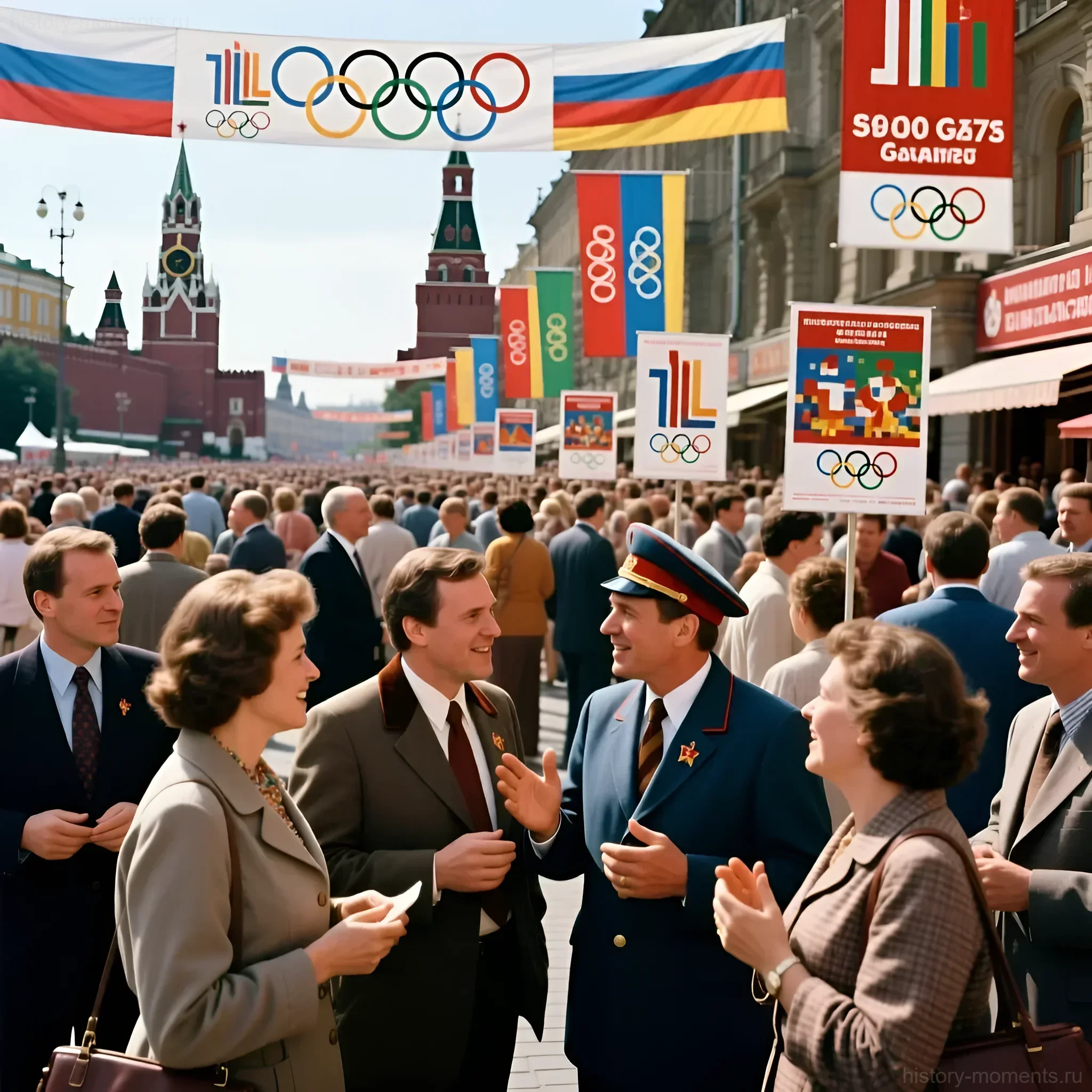
The summer of 1980 was special in the Soviet Union. It was the summer when the whole world, despite political storms, focused on Moscow for a brief period. The XXII Summer Olympic Games were an event that had been decades in the making and promised to be a showcase of socialist achievements. But for millions of Soviet citizens who couldn’t make it to the stadiums, the Olympics-80 became, first and foremost, a grand television event. It was an era when the country glued itself to the screens of black-and-white and newly emerging color televisions, not just to watch sports, but to catch a glimpse of the “big world.”
Olympics-80: On the Eve of the Era’s Premier Sports Event
Moscow being awarded the right to host the Games in 1974 marked the beginning of a six-year preparation marathon that affected not only the capital’s infrastructure but also the consciousness of the entire Soviet society. The Soviet Union, proud of its role as host, aimed to present the Games as a triumph of peace, friendship, and socialist sport. For the citizens, this meant not only pride but also significant changes in their daily lives.
The preparations for the Olympics-80 were comprehensive. Not only sports facilities were built (such as the magnificent Olympic Complex “Olympiysky,” opened in 1980, and the renovated Luzhniki Stadium), but also facilities designed to improve the quality of life for Muscovites and create an ideal image for foreign guests.
The Soviet leadership understood that the Games were an opportunity to demonstrate a high standard of living. Shops in Moscow temporarily stocked goods that had previously been in severe shortage: imported cigarettes, Finnish sausages, French perfumes, and even the famous Coca-Cola, which became a symbol of the Games. However, this abundance was mainly enjoyed by the residents of the capital and those who came there with special permission.
For citizens living outside Moscow, Leningrad, Kyiv, Minsk, and Tallinn (where the sailing regattas took place), the Olympics were a celebration they could only observe through the media. This is why the quality and accessibility of broadcasts became critically important.
The Cold War and Sports Boycott: The Prelude to the Moscow Olympics
It is impossible to discuss how Soviet people watched the Olympics without mentioning the shadow that loomed over the Games: the political boycott initiated by the United States. In December 1979, Soviet troops entered Afghanistan, leading to a sharp escalation of the Cold War. U.S. President Jimmy Carter called for a boycott of the Moscow Games. As a result, athletes from 65 countries, including the USA, Canada, West Germany, Japan, and China, missed the Olympics.
How Did Soviet Viewers Perceive the Boycott?
Official Soviet media (newspapers “Pravda,” “Izvestia,” “Vremya” programs, and of course, sports broadcasts) presented the boycott as a malicious and unfair action by imperialists aimed against the Olympic ideals and peace. Emphasis was placed on the idea that sport should be outside of politics, and the absence of American athletes was a personal tragedy for the athletes themselves.
- Increased Patriotism: The absence of major competitors (primarily the USA) paradoxically strengthened the sense of unity and patriotism. Every gold medal won by the Soviet team was perceived as a victory over political enemies.
- Focus on Friendship: Television actively highlighted the participation of athletes from socialist countries, as well as from Asia, Africa, and Latin America, presenting them as “true friends” of the Olympics.
- Alternative Flags: Since many boycotting countries allowed their athletes to participate but under the Olympic flag, Soviet viewers saw many white flags, which required additional explanations from commentators who carefully avoided sensitive political issues.
Thus, for the Soviet viewer, the Olympics-80 was not just a sports competition but also an ideological front, where the USSR’s victory was a matter of national honor.
Television and the Olympics-80: How Soviet Citizens Followed the Competitions
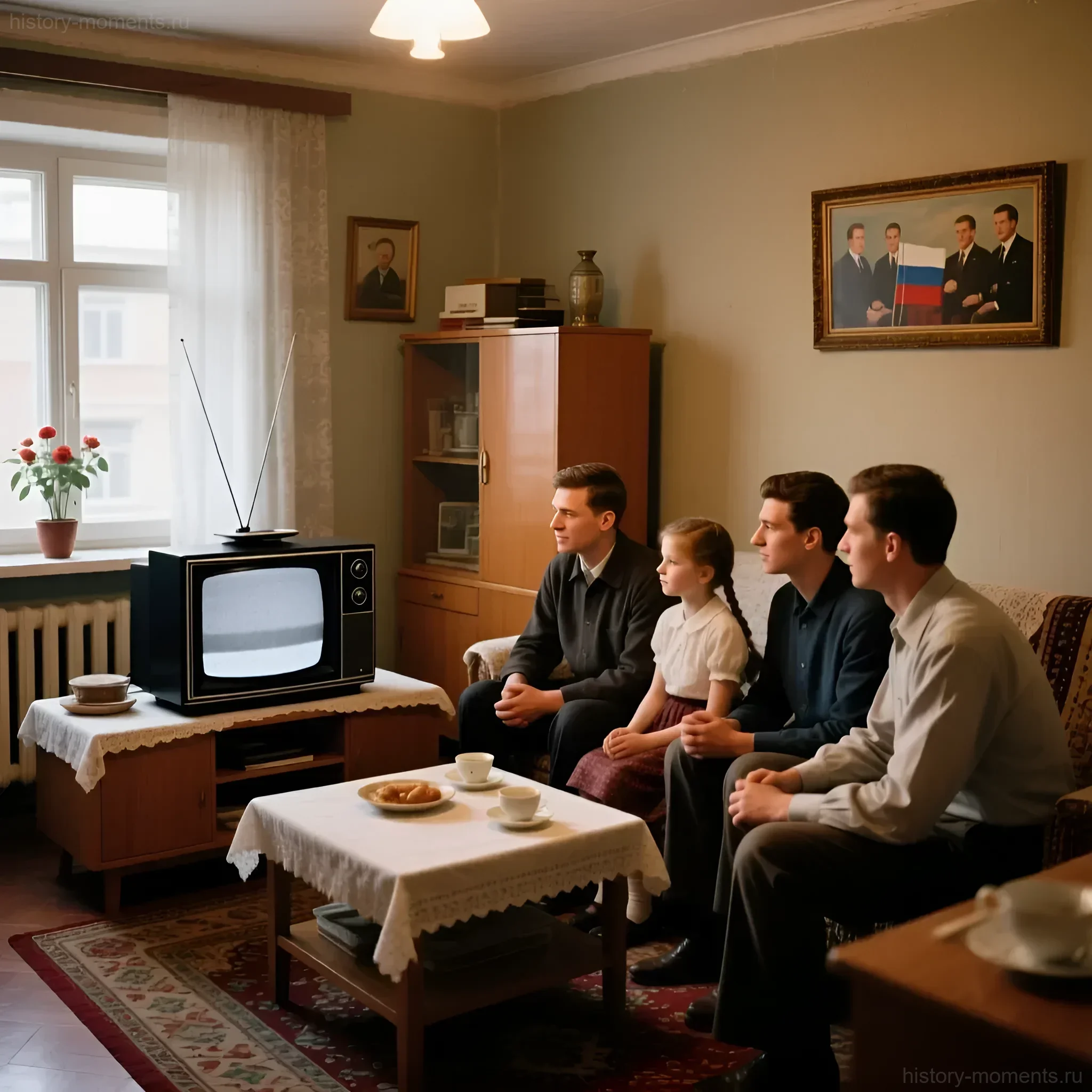
If for foreigners the Games were a moment when Moscow opened its doors, then for most Soviet people, the Olympics-80 was a moment when the world entered their homes through the television screen. This was the first time in the history of the USSR that a sporting event of such magnitude was broadcast with unprecedented technical equipment.
Technological Breakthrough: Color Television
By 1980, color televisions were not yet commonplace, but their numbers were growing. The Olympics became a powerful incentive to purchase models like the “Rubin Ts-202” or “Raduga.” Those who didn’t have a “color miracle” gathered at the homes of luckier neighbors or relatives. Watching the Games in color, with bright blue tracks and red uniforms, felt like a true window into the future.
Central Television of the USSR (TsT USSR) allocated two main channels for broadcasts: The First Program (main events, ceremonies, most popular sports) and The Second Program (less popular or parallel competitions). Additionally, in Moscow and some major cities, there was a Third Channel that provided additional live broadcasts.
The broadcast volume was colossal: TsT USSR broadcast over 1500 hours of Olympic programming over two weeks. This meant that screens were filled with sports almost from 9 AM until late at night (sometimes until 1 AM). For comparison, this was many times more than the usual volume of sports broadcasting.
Voices of the Era: Legendary Commentators
The success of the broadcasts largely depended on the commentators, whose voices became a symbol of the Olympics-80. They didn’t just report scores; they created an atmosphere, weaving patriotic notes and emotional exclamations into their reports. The main stars were:
- Nikolai Ozerov: A legend of Soviet sports commentary. His famous “We don’t need this kind of hockey!” from 1980 was replaced by the equally emotional “Olympic champion!”. Ozerov commented on the main events and opening/closing ceremonies; his voice personified national pride.
- Vladimir Maslachenko: A master of football and track and field commentary, known for his vivid and lively style.
- Evgeny Mayorov: Commented on hockey and other team sports.
- Anna Dmitrieva: The voice of tennis, bringing elegance to her reports.
Their commentary was not just informative; it was educational, emphasizing the will to win, friendship, and the superiority of the Soviet sports school. Viewers often quoted their phrases, making the commentators true national heroes.
Radio as a Supplement
For those who were at work, traveling, or in regions with poor television signals, All-Union Radio remained the main source of information. The “Mayak” program provided regular updates. Radio allowed people to follow the progress of marathons or sailing regattas when the visual aspect was less important, and emotions and speed of information transfer were key.
Heroes of the Olympics-80: Athletes Who Conquered Hearts
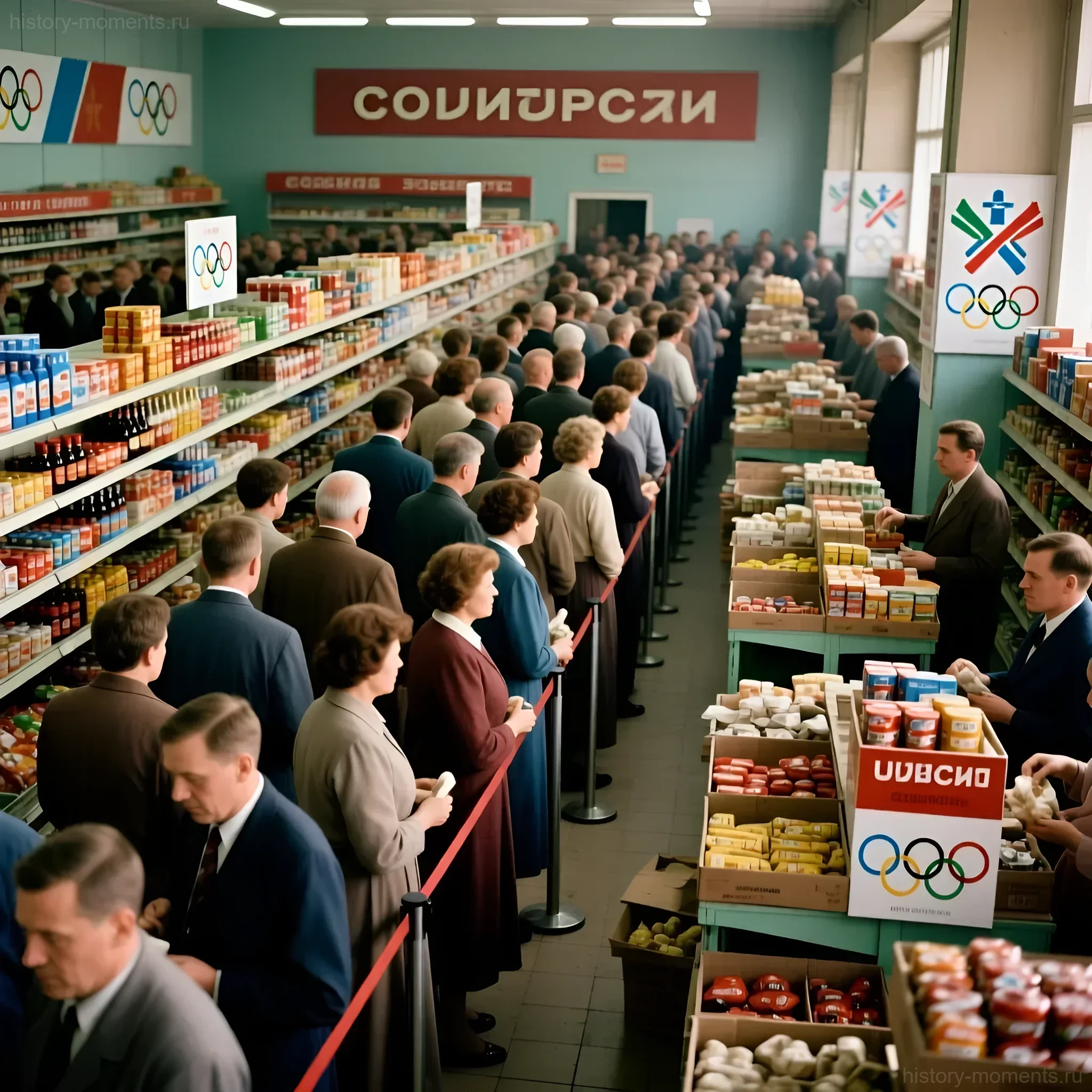
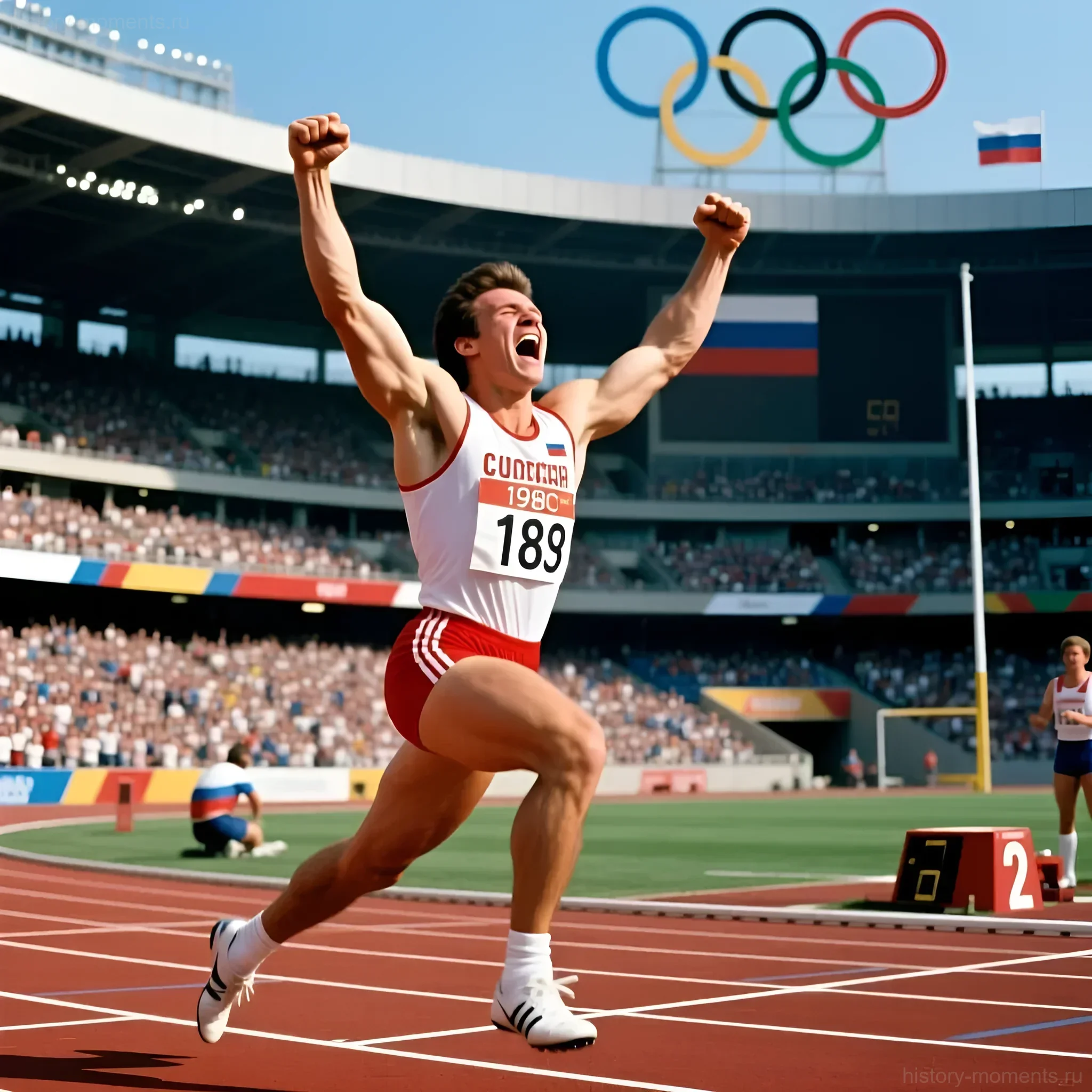
Soviet people watched the Olympics-80 with particular attention to their athletes. Against the backdrop of the boycott, the victories of the Soviet team (which won a record 80 gold medals) were perceived as a national triumph. Some athletes became instant legends; every schoolchild knew their names.
The brightest stars followed by the entire country:
1. Alexander Dityatin (Gymnastics)
Dityatin made history as the only athlete to win medals in all eight disciplines of artistic gymnastics at a single Games: three golds, four silvers, and one bronze. His perseverance and skill on the apparatus evoked admiration. Footage of him performing complex elements was repeatedly shown in news broadcasts.
2. Vladimir Salnikov (Swimming)
Salnikov became the first person in history to swim 1500 meters freestyle in under 15 minutes. His three gold medals were a sensation, as Americans traditionally dominated swimming. His victory was particularly important as it demonstrated that the USSR could be the best even in sports considered “Western.”
3. Tatyana Kazankina (Athletics)
A two-time Olympic champion, she won the 800 and 1500 meters races. Her finishing sprints, where she snatched victory in the final meters, made viewers jump from their sofas. Kazankina became a symbol of female strength and endurance.
4. Yuri Sedykh (Athletics)
He set a world record in the hammer throw that stood for many years. His power and dominance in the stadium evoked a sense of the invincibility of Soviet sport.
The victories of these and other athletes (such as weightlifter Sultan Rakhmanov or wrestler Alexander Kolchinsky) became the main topic of conversation in kitchens, trams, and at work. Newspapers featured huge headlines dedicated to Olympic records, and the “Vremya” television program began with a review of the medal standings.
Olympics-80 in Daily Life: Shortages, Coupons, and an Atmosphere of Universal Celebration
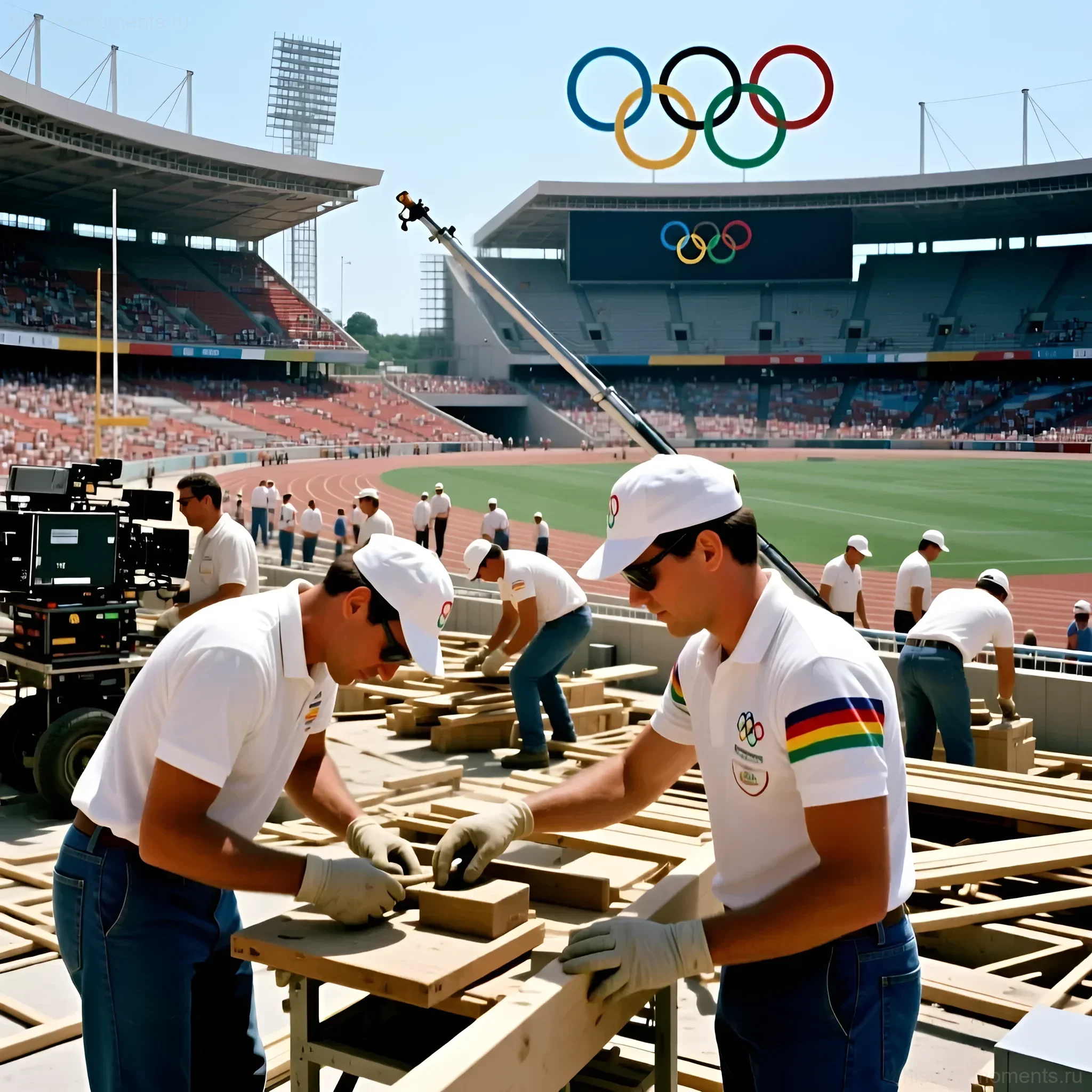
The 1980 Olympic Games were not just a sporting event; they were a large-scale social experiment that temporarily changed the daily lives of millions of Soviet citizens, especially in Moscow.
“Cleansing” the Capital and Control
To create an ideal image of a “calm and prosperous” capital, the authorities implemented unprecedented security and social control measures. Unreliable elements, dissidents, and even individuals without permanent registration were temporarily expelled beyond the 101-kilometer zone. Students not involved in servicing the Games were sent to summer camps or to work in the fields.
For Muscovites, this meant empty streets and the absence of the usual crowds in the city center. Paradoxically, despite the influx of tourists, Moscow became more orderly and cleaner, which many perceived positively.
Trade and Olympic Shortages
Although many imported goods were brought into Moscow’s stores, the distribution of these goods was strict. Special “Beryozka” stores operated to serve tourists, accepting foreign currency. Ordinary citizens could buy Olympic memorabilia, badges, souvenirs, and a limited number of new food products.
What they watched, what they snacked on:
- Beer: Canned beer appeared on the market for the first time and instantly became a hit (although it was expensive).
- “Olympic” Food: Special varieties of ice cream, chocolate, and drinks with Olympic symbols were introduced.
- Atmosphere: The main attribute of watching was not the food, but the company. Watching the Olympics was a collective ritual. People gathered with large families, neighbors, often with a folding table full of snacks, and, if lucky, a bottle of “Sovetskoye Shampanskoye” or “Stolichnaya.”
For the regions far from Moscow, the Olympics were felt through souvenirs brought back from the capital and, of course, through the famous Olympic Mishka.
Olympics-80: Interesting Facts and Little-Known Stories
Behind the scenes of the grand broadcasts were details that today help us understand the uniqueness of those Games and how they affected viewers.
1. Technical Heroism: “Orbita” and Satellite Communication
To ensure high-quality broadcasts for the entire country, especially in the remote regions of Siberia and the Far East, the entire “Orbita” and “Ekran” satellite communication network was utilized. Soviet engineers performed a real feat, ensuring synchronous high-quality signal transmission over a vast territory. This allowed residents of Vladivostok to see the finals of the competitions almost simultaneously with Muscovites (taking into account time zones, of course).
2. “Olympic Language” and Censorship
Commentators strictly monitored their vocabulary. Words that might seem too “capitalistic” or negatively charged were not allowed. For example, athletes competing under the Olympic flag were referred to as neutrally as possible. There was a strict directive: focus on sport and friendship, not on political disagreements.
3. Mishka and Tears of Farewell
The closing ceremony of the Games, held on August 3, 1980, became one of the most emotional moments ever shown on Soviet television. The main symbol of the Olympics, the Olympic Mishka, ascended on balloons and flew away. The footage of Mishka waving its paw and shedding a tear from its eye brought tears to millions of viewers across the country. It was a moment of sincere sadness for the departing celebration. Many viewers recalled that this was the first time they had seen such open and beautiful theatrical emotion on the Soviet screen.
4. “Our” Foreign Sports
Thanks to the boycott, many sports that usually remained in the shadows due to the dominance of Western countries received increased attention. Viewers with interest discovered archery, rowing, and sailing, where Soviet athletes achieved significant success.
The Impact of Olympics-80 on Soviet Society: The Legacy of the Games
The Olympics-80 ended, but its influence on Soviet society and the culture of watching sports competitions remained for a long time. It was a turning point after which the demands for the quality of broadcasts and the level of sports commentary significantly increased.
1. Acceleration of Technical Progress
The mass production of color televisions, initiated in anticipation of the Games, continued. The Olympics stimulated the development of telecommunications infrastructure. Soviet people became accustomed to a higher quality and more timely picture, and returning to the old format became impossible.
2. Culture of Sports Fandom
The Games strengthened the tradition of collective viewing and active cheering. Sports became an even more important part of Soviet identity. The patriotism generated by the victories ensured a high status for sports in the USSR for the next decade.
3. “Olympic Standard” in Moscow
Although many improvements in Moscow were temporary (e.g., abundance of goods), some things remained: new hotels, an improved transport system, modernized airports (Sheremetyevo-2). For Muscovites, this became a standard they aspired to.
The Olympics-80, despite political complexities, remained in the memory of Soviet people as a brilliant, pure, and emotional event. It was a moment when, for two weeks, the country forgot its everyday problems, glued itself to the screen, and felt part of a global celebration, albeit in an isolated version.
Olympics-80: Questions and Answers (FAQ)
We have compiled the most frequent questions about how Soviet people organized their leisure time during the Olympics-80 broadcasts.
1. Was it possible to watch all competitions live?
Answer: Yes, mostly. Central Television provided a huge number of live broadcasts, especially for key sports. However, due to time differences with some foreign countries and the vast volume of events, some competitions were shown on tape in evening reviews or on the Second Channel.
2. How did the Olympics affect work schedules?
Answer: Officially, work schedules did not change, but the practice of “Olympic breaks” was introduced. Many enterprises installed televisions in “red corners” or canteens so that employees could follow the most important starts of Soviet athletes (e.g., gymnastics or swimming).
3. Were there special Olympic newspapers or magazines?
Answer: Yes. The newspaper “Sovetsky Sport” was published in an increased daily circulation. Additionally, special Olympic issues of magazines like “Ogonyok” and “Smena” were released, featuring colorful photographs and detailed reports on the medal standings. Many people collected these publications.
4. How were foreign fans treated?
Answer: The authorities conducted extensive work to prepare the population for interaction with foreigners, emphasizing politeness and hospitality. For most Soviet citizens, seeing a live foreign tourist was a rarity, and it was met with great curiosity and friendliness. However, contacts were strictly controlled by the KGB, and citizens were advised to avoid political conversations.
5. How were the Olympics watched in the regions?
Answer: In regions without access to the Third and Fourth channels of TsT, viewers relied on the First and Second channels. Signal quality depended on the distance from relay stations, but overall, thanks to the “Orbita” system, the main Olympic events were accessible throughout the country.