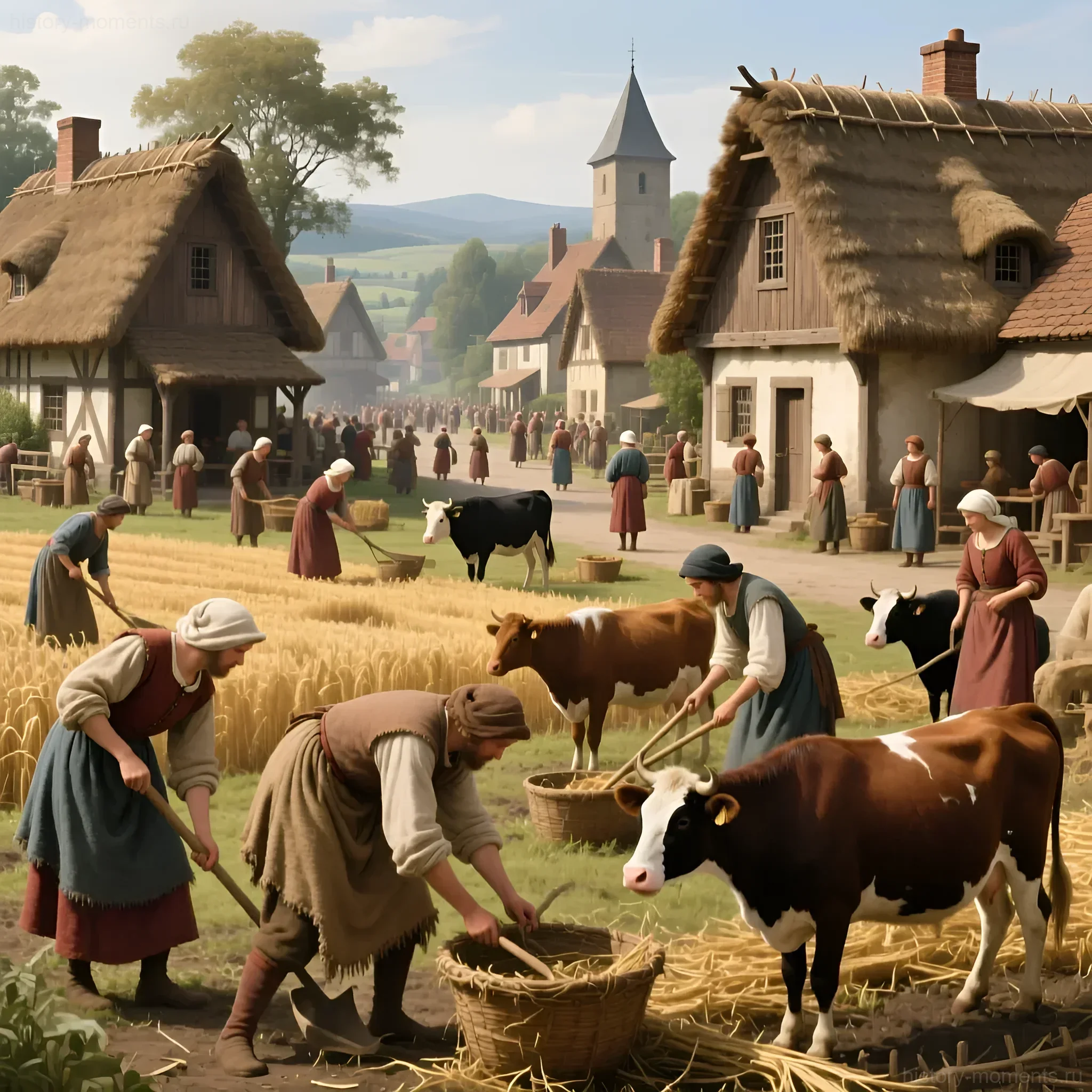
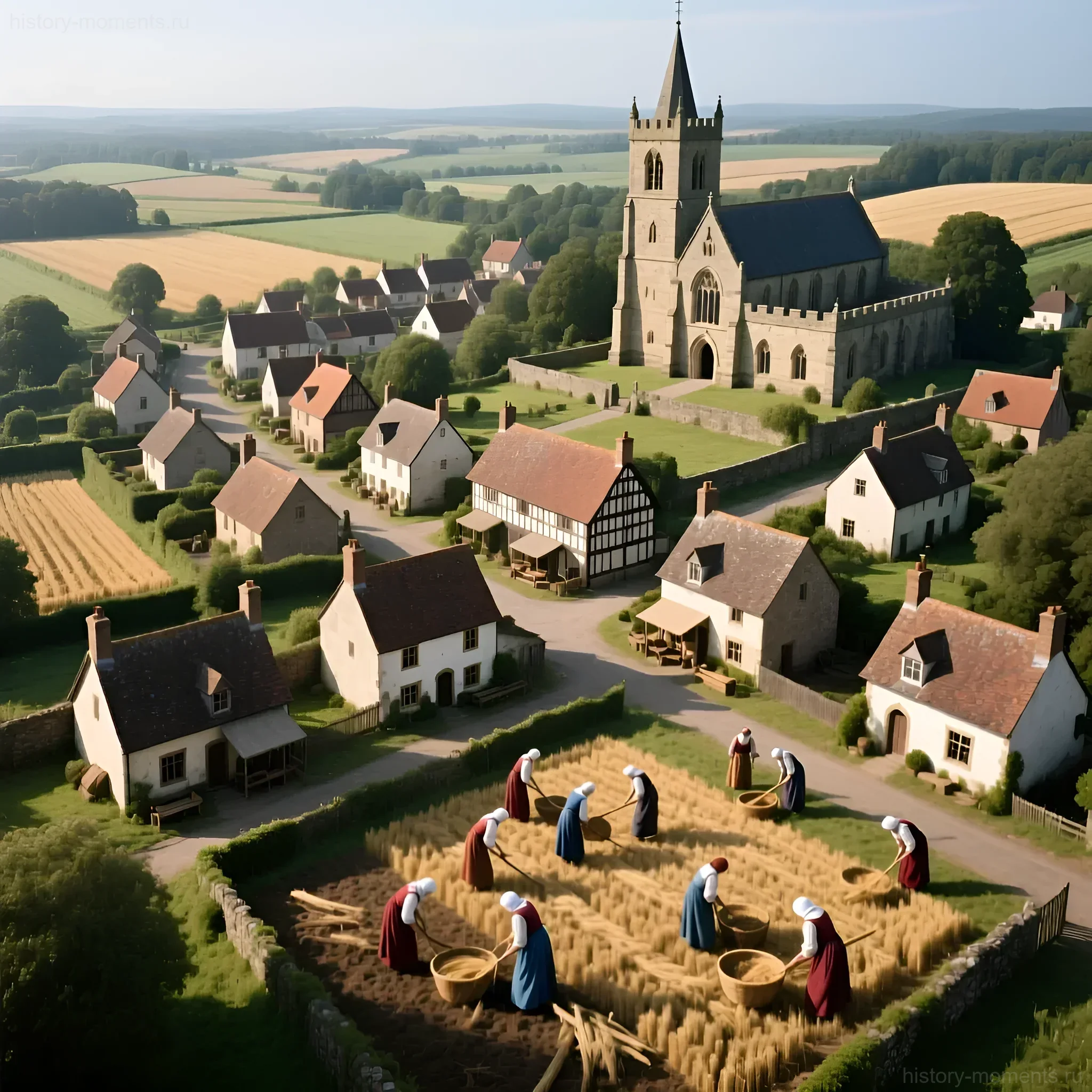
When we imagine medieval Europe, our imagination most often paints majestic castles, stone cathedrals, and knights in shining armor. However, the heart and foundation of this era beat not within the thick walls of feudal fortresses, but in quiet, smoky villages where millions of simple farmers lived. It was the peasants who constituted up to 90% of the population, and their dwelling – a modest but vitally important house – was a true reflection of their existence, their struggles, and their hopes.
The history of the peasant house is a story of survival, pragmatism, and a deep connection to the land and available resources. It was not just four walls and a roof; it was a multifunctional center of life where entire families were born, worked, slept, and died. We invite you to take a journey through the centuries to examine in detail what the medieval peasant house looked like and to understand why it was designed this way.
Life in the Middle Ages: The Epoch’s Context and Peasant Life
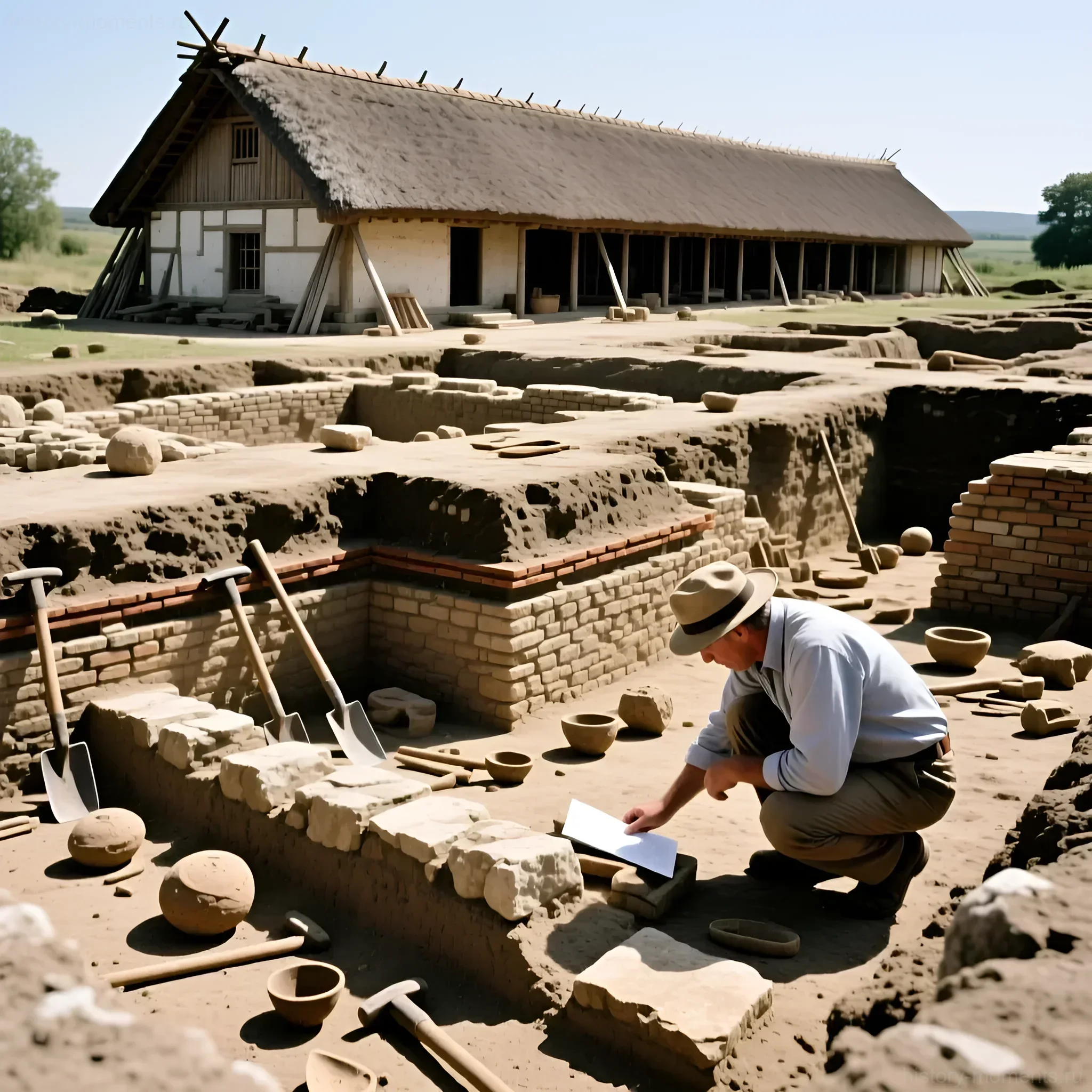
To truly appreciate the design of a peasant house, it is necessary to remember the context: we are talking about the period from approximately the 5th to the 15th century, when life was dictated by the agricultural cycle, and technology was minimal. The peasant, as a rule, did not own the land (he was either a serf or a free tenant), and his main task was to feed himself and his family, as well as to fulfill all obligations to the feudal lord – whether it was corvée labor or quitrent.
These economic and social constraints imposed severe demands on housing:
- Availability of Materials: The house had to be built from what could be found in the immediate vicinity, for free or for a minimal fee (clay, wood, straw, stone).
- Speed of Construction: The dwelling often needed to be erected quickly, with the help of the community.
- Multifunctionality: The house had to accommodate not only a large family (often including several generations) but also livestock during the cold season, as well as tools and food supplies.
Thus, the medieval peasant house was not a symbol of status, but a purely pragmatic construction, designed for maximum thermal insulation and minimal cost. It was dark, cramped, and constantly filled with smoke, but it was the only protection against the harsh European winter and the dangers of the outside world.
The Prehistory of Peasant Dwellings: From Antiquity to the Middle Ages
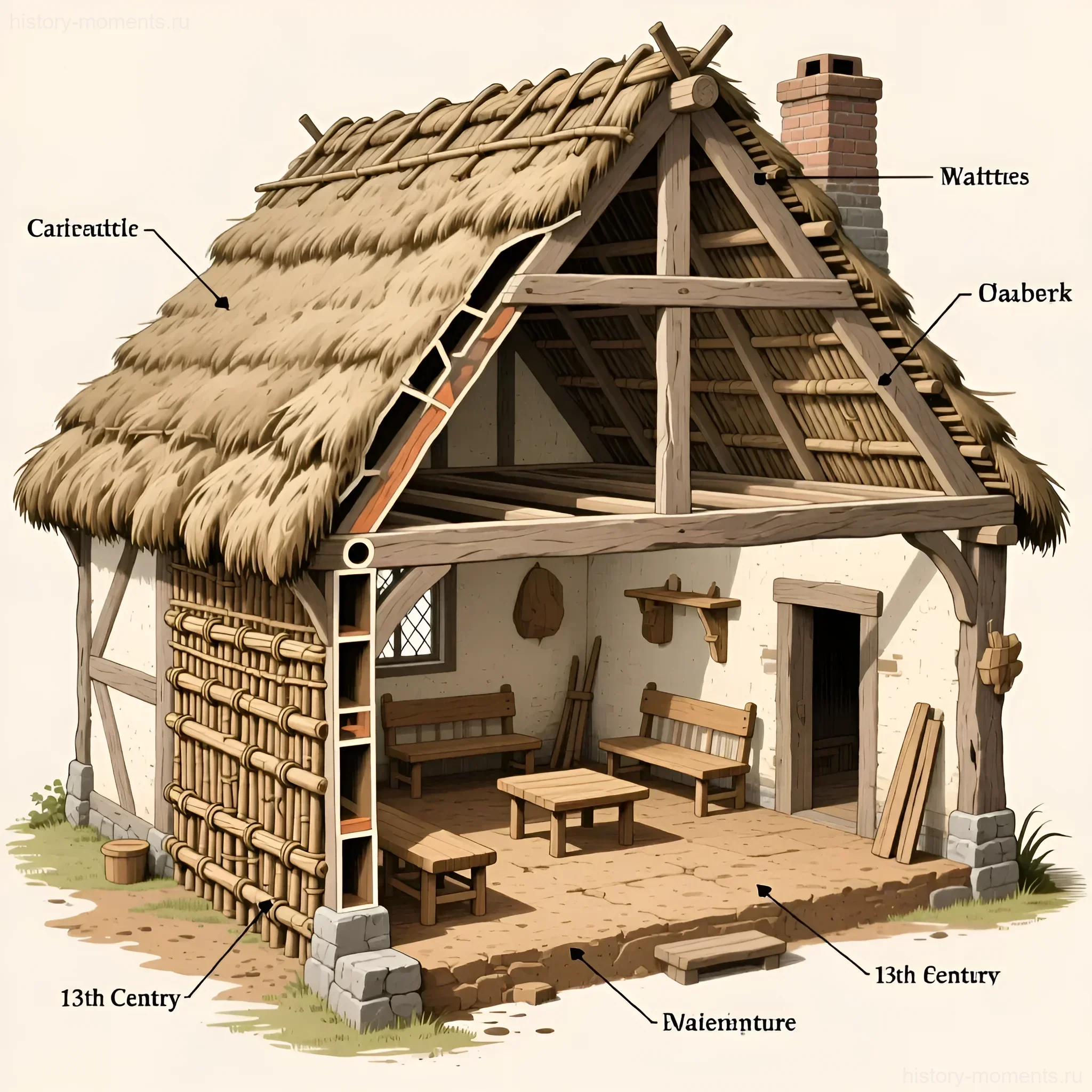
The medieval peasant house did not appear out of nowhere. It was the result of millennia of evolution, originating from the dwellings of the Celts, Germans, and late Romans. In the Early Middle Ages (6th–10th centuries), two main types of structures dominated, which formed the basis for future peasant houses.
Traces of Roman and Germanic Influence
In territories that were previously part of the Roman Empire (e.g., Gaul, Italy), some construction traditions were preserved, including the use of stone and tiles, albeit in a very simplified form. However, Germanic traditions played a greater role:
- Pit Houses (Grubenhäuser): In the 6th–8th centuries, semi-subterranean dwellings were widespread in Northern Europe – small structures partially dug into the ground (0.5–1 meter deep). This provided excellent thermal insulation. The above-ground part was a light frame covered with straw or reeds.
- Longhouse: Characteristic of the Anglo-Saxons and Scandinavians, the longhouse was a single-room structure where people and livestock lived under one roof (herders typically lived at one end, and people at the other, often separated by a partition or simply space). This arrangement allowed the heat generated by the animals to warm the living area.
By the 11th–12th centuries, with population growth and the development of agriculture, longhouses gradually began to be divided into separate structures for people and livestock, and peasant huts themselves became more standardized, although they remained overwhelmingly single-room.
What a Typical Medieval Peasant House Looked Like: Construction and Materials
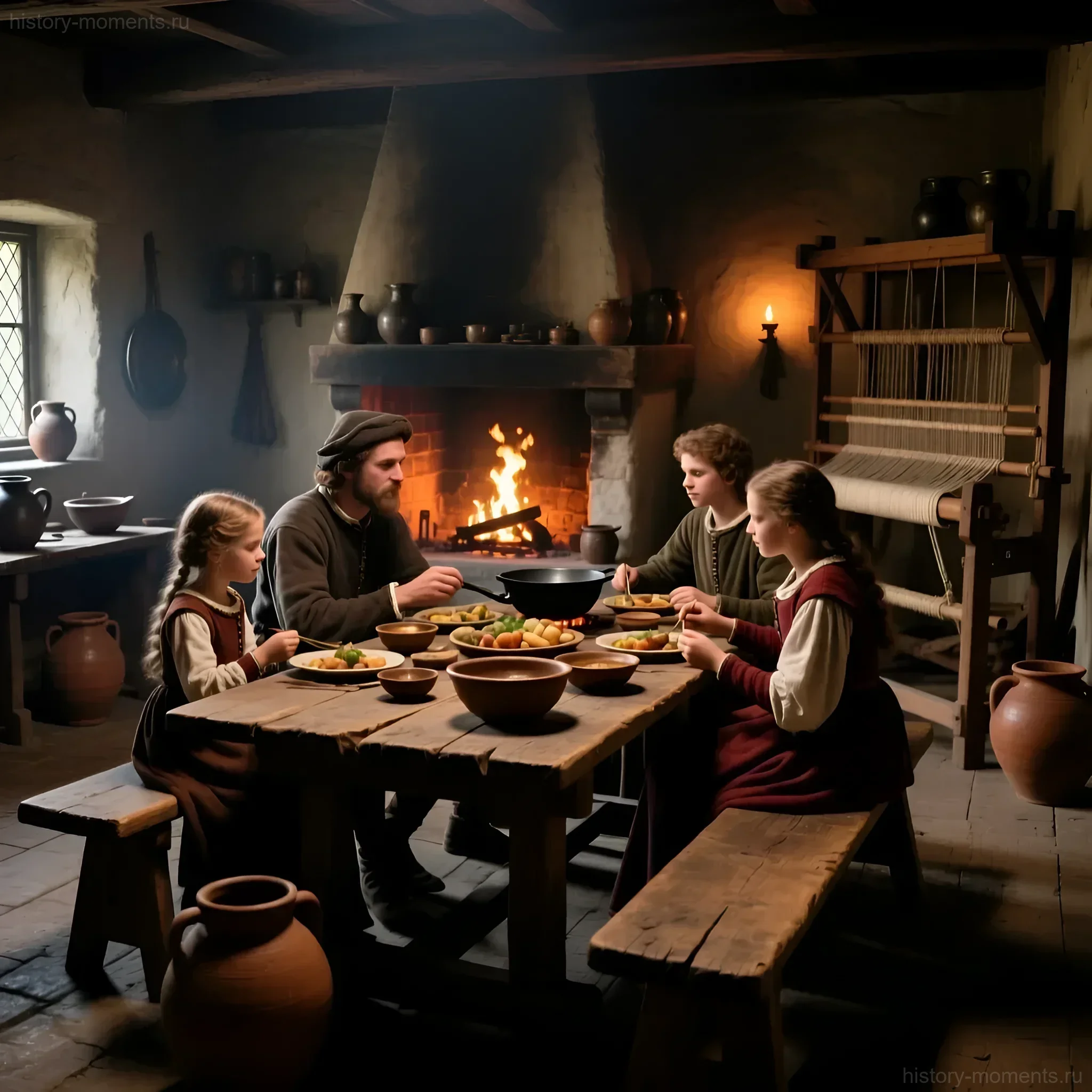
The typical medieval peasant house, especially during the High Middle Ages (11th–13th centuries), was strikingly simple. Its dimensions rarely exceeded 5 by 10 meters, and the ceiling height was minimal to conserve heat.
Foundation and Walls
A foundation as such often did not exist. The house was placed directly on the ground, or on small stone slabs, to prevent the lower logs from rotting. The main enemy of the house was dampness, so the floor was usually earthen, tamped down, and sometimes covered with a layer of clay.
The construction of the walls depended on the region:
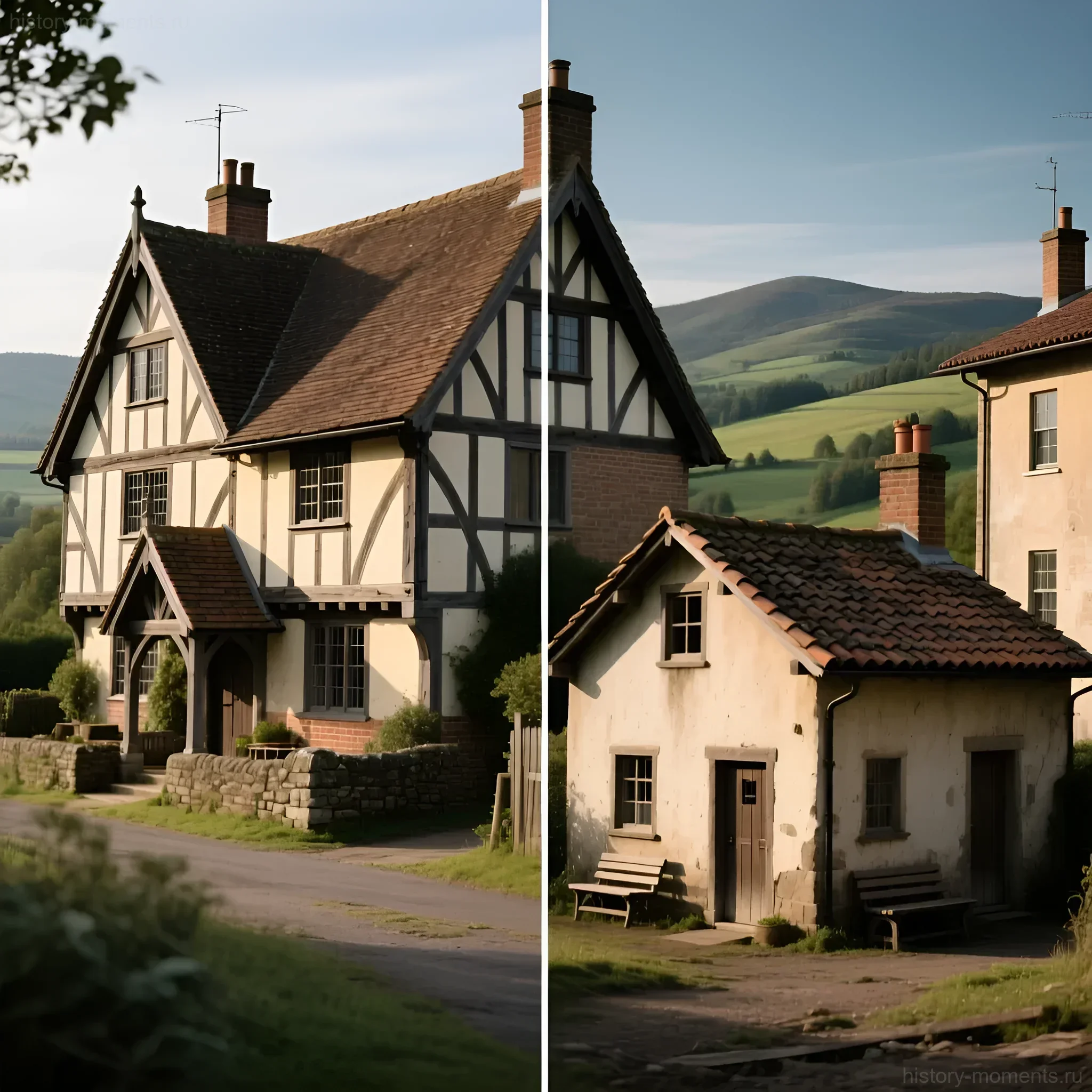
- Timber Framing (Fachwerk): Prevailed in forested regions (Germany, Northern France, England). Walls were built on a sturdy wooden frame (oak, ash), and the gaps between the beams were filled using the wattle and daub technique. This was a woven frame of branches, plastered with a mixture of clay, manure, straw, and sand. Such a wall was light, cheap, and provided decent insulation.
- Log House: Dominated in Eastern Europe and Scandinavia, where forests were abundant. Log houses were sturdier and warmer but required more material and time to build.
- Stone or Adobe Houses: In southern regions (Italy, Spain), where wood was scarce, stone or adobe bricks were used, bound with clay mortar.
Roof
The roof was perhaps the most important part of the house. It was always high, steeply gabled, so that snow and rain would easily slide off. The roofing material was straw, reeds, or, less commonly, turf (in Scandinavia and Iceland).
- Thatch Roof: The most common option. A layer of straw up to half a meter thick provided excellent insulation but was highly flammable and required annual repairs.
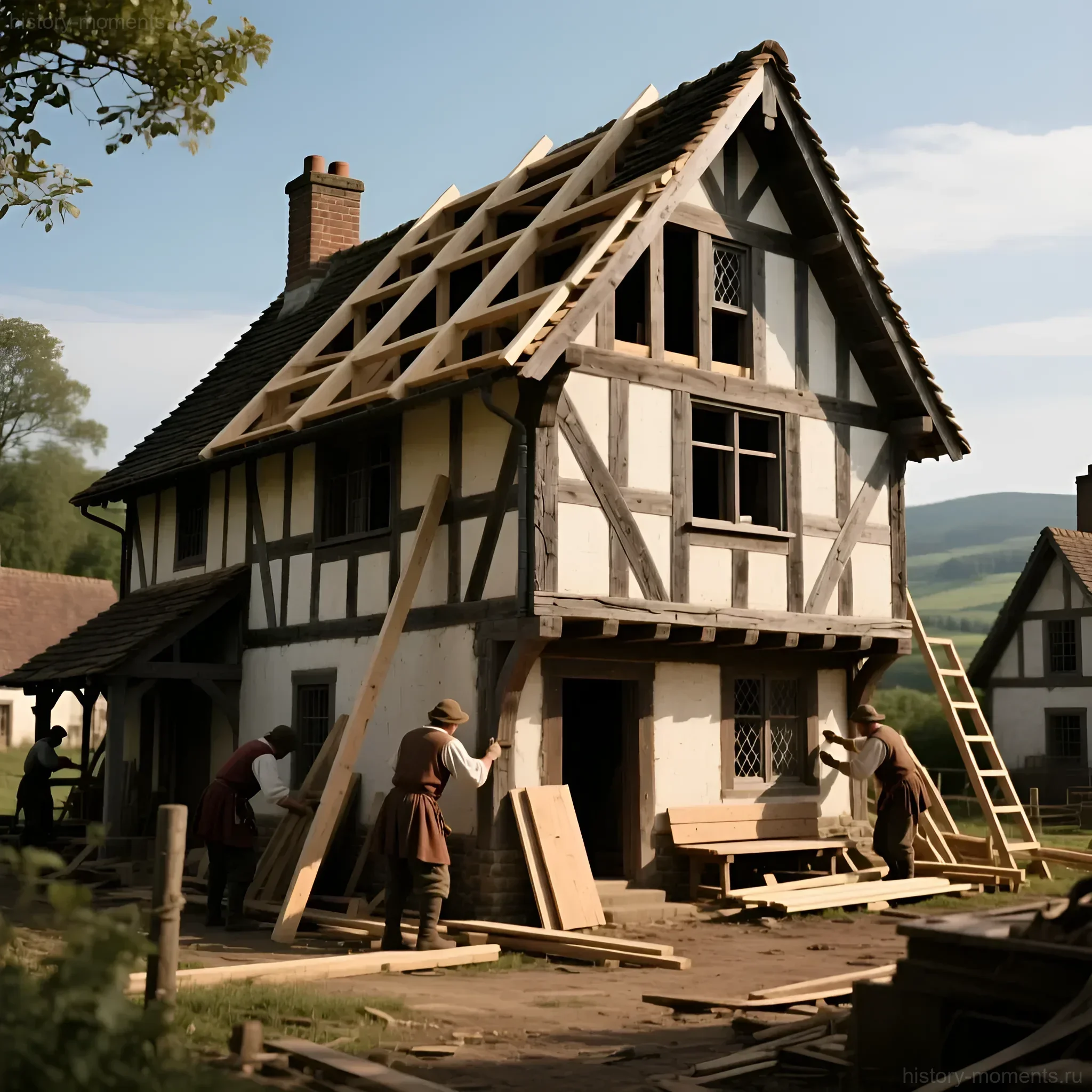
- Construction: In many early houses, the roof was supported not by walls but by internal posts. This was the so-called cruck construction, where curved beams, cut from tree trunks, formed an arch from the ground to the ridge, making the house wind-resistant.
The Interior of a Peasant House: Simplicity and Functionality
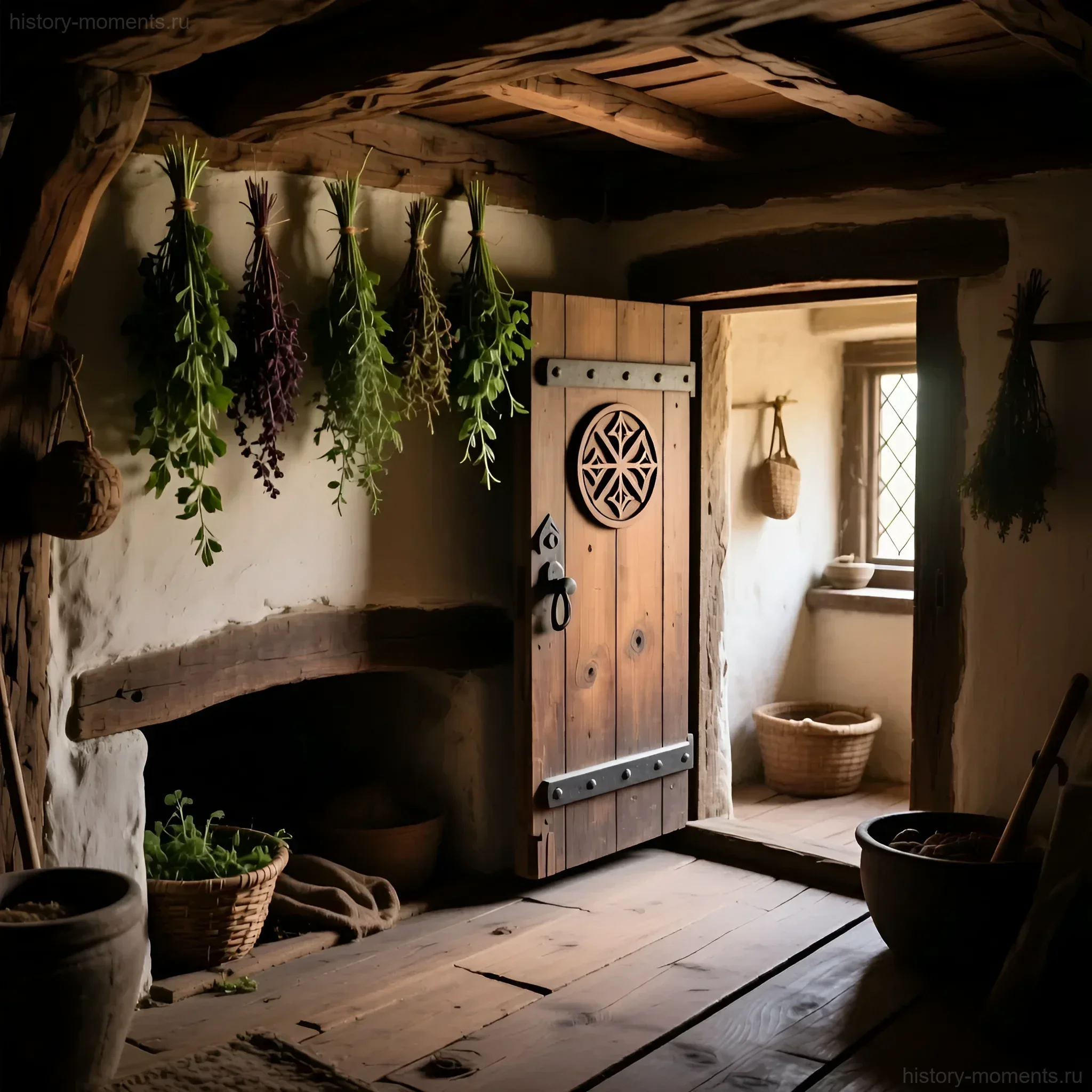
If the external appearance of the house depended on available resources, its interior was universally austere and served a single purpose: survival. Typically, the house consisted of one large room (hall), which served as a kitchen, bedroom, workshop, and dining room.
Hearth and Smoke
The hearth was the center of all life. In the Early Middle Ages and up to the 14th–15th centuries, most peasants did not have chimneys. The hearth was located directly in the center of the earthen floor, and smoke escaped through a small opening in the roof (smoke vent) or, more often, simply seeped through the straw roof or cracks in the walls.
As a result, the inside of the house was always filled with thick, acrid smoke. This was unpleasant, but it had its advantages:
- Smoke preserved food hanging under the roof (meat, fish).
- The creosote in the smoke killed insects and parasites in the thatched roof.
Only by the end of the Middle Ages, and then in the homes of wealthier peasants or yeomen (free landowners), did primitive stone stoves and chimneys begin to appear.
Furniture and Bedding
Furniture was minimal and often built-in:
- Table: Usually a simple board placed on trestles, which was removed after meals to free up space.
- Chairs: Rare. Low benches along the walls or simple stools were used.
- Bedding: Peasants slept on straw mattresses, which were placed directly on the floor or on low wooden platforms. The straw required frequent replacement due to insects and dirt. Everyone slept together to conserve heat, often covered with old skins or woolen blankets.
- Utensils: Consisted mainly of earthenware, wooden bowls, and spoons. Metalware (e.g., a cooking pot) was valuable and passed down through inheritance.
Key Factors Influencing House Appearance and Size: Region and Wealth
Although we speak of a “typical” peasant house, its appearance and interior organization depended heavily on two main factors: geographical location and the family’s financial situation.
Regional Differences
Climate and available building materials dictated the architecture:
| Region | Typical Material | Features |
|---|---|---|
| Northern Germany, England (East) | Wood, clay (Fachwerk) | Low walls, high thatched roofs, often whitewashed for protection. |
| Scandinavia, Eastern Europe | Log, turf | Sturdy log houses, often with turf roofs for maximum insulation from the cold. Houses often had an entryway or annex for storage. |
| Southern France, Italy, Spain | Stone, adobe brick | Thick walls, small windows to protect from summer heat. Flat roofs or tiled roofs (near cities). |
| Ireland, Scotland | Stone, peat | Round or oval stone huts (roundhouses), covered with reeds or peat, with very low doorways. |
Differences in Wealth
Not all peasants were equally poor. A social ladder existed within the village. The house of a wealthy peasant (e.g., a yeoman in England or a bonda in Scandinavia) could differ significantly from that of a poor person:
- Poor Person (Cotter): Lived in a tiny, often semi-subterranean hut, no more than 3×5 meters, with an earthen floor and a minimal hearth.
- Middle Peasant: A house of 5×10 meters, with a sturdier frame, possibly with a stone base to prevent wood rot. Could afford a separate annex for livestock or grain storage.
- Wealthy Peasant: Their house could be two-room (divided into living and utility areas), have a stone stove (sometimes even a primitive chimney), a wooden floor (packed or planked), and, a true luxury, small windows covered with oiled cloth or animal bladders (glass was inaccessible).
Consequences and Influence: The Evolution of the Peasant House Towards the Modern Era
By the 15th century, as the Middle Ages gave way to the Early Modern period, living standards and agricultural technologies slowly but surely improved. This led to a gradual but significant change in the architecture of peasant dwellings.
Major Architectural Breakthroughs
The evolution moved towards increased comfort, safety, and hygiene:
- The Advent of the Chimney: This was perhaps the most important change. Moving the hearth from the center of the room to the wall and building a stone chimney (initially wooden, plastered with clay, then stone) solved the smoke problem. Rooms became brighter, cleaner, and, importantly, the risk of fire decreased. This process actively began in the 14th century in wealthy homes and by the 16th century became standard for most prosperous peasants.
- Spatial Division: The single-room “hall” began to disappear. Partitions appeared, separating the sleeping area from the kitchen and work area. Wealthier peasants might even have second floors or attics for storage.
- Improved Floors: Earthen floors began to be replaced by planked or stone floors. This significantly improved hygiene and thermal insulation.
- Windows: Although glass remained expensive, mica plates began to be used, and then, in the 16th–17th centuries, small glass inserts, allowing light to enter without letting heat escape.
These changes, especially in Northern Europe, coincided with a period of active development in timber-framed architecture, where the frame became more complex and decorative. The house that in 1100 was merely a smoky hut had, by 1600, transformed into a relatively comfortable, though still modest, dwelling.
Interesting Facts About Medieval Peasant Houses: Details That Surprise
Understanding the daily life of a medieval farmer often lies in the details that seem strange or even unsanitary to us modern people. But for them, it was a practical necessity.
Co-habitation with Livestock
As we have already mentioned, in the Early and even High Middle Ages, especially in harsh climatic zones, livestock (cows, sheep) were often kept in the house, in a separate section. This was not a whim but a vital necessity:
- Warmth: The heat generated by cattle helped keep the living part of the house above freezing.
- Security: Livestock was too valuable to leave outside, where it could be stolen or attacked by wild animals.
In some regions, for example, in England, this tradition persisted until the late Middle Ages, and such houses were called houseen.
Absence of Doors
The poorest huts did not have wooden doors in the modern sense. The doorway might be closed by a thick cloth, a woven mat, or an animal skin. Wood was too valuable to be used for a door that could be easily damaged.
Annual Relocations
In some regions, especially where light wattle-and-daub construction was used, the house could be relatively temporary. Historians note that in some villages, houses might be rebuilt or even moved (albeit short distances) every 15–20 years, as wood rotted and clay walls required constant repair. This confirms that the peasant house was considered a consumable item, not a permanent capital structure, unlike castles and churches.
Historical Significance of the Peasant House: A Reflection of Social Structure and Daily Life
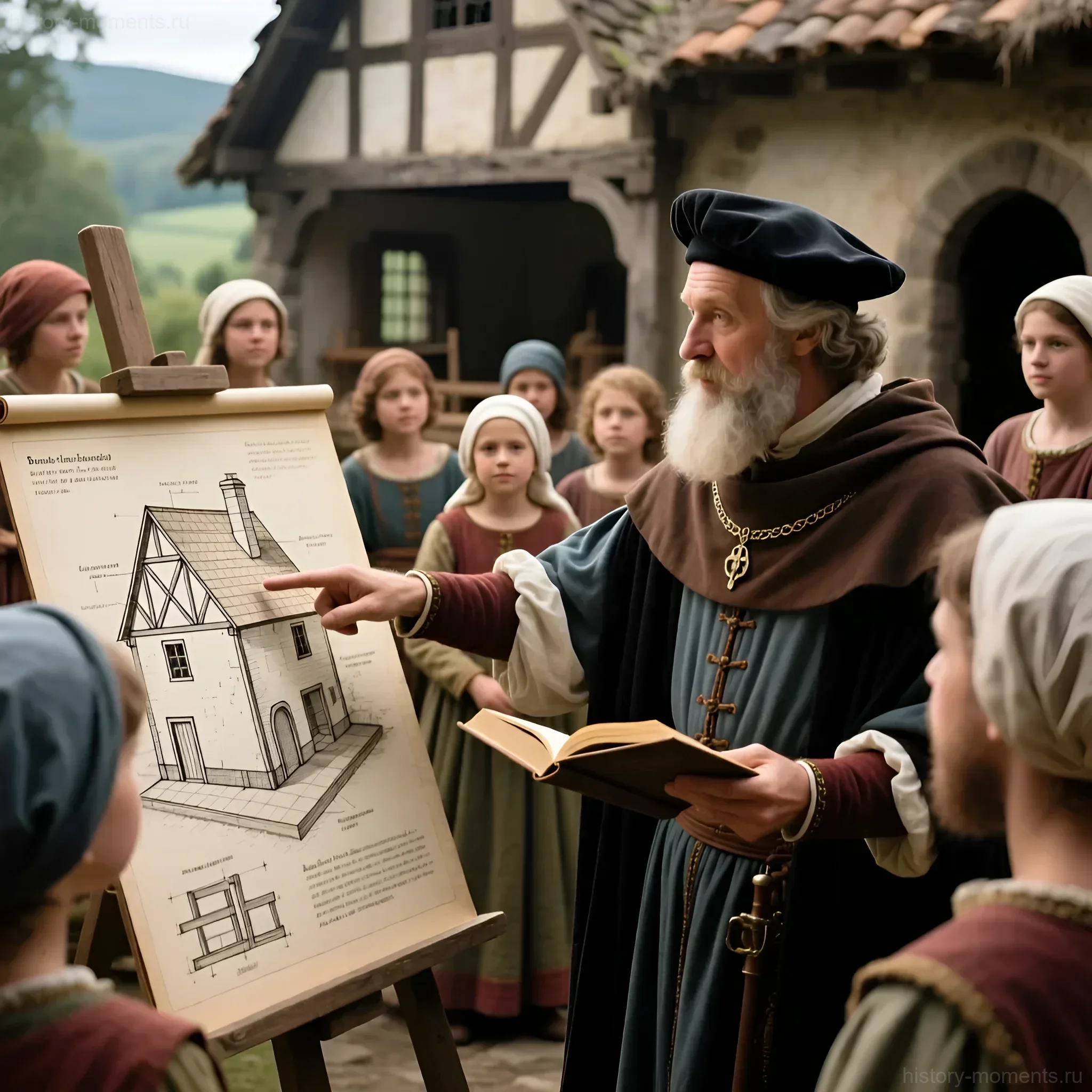
The peasant dwelling is one of the best silent witnesses to the feudal system and social hierarchy. It clearly demonstrated how few resources society was willing to allocate to its economic base.
The House as a Mirror of Dependence
Since the peasant was not the owner of the land, he had no incentive to invest significant funds and time in building durable and luxurious housing. A house built from readily available materials reflected his dependent status: at any moment, he could be evicted from the land, or he could be burdened with excessive taxes, making capital construction impractical.
Quote reflecting daily life: “The life of a peasant in his house was a life devoid of personal space. Everyone was awake, ate, and slept within earshot and sight of each other. This closeness helped strengthen family and community ties but completely excluded privacy, which is a key characteristic of the medieval mentality.”
Thus, the medieval peasant house is a monument to pragmatism, endurance, and ingenuity, born out of constant scarcity. It was dirty, dark, and smoky, but it was the family’s fortress, protecting them from hunger and cold, and it was within it that the foundations of European civilization were forged.
FAQ: Most Frequent Questions About Medieval Peasant Houses
1. Did medieval peasant houses have windows?
Yes, but they were very different from modern ones. In most houses, they were simply small openings in the walls, which were closed with wooden shutters to conserve heat, or with pieces of oiled cloth (parchment) or thin animal bladder films. They let in very little light. Glass was incredibly expensive and was almost exclusively used in churches and castles. Very poor huts might not have had windows at all.
2. How frequent were fires?
Fires were a huge and constant threat. Since houses were built very close to each other, from flammable materials (thatched roofs, wooden frames), and had an open hearth without a chimney, fire spread rapidly. Entire villages were burned to the ground. It was this danger that compelled communities to strictly regulate fire safety rules and required peasants to constantly repair their roofs.
3. What was the average lifespan of such a house?
The lifespan depended on the quality of materials and the region. Log houses, especially if they had a stone foundation, could last 50–100 years (with regular repairs). However, houses built using the wattle-and-daub technique or adobe brick rarely lasted longer than 20–30 years without major repairs, as wood and clay quickly rotted from moisture and pests.
4. Where did animals sleep if they weren’t kept in the house?
In the later Middle Ages (after the 13th century) or in wealthier communities, livestock were kept in separate structures: barns or stables. These structures were also primitive but separated the living space from the stalls, which improved hygiene. However, these annexes were usually located in close proximity to the dwelling house to facilitate animal care and ensure their safety.
5. Was the peasant house heated?
Yes, but the heating was extremely inefficient. The source of heat was an open hearth. Heat was certainly generated, but most of it escaped through the smoke vent and cracks in the roof and walls. Due to poor insulation and the absence of sealed windows, the house was only slightly warmer than the outside, and its main function was to protect from wind and precipitation. True comfort only appeared with the spread of closed stoves and chimneys in the 15th–16th centuries.