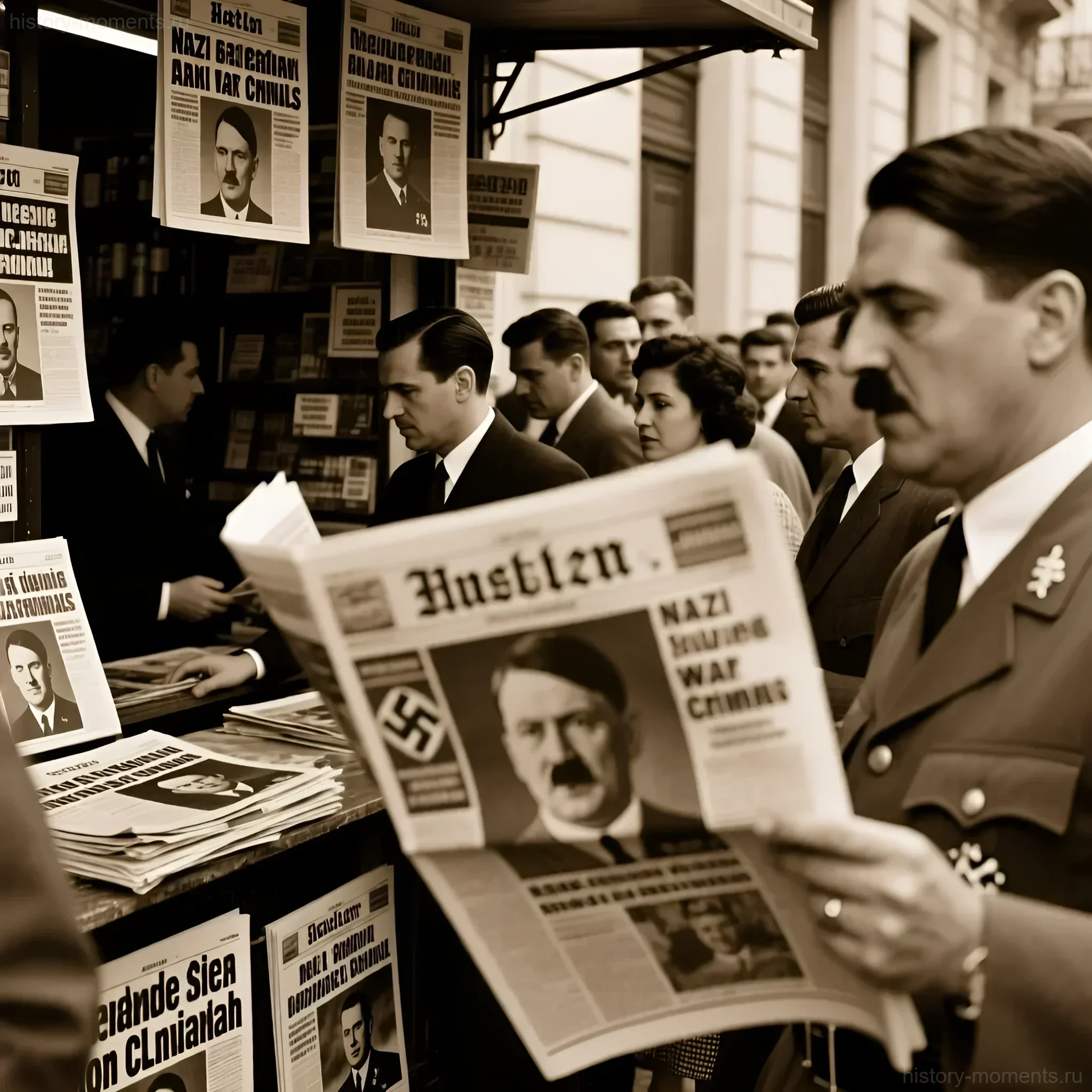
The mystery of Adolf Hitler’s final days is not just a historical episode; it’s one of the most enduring and grim legends of the 20th century. On April 30, 1945, as Berlin was engulfed in flames and Soviet troops were mere hundreds of meters from the Reich Chancellery, the Führer, according to the official version, committed suicide in his bunker. However, from the very day the world learned of his death, this version has been met with profound disbelief, giving rise to a theory that lives on and thrives to this day: Hitler did not die; he escaped. And his refuge became the distant and friendly Argentina.
The Myth of Hitler’s Escape to Argentina: Why This Theory is So Popular
Why did this particular theory gain such widespread traction, overshadowing other assumptions about the dictator’s fate? The reasons lie in post-war distrust, political realities, and, strangely enough, in the very nature of the Nazi regime, which was always shrouded in mysticism and rumors.
Firstly, the official version presented by the Soviet Union was initially contradictory. In the first days after the fall of Berlin, Marshal Zhukov publicly stated that Hitler’s fate was unknown and that he might have escaped. This sparked suspicion: if the Russians found the body, why didn’t they present irrefutable evidence immediately? This information vacuum, which existed in the early years of the Cold War, was immediately filled with rumors.
- Political Vacuum: Western allies, particularly the US and UK, distrusted Soviet data about the discovered remains. It was advantageous for them to support the theory of a living Hitler to justify continued large-scale intelligence operations and possibly divert attention from other Nazi criminals who escaped through “ratlines.”
- Psychological Factor: The idea that history’s greatest villain escaped justice and lives in luxury incredibly stirs the imagination. It’s a kind of “anti-climax” that prevents the story from truly ending.
- Prepared Ground: As we will see, Argentina was an ideal place for escape, with its strong German communities and a government sympathetic to the Nazis.
Pre-War Argentina and Nazi Sympathies: Fertile Ground for Escape
To understand why South America, and Argentina in particular, became a central point in this theory, one must look into the political history of the region in the 1930s and 1940s. Argentina was not a random choice; it was a meticulously prepared fallback option.
Starting in the 1930s, Argentina maintained close economic and cultural ties with Germany. The country had a large and influential German diaspora. By 1939, dozens of Nazi organizations were active in Buenos Aires, and the German embassy actively engaged in propaganda.
A key factor was the rule of Juan Domingo Perón. Perón, who came to power in 1946 but had influence even before that, openly sympathized with fascist regimes. His government, although formally declaring war on Germany in 1945, did so too late to be considered an enemy of the Reich. On the contrary, Perón saw German specialists and fugitive Nazis as valuable assets for his country’s development.
It was through Argentina that one of the most effective “ratlines” (Ratlines) operated – a network of routes created with the help of the Catholic Church (particularly Bishop Alois Hudal) and former SS members to transport thousands of Nazis, including notorious figures like Adolf Eichmann and Josef Mengele.
Historians who study the theory of Hitler’s escape claim that significant Reich financial assets (the so-called “Nazi Gold”) were transferred to Argentina in 1944-1945, and secret refuges were established, primarily in the remote regions of Patagonia. This preparation, known as Operation Feuerland (Fireland), according to proponents of the theory, was aimed at ensuring a comfortable old age for the top leadership, including Hitler himself and Martin Bormann.
The Führer’s Last Days in Berlin: The Official Version and Early Doubts
To understand what exactly escape theorists dispute, it’s necessary to briefly review the official version of events on April 30, 1945, as accepted by historians.
According to witness testimonies, primarily from personal adjutant Otto Günsche and bodyguard Rochus Misch (the last person to leave the bunker alive), Hitler and Eva Braun committed suicide around 3:30 PM. Eva Braun took cyanide, while Hitler either also took cyanide or (more likely) shot himself in the right temple with a Walther PPK pistol.
The bodies were carried out to the Reich Chancellery garden, doused with gasoline, and burned. The aim was to prevent desecration of the remains, similar to what happened with Mussolini’s body.
Why Did Doubts Arise?
Soviet troops discovered the remains on May 2nd and 4th. Two heavily burned corpses were found, which, after forensic examination (based primarily on unique dental prosthetics identified by dental assistant Käthe Hausermann), were identified as the remains of Hitler and Braun. However, Soviet authorities did not provide this evidence to the West, keeping it secret for decades. This gave rise to the following questions:
- Incomplete Burning: The bodies were burned, but not completely. Why didn’t the witnesses use more gasoline if the main goal was complete destruction? Escape theorists suggest that the bodies of doubles were burned.
- Contradictory Testimonies: Witnesses from Hitler’s inner circle who were captured by the Allies gave conflicting accounts regarding the method of suicide (bullet or poison). This led some researchers to suggest they were confused or instructed to conceal the escape.
- The Search for Martin Bormann: The fact that Martin Bormann, Hitler’s personal secretary, disappeared from the bunker on May 1st and his fate remained unknown for decades (until his remains were discovered in 1972) strengthened the belief that the top leadership could have successfully escaped.
Key Figures Associated with the Escape Theory: From Former SS Officers to Journalists
The escape theory did not arise on its own; it was shaped and fueled by specific individuals who either claimed to have witnessed the escape or dedicated their lives to “debunking” the official version.
Proponents of the Theory
1. Abel Basti: An Argentine journalist and perhaps the most famous modern proponent of the theory. In his book “Hitler in Argentina” (2006), he claimed that Hitler and Eva Braun flew to Spain and then reached the coast of Patagonia by submarine (U-530 or U-977). Basti stated that Hitler lived under an alias in several refuges in Argentina, including the Inalco Hotel, until his death in the 1960s.
2. Gerrard Williams & Simon Dunstan: Authors of the book “Grey Wolf: The Escape of Adolf Hitler” (2011), which served as the basis for a popular TV series. They claim that Hitler and Eva Braun lived long lives, had two daughters, and died in Argentina in 1962. Their theory is based on numerous (but often contradictory) testimonies from South American residents.
3. Harry Cooper: An American researcher who focuses on the role of submarines. He claims that submarines U-530 and U-977, which surrendered to Argentine authorities months after Germany’s capitulation, transported not only crews but also high-ranking passengers, including the Führer himself, to South America.
Dubious Witnesses
Many testimonies cited by escape proponents come from individuals who were either involved in Nazi activities or financially benefited from their stories:
- “The German Gardener”: The most famous testimony is the story of a man who allegedly served as a gardener at a villa in Patagonia and recognized an aging Hitler among its residents.
- Magda de Fontanelle: A woman who claimed her family hosted Hitler in Argentina after his arrival. Her testimony formed the basis for many modern books.
“Evidence” of Escape: Testimonies, Documents, and Investigations
What specific points do escape theorists present as irrefutable proof that the Führer did not perish in the bunker but sailed overseas?
1. Submarines U-530 and U-977
The surrender of these two submarines in Mar del Plata, Argentina, in July and August 1945, two to three months after Germany’s capitulation, is a cornerstone of the theory. Officially, the crews claimed they were at the limit of their range and surrendered to avoid capture by Allied forces in Europe.
However, according to conspiracy theorists, these submarines delivered valuable cargo: gold, documents, and, most importantly, Hitler and Eva Braun. The Argentine authorities allegedly allowed the passengers to disembark secretly before arresting the crews.
Fact: Both American and Argentine investigations found no evidence that these submarines carried high-ranking passengers. The submarines’ logs were thoroughly examined, and the crews, under torture (by the Allies), did not confirm Hitler’s presence.
2. Declassified FBI Files
In 2014, after the declassification of some FBI archives, conspiracy theorists received a new impetus. These documents contained dozens of reports about Hitler’s possible whereabouts in Argentina, Chile, and Colombia, dating from 1945-1947. One of the most famous reports, dated 1945, described Hitler arriving in Argentina by submarine and living on a ranch in the Andes.
Fact: The FBI received thousands of reports about Hitler, most of which were based on rumors, wishful thinking, or fraud attempts. FBI Director J. Edgar Hoover wrote in a 1947 memo that investigations were initiated “only to ascertain that none of the reports had any basis in fact,” but ultimately, they all proved to be unsubstantiated.
3. Inalco Hotel and Villa in Necochea
Escape proponents often point to specific refuge locations in Patagonia. The Inalco Hotel, located on the shore of Lake Nahuel Huapi, was built in a German style and owned by someone connected to the Nazis. It is claimed that Hitler and Braun spent several years there. Another alleged refuge is a villa in Necochea, where a “sick German gentleman” was rumored to reside.
Fact: While these locations were indeed centers for Nazi refugees (as was Bariloche), no direct documentary or physical evidence linking them to Hitler has been found. Investigations conducted at these sites yielded no results.
Counterarguments and Scientific Research: What Modern Historical Science Says

Despite the fascination with the escape theory, modern historical and forensic science unequivocally rejects it, based on the totality of evidence that became available after the fall of the Soviet Union.
1. Dental Examination
The strongest evidence of Hitler’s death is his teeth. In 1945, Soviet experts, based on the testimonies of dental assistant Käthe Hausermann and dental technician Fritz Echtmann, identified jaw fragments as belonging to Hitler. The prosthetics and bridges were unique and complex, making forgery highly unlikely.
In 2017, French forensic pathologists led by Dr. Philippe Charlier gained unprecedented access to bone fragments stored in Moscow (including parts of the jaw and skull with a bullet exit wound). Their findings, published in 2018, confirmed:
- The teeth matched all of Hitler’s dental records.
- Traces of cyanide and combustion products were found on the teeth, but no traces of meat or animal products were detected (consistent with Hitler’s known vegetarian diet).
- The skull fragment showed damage consistent with a gunshot wound to the head, aligning with the final suicide version.
2. Access to Soviet Archives
After 1991, historians worldwide gained broader access to Soviet documents concerning “Operation Myth” (the Soviet investigation into Hitler’s death). These documents confirmed that Soviet authorities had indeed discovered and identified the remains, although they kept this fact secret for political reasons (Stalin personally ordered that definitive proof not be disclosed to keep the West on edge).
3. Lack of Escape Logistics
Hitler’s escape from besieged Berlin would have required an extremely complex logistical operation: an aircraft capable of taking off from an improvised runway under artillery fire, and complete security guarantees along the route through Spain (which was under Allied pressure). In the final days of the Reich, such a level of coordination was practically impossible. Furthermore, Hitler suffered from Parkinson’s disease and was in a severe psychological state, making a long submarine journey highly improbable.
Argentina After the War: Nazi Refugees and “Protection”

While the theory of Hitler’s own escape doesn’t hold up to scientific scrutiny, Argentina did play a crucial role in the fate of thousands of Nazi criminals. It is this fact that lends plausibility to the theory of Hitler’s escape.
Perón’s government, starting in 1946, actively facilitated the immigration of Nazis. This was part of a state policy known as “Operation Ratline.”
Who Escaped to Argentina?
- Adolf Eichmann: The chief architect of the Holocaust, he fled in 1950 and lived in Buenos Aires until his abduction by Israeli Mossad agents in 1960.
- Josef Mengele: The “Angel of Death” from Auschwitz, he lived in Argentina and Paraguay, evading justice.
- Erich Priebke: An SS captain involved in the Ardeatine massacre, he lived in Bariloche until his arrest in 1994.
- Martin Bormann: Although his remains were found in Berlin, it was long believed that he also escaped to South America, and his search was actively conducted in Argentina and Paraguay.
The scale of this migration and the apparent assistance provided by the Argentine authorities created an ideal backdrop for rumors: if thousands of less significant Nazis could escape, why not the Führer himself?
Historical Significance of the Theory and Its Influence on Popular Culture: From Books to Films
The “Hitler in Argentina” theory has long transcended its status as a mere historical rumor and has become a full-fledged cultural phenomenon. It serves not only for entertainment but also fulfills an important function in the collective consciousness.
The Phenomenon of the “Ever-Living Enemy”
Hitler’s escape allows one to avoid the unpleasant thought that such a person could simply disappear into the fires of history. The idea that he is alive and possibly plotting new conspiracies maintains a sense of eternal struggle. This is a psychological mechanism that makes evil tangible.
Influence on Media
This topic has become fertile ground for literature and cinema. Among the most notable examples:
- Books: One of the first to popularize this idea was British historian Hugh Thomas (in the 1970s), although he later retracted his assumptions. Modern bestsellers like “Grey Wolf” (Gerrard Williams & Simon Dunstan) actively promote the Argentine version.
- Film and TV: The escape theory forms the basis of many feature films and documentary series, such as “Hunting Hitler” (History Channel). These shows, despite criticism for sensationalism and lack of rigorous evidence, maintain public interest in the topic.
- Video Games: The image of Hitler escaping to South America is often used in alternate history and fantasy plots.
Thus, even though refuted by science, the theory of Hitler’s escape remains an important part of popular culture, symbolizing an unresolved trauma and the yearning for a definitive answer to the question of the fate of the 20th century’s greatest tyrant.
Frequently Asked Questions about Hitler’s Escape to Argentina (FAQ)
We have compiled answers to the most common questions regarding the theory that Adolf Hitler escaped to South America.
1. Is there any real evidence that Hitler was in Argentina?
No. All “evidence” consists of either unconfirmed rumors and testimonies (often contradictory) or interpretations of declassified FBI documents, which themselves are merely reports of rumors. All scientific and forensic data, including dental and DNA analysis, confirm that Hitler died in Berlin in 1945.
2. What happened to Hitler’s body?
Hitler’s remains were discovered by Soviet troops, identified by his teeth, and reburied multiple times. In 1970, on the orders of KGB chief Yuri Andropov, the remains were finally cremated and scattered over the Elbe River to prevent the creation of a pilgrimage site.
3. If Hitler didn’t escape, why did so many Nazis end up in South America?
The political climate in Argentina (and other countries like Paraguay and Brazil), as well as the active work of the “Ratline” network, funded by the SS and supported by some members of the Catholic Church, allowed thousands of former Nazis to evade justice. They were of interest to local governments as specialists and anti-communists.
4. Is it true that the FBI investigated Hitler’s escape?
Yes, the FBI investigated hundreds of reports about Hitler in South America, but none led to the discovery of the dictator himself. These investigations were closed as unpromising.
Interesting Facts and Little-Known Details About the Search for Hitler
To conclude our investigation, it’s worth mentioning a few little-known but significant details related to the search for and identification of Adolf Hitler’s remains.
- DNA Analysis: In 2009, American archaeologist Nick Bellantoni gained access to a skull fragment stored in Moscow, believed to belong to Hitler. DNA analysis revealed that the fragment belonged to an unknown woman between the ages of 20 and 40. This fact sparked a new wave of speculation, but Russian authorities clarified that this skull fragment was found separately from the main remains and was never officially recognized as part of Hitler’s body. The jaw fragment, which is the primary evidence, has not undergone DNA analysis, but its authenticity is confirmed by dental records.
- Stalin’s Order: Joseph Stalin personally controlled information about Hitler’s death. He was obsessed with the idea that Hitler might have escaped. It was on his orders that in May 1945, it was announced that the Führer’s fate was unknown, which gave rise to all subsequent conspiracy theories.
- Operation “Theodorich”: In 1944, the Nazis did develop plans to evacuate top leadership and finances to South America, particularly Paraguay and Argentina. These plans, known as “Operation Theodorich,” concerned the creation of a “Fourth Reich” far from Europe, but did not guarantee Hitler’s own escape.
- Rochus Misch: Hitler’s personal bodyguard and the last living witness to the events in the bunker, Rochus Misch, insisted until his death in 2013 that Hitler committed suicide and that he personally saw his dead body. His testimony is considered the most reliable among the bunker witnesses.
Thus, despite decades of rumors, captivating books, and thrilling documentaries, historical science remains unwavering: Adolf Hitler did not escape to Argentina. He met his end in a concrete bunker beneath the ruins of Berlin, and his death has been confirmed by irrefutable scientific data.