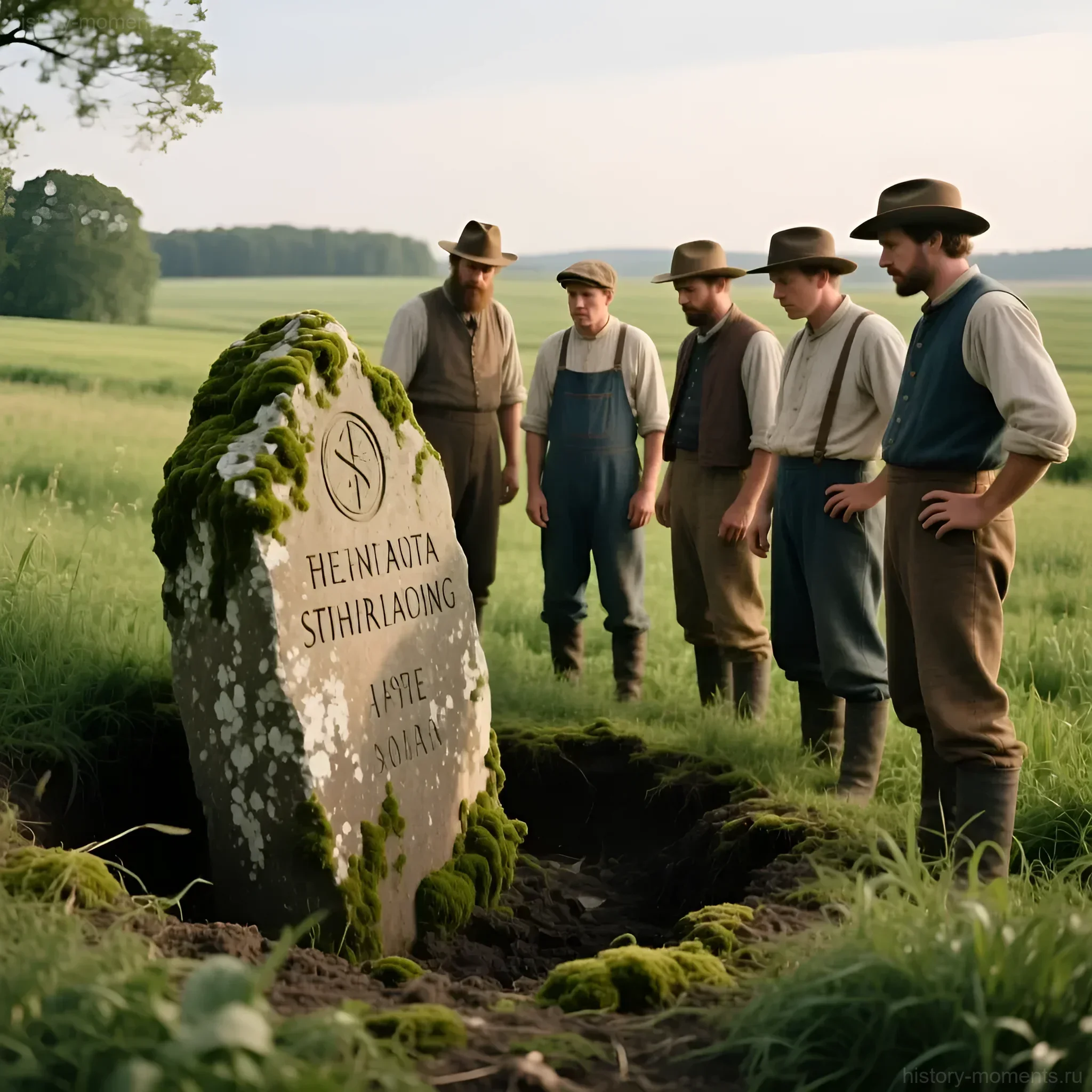
Imagine this: you’re digging in the soil on a farm deep in North America, thousands of miles from the ocean, and you find something that instantly challenges everything you thought you knew about the history of the New World. It’s not just an artifact; it’s a message carved in stone nearly seven centuries ago, claiming that Europeans reached modern-day Minnesota 130 years before Christopher Columbus was even born. This is the story of the Kensington Runestone – one of the most fascinating and controversial mysteries in American archaeology.
The Kensington Runestone: An Introduction to America’s Viking Saga
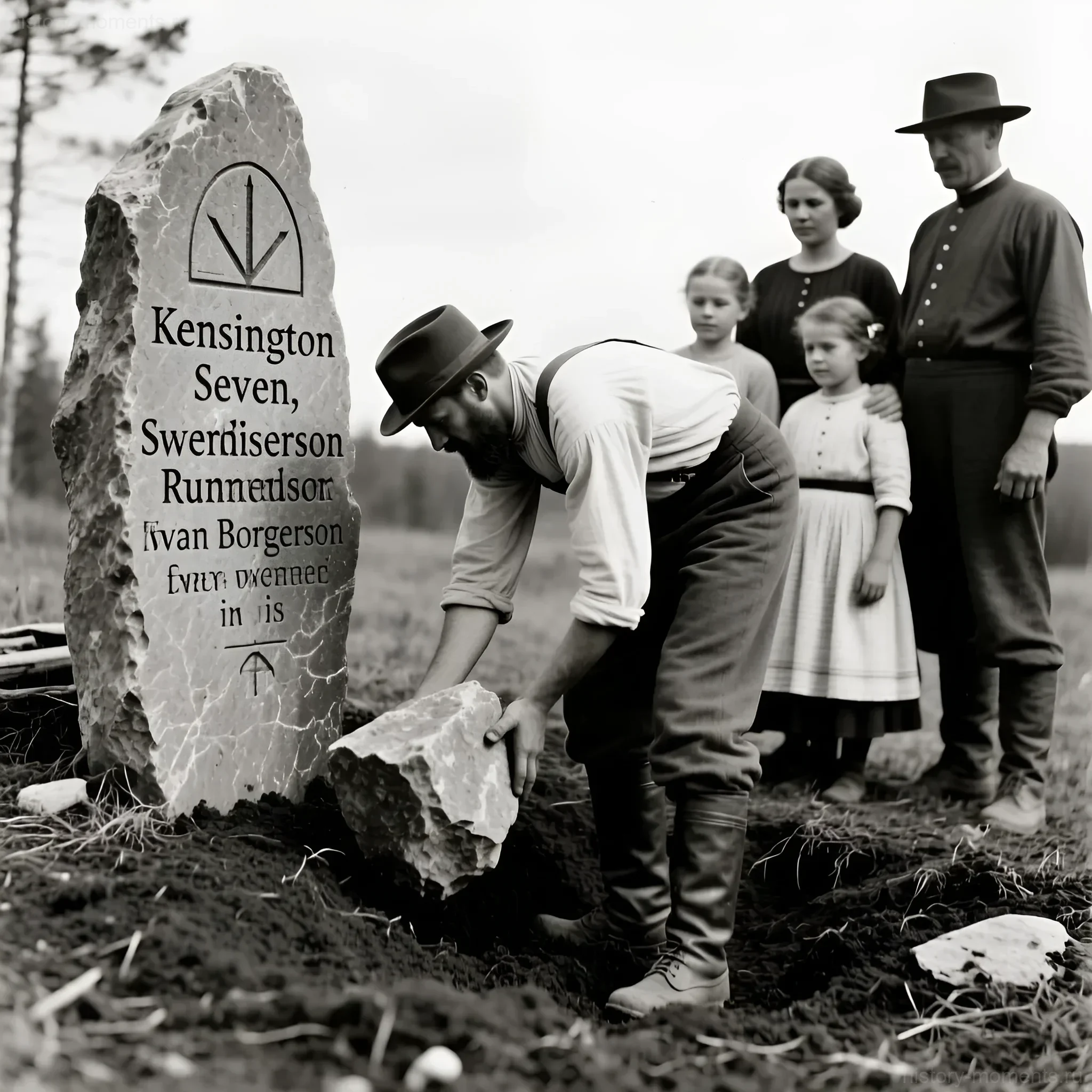
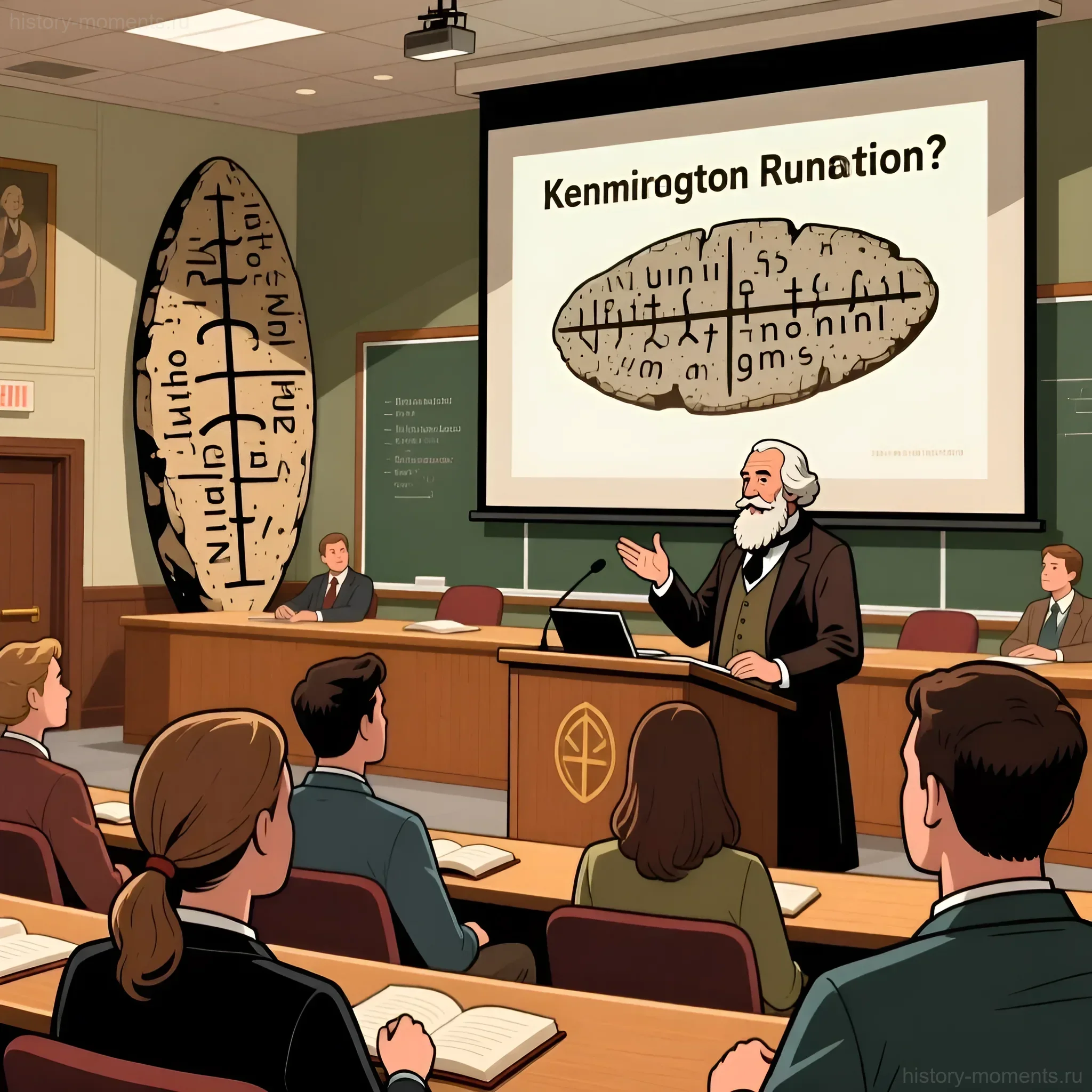
Summer of 1898. The small town of Kensington in Douglas County, Minnesota. A farmer of Swedish origin named Olof Ohman was clearing a rocky patch of land, preparing for planting. While working on the roots of an old aspen tree, he and his son discovered a flat, heavy stone embedded in the ground. This stone, about 30 inches (76 cm) long and weighing over 200 pounds (90 kg), was covered in strange, angular inscriptions. They were runes.
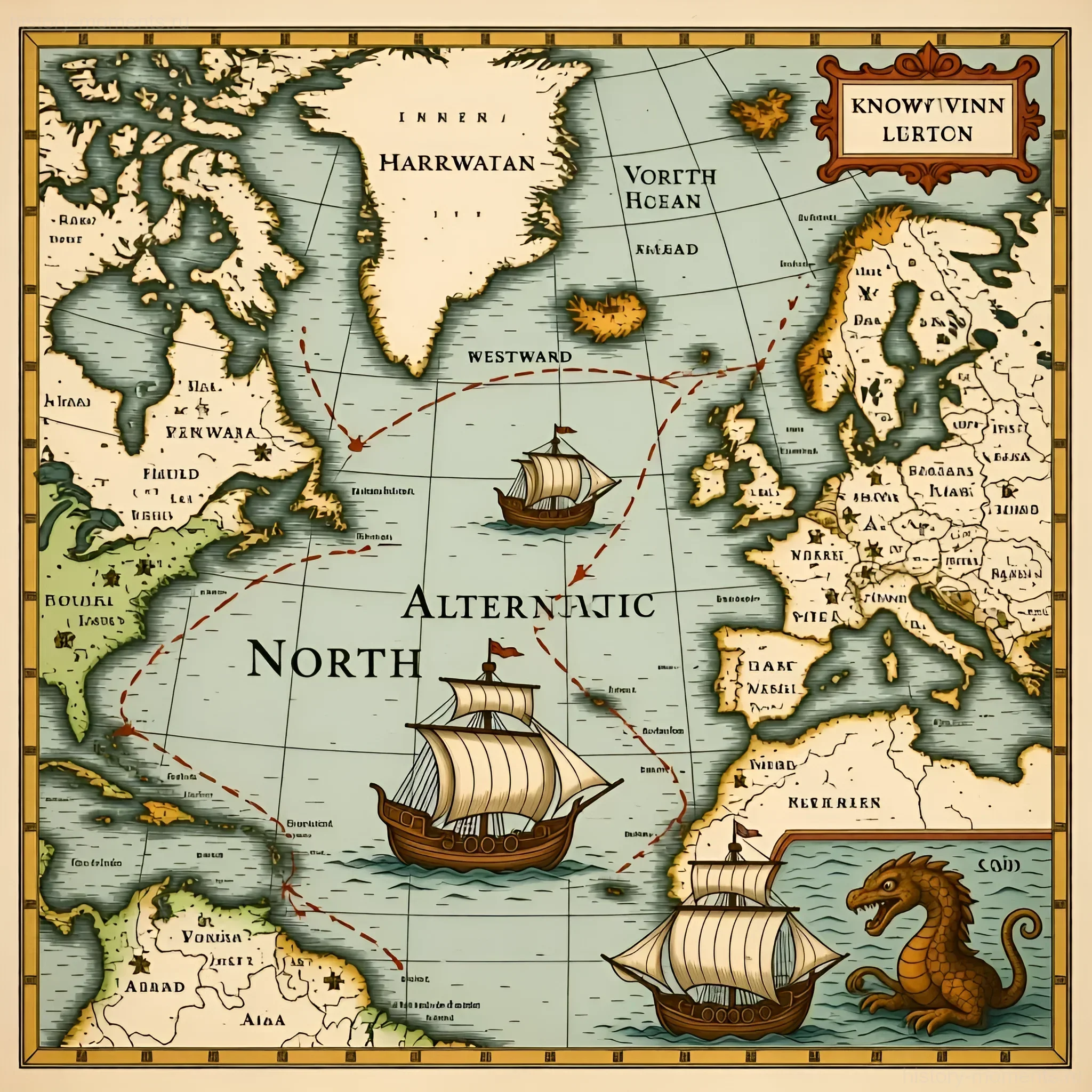
The Kensington Runestone, as it came to be known, bore an inscription that, if true, radically altered the timeline of America’s discovery. The inscription is dated 1362 and tells of a tragic expedition of Scandinavian explorers. If the stone’s authenticity is confirmed, it proves that Norwegian and Swedish travelers not only landed on the North American coast, as was the case in Vinland, but managed to penetrate deep into the continent, into the heart of the Midwest, long before the Age of Discovery.
From the moment of its discovery to this day, the stone has been the subject of fierce debate among linguists, historians, and archaeologists. For some, it is irrefutable proof of the feat of medieval Scandinavians; for others, it is a carefully crafted hoax, possibly created by Ohman himself or his neighbors. But before delving into the debates, it’s essential to understand what America was like before Columbus and before Ohman.
America Before Columbus: The Context of the Era and the Prerequisites for Viking Voyages
By the time Columbus reached the Caribbean in 1492, Scandinavians already had a long, albeit intermittent, history of contact with North America. The Vinland Sagas – the Saga of Erik the Red and the Saga of the Greenlanders – vividly describe the voyages of Leif Erikson, son of Erik the Red, around 1000 AD.
These sagas were long considered myths until a landmark discovery in the 1960s. Norwegian archaeologists Helge Ingstad and Anne Stine Ingstad discovered a settlement at L’Anse aux Meadows on the island of Newfoundland. Radiocarbon dating and Scandinavian architecture confirmed: this was Vinland, or at least its outpost, dating back to the 11th century. This proved that Vikings were indeed the first Europeans in the New World.
However, a vast historical gap exists between the 11th century (L’Anse aux Meadows) and 1362 (the date on the Kensington stone). By the 14th century, Viking settlements in Greenland, which served as a staging ground for further expeditions, were in deep crisis. The climate was worsening (the Little Ice Age was setting in), trade routes were disrupted, and contact with Norway became increasingly rare. Why would a small group of Scandinavians venture not just across the Atlantic, but thousands of miles inland through territories inhabited by Native American tribes? Proponents of the stone’s authenticity suggest that this expedition might have been related to the disappearance or search for lost Greenlandic colonists.
The Discovery of the Stone: The Story of its Find and Initial Investigations
Olof Ohman, who found the stone, was not a scholar. He was a farmer, and the runes were just strange symbols to him. The story of the discovery, as told by Ohman, became part of American folklore. The stone was found entangled in the roots of an old aspen tree, and it was claimed that the roots had wrapped around it so tightly that it must have taken many decades, seemingly confirming the antiquity of the find.
Initially, Ohman showed the stone to his neighbors. Since most of the residents of Kensington were Scandinavian immigrants, they immediately recognized the runes but couldn’t read them, as the inscription contained a mix of archaic and later runic forms, as well as unusual abbreviations.
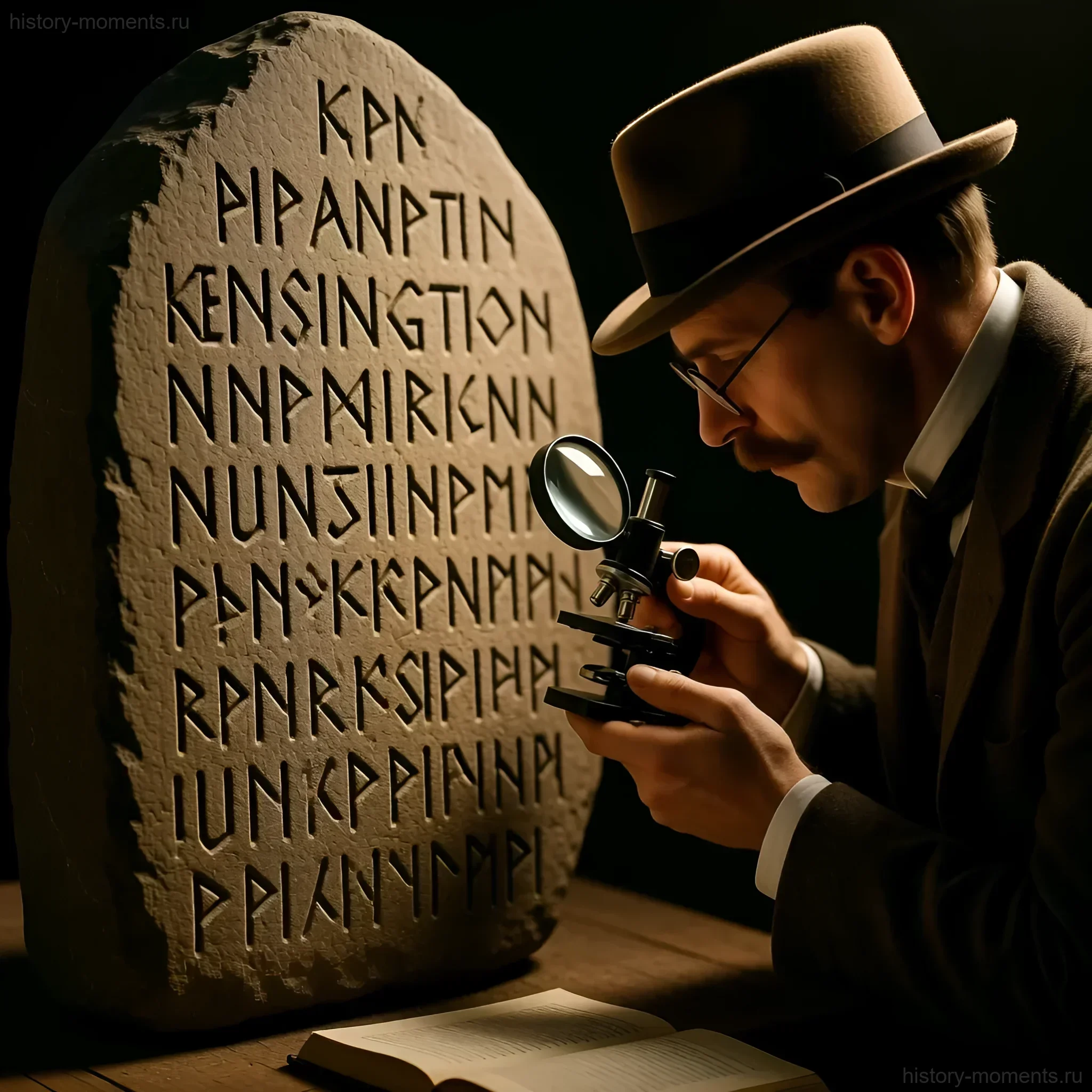
Soon, news of the discovery reached the state capital. The stone was sent to the University of Minnesota, where it was first examined by Professor Olaus J. Breda, a specialist in Scandinavian languages. Breda’s reaction was unequivocal and extremely negative: a hoax. He declared that the runes contained grammatical errors and their form was anachronistic – meaning they mixed runes used in the 11th century with runes that only appeared in the 14th century, and even with runes that didn’t exist until the end of the Middle Ages. In 1907, the stone was returned to a disappointed Ohman, who then used it as a step to his shed.
However, the story didn’t end there. In 1907, the stone attracted the attention of Hjalmar R. Holand, a Norwegian-American amateur historian. Holand became the stone’s main and most ardent defender, dedicating over 40 years of his life to its study and promotion. It was thanks to his efforts that the Kensington Runestone became an international sensation.
Deciphering the Runes: What the Kensington Stone Inscriptions Say
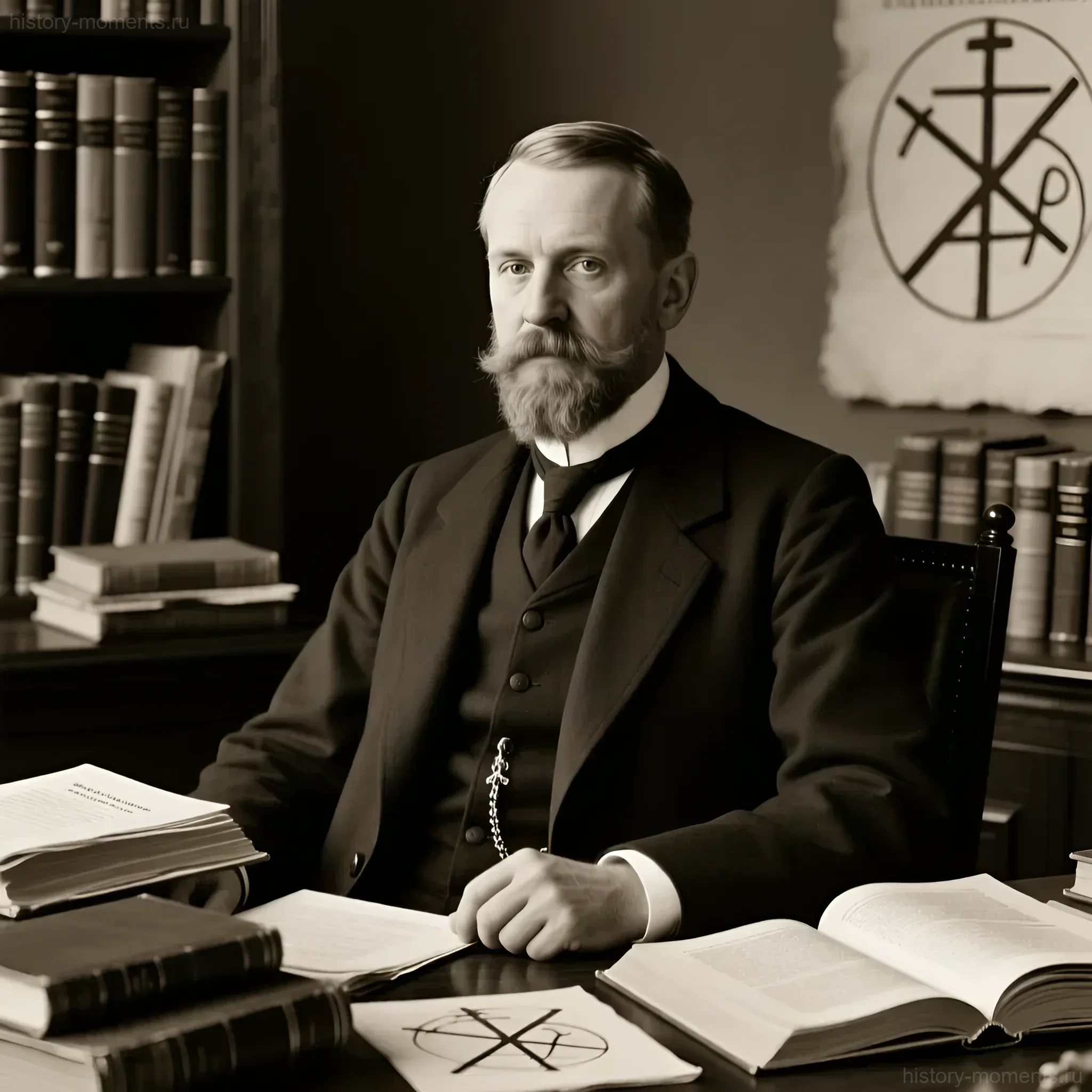
The inscription on the stone consists of two parts: the main text on the front and the date on the side. It is this text that has sparked heated debate. It is written in a mix of Swedish and Norwegian and, if translated into modern Russian, sounds approximately like this:
Main Text (Translation):
- “8 Goths and 22 Norwegians on an exploring expedition from Vinland to the west. We have a camp by two rocky islands, one day’s journey north of this stone. We went out fishing one day. When we returned, we found 10 of our men red with blood and dead. A.V.M. Save us from evil.”
Date and Note (Side):
- “We have 10 men by the sea to watch our ship, 14 days’ journey from this island. Year 1362.”
The inscription contains several critically important details that either confirm or refute its authenticity:
- The Date (1362): This date is ideal for proponents, as it coincides with a period when Swedish King Magnus Eriksson was known to be interested in the fate of the Greenlandic colonies. Theoretically, this expedition could have been part of a larger mission.
- “8 Goths and 22 Norwegians”: The mention of “Goths” (Swedes) and Norwegians reflects the political situation in 14th-century Scandinavia, when Sweden and Norway were united under one crown (the Kalmar Union was formed later, but political unification was already brewing).
- A.V.M.: These initials likely stand for Ave Virgo Maria (Hail, Virgin Mary) – a common prayer invocation of the time. However, the use of an abbreviation in this form on a runestone raises questions for skeptics.
Key Figures in the Debate: Scholars, Skeptics, and Proponents of Authenticity
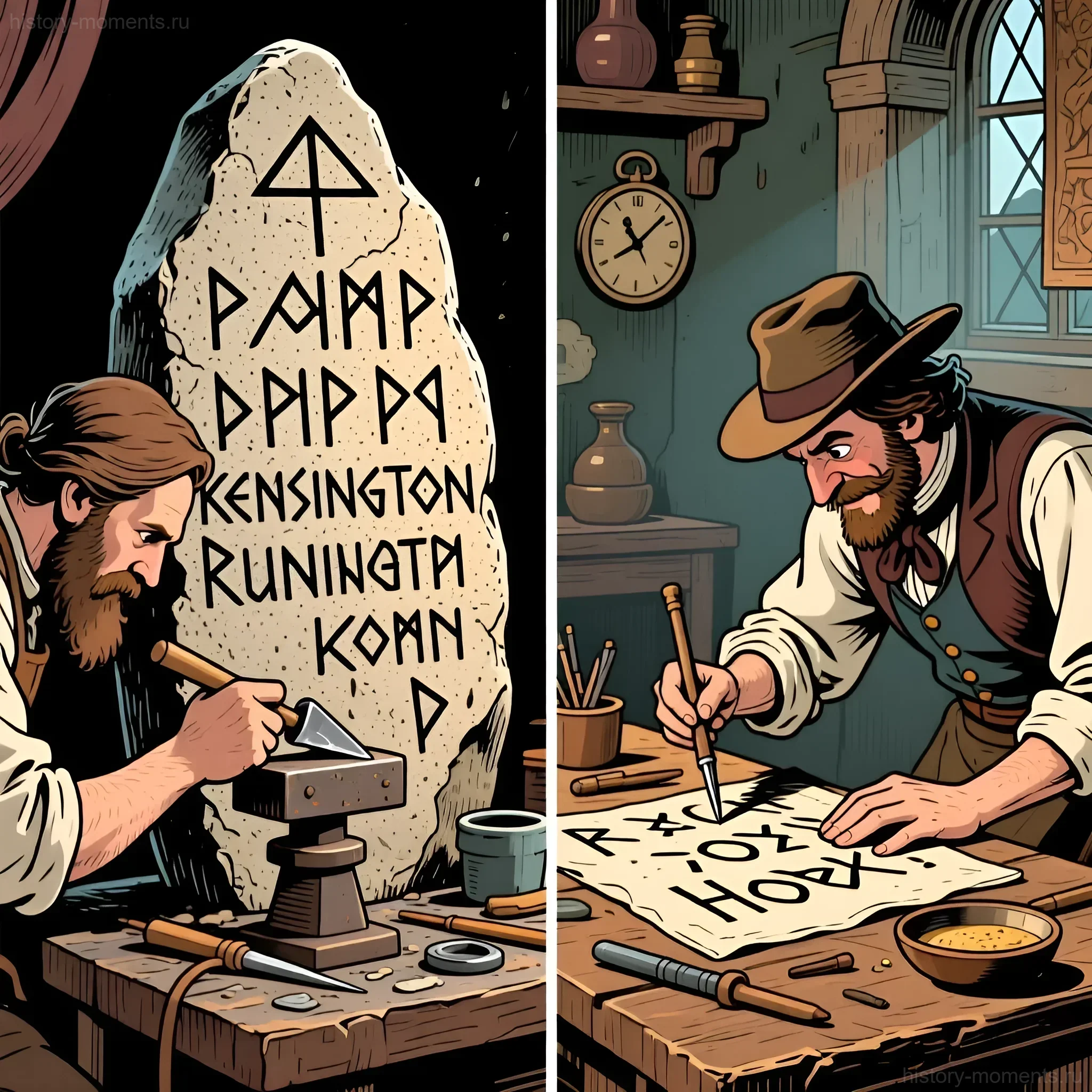
The debates surrounding the Kensington stone were not quiet academic discussions; they were outright wars between historians and linguists, spanning a century. At the center of this storm were several key figures.
Hjalmar R. Holand: The Tireless Defender
Holand (1870–1963) was undoubtedly the stone’s most important promoter. He bought the stone from Ohman and dedicated his life to proving its authenticity. Holand traveled the world, gathering evidence, comparing maps, and attempting to explain the linguistic anomalies. He argued that the strange runes were the result of using Hälsinge runes, a simplified alphabet popular in Sweden in the 14th century, as well as dialectal influences.
Robert A. Hall Jr.: The Linguistic Skeptic
A linguistics professor from Cornell University, Hall, in the mid-20th century, became one of the stone’s main critics. His analysis was ruthless. Hall argued that the language and grammar of the inscription did not match Norwegian or Swedish dialects of 1362, but remarkably coincided with the Swedish-Norwegian dialect spoken in Minnesota in the late 19th century. He pointed to words like “ogh” (and), which were not used in medieval Scandinavia but were common among immigrants.
Erik Wahlgren: The Chief Exposer
Swedish-American scholar Erik Wahlgren, in 1958, published the book The Kensington Stone: A Scandinavian-American Hoax, which cemented the stone’s reputation as a forgery for a long time. Wahlgren meticulously analyzed all the linguistic errors and pointed to suspicious circumstances related to Olof Ohman, who, although poorly educated, had access to books on runology published in Scandinavia shortly before 1898.
Richard Nielsen: The Modern Proponent
In recent decades, the pendulum has swung back towards authenticity thanks to the work of researchers like Richard Nielsen. He focused on analyzing runes that Hall and Wahlgren considered errors. Nielsen argued that these “errors” are actually extremely rare but documented forms of medieval runes used in remote parts of Scandinavia, and that forging them in 1898 would have been practically impossible.
Authenticity or Hoax: Arguments ‘For’ and ‘Against’ the Runestone
The dispute over the Kensington stone’s authenticity is not just a linguistic analysis; it’s a battle for national pride and historical heritage. Let’s examine the key evidence presented by both sides.
Arguments for Authenticity
- Root Dating: Initial testimonies from Ohman and his neighbors indicated that the aspen roots entwined around the stone were very old. While not scientific proof, it suggests the stone had been in its location for a very long time.
- Unique Runes: Proponents, like Richard Nielsen, point to the use of runes with dots (e.g., runes for ‘J’ and ‘G’) and specific ligatures (joined runes). They argue these forms were too rare and specialized for a poorly educated farmer from Minnesota in 1898 to know.
- Weather Patina: Geological studies in the early 21st century showed that the patina (a thin layer of oxidation) on the runes, as well as on the sides of the stone, has an age estimated to be several hundred years. If the runes were carved in 1898, the patina would be lighter and less pronounced.
- Geographical Correspondences: Holand discovered so-called “mooring stones” with holes in the vicinity of Kensington, which he believed were used by Scandinavians to secure boats when traveling on Minnesota’s numerous lakes.
Arguments Against Authenticity (Hoax)
- Linguistic Anachronisms: This is the strongest argument for skeptics. The text contains words and grammatical structures that precisely match 19th-century Swedish, not 14th-century. For example, the runes used to denote vowels do not conform to medieval standards but resemble those found in runology textbooks available in the late 1800s.
- Suspicious “Errors”: Some words are written in a way that a person poorly acquainted with medieval runic script but attempting to imitate it might mistakenly reproduce them. For instance, the use of the symbol A.V.M., which looks like an attempt to create an “ancient” abbreviation.
- Ohman’s Motivation: Although Olof Ohman always denied his involvement in the forgery, skeptics point out that he, as a Swedish immigrant, might have had a motive – to glorify Scandinavian heritage in America during a period when immigrants were trying to establish themselves in a new land. Rumors circulated that Ohman confessed to the hoax on his deathbed, though this was never confirmed.
- Mixture of Alphabets: The inscription is a “runic mishmash,” mixing runes from the Elder Futhark (archaic), Younger Futhark (medieval), and even cryptographic runes. Scholars believe a medieval scribe, even in isolation, would hardly use such an inconsistent alphabet.
Impact on Historical Science: How the Kensington Stone Changed Our Understanding of America’s Discovery
Regardless of the final verdict on its authenticity, the Kensington Runestone has had a profound, albeit controversial, impact on historical science and public consciousness.
Firstly, it forced historians and archaeologists to take the idea of transcontinental contacts in the Middle Ages more seriously. Before 1898, the notion that Vikings could have penetrated so far south and west was unthinkable. The stone, even being controversial, spurred more active searches for other potential Norse artifacts in North America.
Secondly, the stone became a cornerstone of identity for Scandinavian immigrants in the Midwest. For Minnesota, home to a large number of Norwegian and Swedish descendants, the stone became a symbol that their ancestors were here “first.” This fostered tourism and the creation of cultural centers dedicated to Norwegian heritage.
Thirdly, it is a classic example of how history and archaeology grapple with pseudoscience. The debates around the stone have become a textbook on dating methods, linguistic analysis, and the importance of separating historical facts from desired myths. The Kensington stone constantly reminds us how difficult it is to prove or disprove a historical event when the only evidence is a single, highly controversial artifact.
Professor Hjalmar Holand, despite the ridicule of the academic community, succeeded in having the stone accepted by the public. In 1948, the Kensington Runestone was exhibited at the Smithsonian Institution (Washington, D.C.), albeit with a caveat about its questionable authenticity, but this was an acknowledgment of its cultural significance.
The Kensington Runestones: Interesting Facts and Mysteries That Remain Unsolved
Beyond the main debates about linguistics and dating, several lesser-known but equally intriguing facts are associated with the Kensington stone.
The Mystery of the “14 Days’ Journey”
The inscription states that 10 men were left “by the sea to watch our ship, 14 days’ journey from this island.” If we assume the expedition traveled by water (via the Great Lakes and river system), then 14 days’ journey by boat from Kensington (Minnesota) could theoretically lead to Hudson Bay or even the East Coast. Skeptics consider this distance too great and unrealistic for a medieval expedition, while proponents see it as confirmation that the Scandinavians used a complex system of inland waterways.
The “Secret Mission” Theory
Some proponents, including scholar Paul Henriksen, propose a theory that the 1362 expedition was not just a group of traders or explorers but part of an official mission sent by King Magnus Eriksson. In 1355, the king allegedly sent an expedition led by Paul Knutson to search for the lost Greenlandic colonists. This mission, if it existed, could explain why the Scandinavians ventured so far west.
Current Location
Today, the Kensington Runestone is housed and exhibited at the Runestone Museum in Alexandria, Minnesota. It is the region’s main tourist attraction. The museum strives to present both sides of the dispute – proponents and skeptics – allowing visitors to decide for themselves whether the stone is authentic.
The Mystery of the “Rune Knife”
Olof Ohman claimed that near the stone, though not directly beneath it, he also found an old metal object resembling a knife or awl. This object was lost, but some researchers believe it might have been used to carve the runes. If this object had been found and dated to the 14th century, it would have been incredible proof of authenticity. But, alas, it disappeared without a trace.
Kensington Runestones: Frequently Asked Questions (FAQ)
We have compiled the most frequent questions our readers have about this amazing historical mystery.
1. Why can’t scientists definitively date the stone?
The problem is that a runestone is just a stone. Unlike organic materials (wood, bone), it cannot be dated using radiocarbon analysis. Dating must rely on indirect evidence:
- Patina: The rate of patina (oxidative layer) formation depends on many variables (humidity, temperature, soil composition) and provides only approximate estimates.
- Linguistics: Linguistic analysis is a science based on comparison. If the language of the inscription contains a mix of dialects and eras, it makes precise dating by language virtually impossible and only increases suspicions of forgery.
2. What is the probability that medieval Scandinavians could have actually reached Minnesota?
Geographically, it is possible. Scandinavians could have sailed from Greenland, through Labrador, entered Hudson Bay, and then used the river and lake system. However, this would have required immense resources, inland navigation skills, and successful contact (or avoidance) with numerous Native American tribes. From a logistical standpoint, it is extremely unlikely, but not impossible.
3. Is the Kensington Runestone considered an official historical fact?
No. The overwhelming majority of professional linguists and runologists worldwide (including specialists from Scandinavia) consider the Kensington stone a forgery created in the late 19th century. Nevertheless, it is recognized as an important cultural and historical artifact for the American Midwest and continues to be actively studied by proponents of its authenticity.
4. Who is Olof Ohman and why is he often suspected of forgery?
Olof Ohman (1860–1954) was the Swedish immigrant who found the stone. He is suspected because linguistic analysis of the runes shows a match with the language of Swedish immigrants of his time. Furthermore, Ohman, though a poorly educated farmer, was known for his love of reading and may have had access to books containing runic samples. However, no direct, irrefutable proof of his guilt has ever been presented. The Ohman family still categorically denies his involvement in the hoax.
5. If the stone is authentic, why haven’t more Scandinavian artifacts been found in Minnesota?
This is another strong argument for skeptics. If there was an expedition of 30 people in Minnesota in 1362, one would expect to find metal tools, weapons, or remnants of a camp. The discovered “mooring stones” lack reliable dating and could simply be holes drilled by 19th-century farmers. The absence of other corroborating artifacts remains one of the main stumbling blocks for proponents of authenticity.