History preserves many places that were not just buildings, but true symbols of eras, stages on which great dramas of the human spirit unfolded. Such a place was the Hippodrome of Constantinople – a colossal structure located in the very heart of the Byzantine Empire. You can imagine it as the largest stadium of its time, but this would only be the tip of the iceberg of its true significance. The Hippodrome was not just an arena for sporting competitions; it was the pulsating center of the social, political, and even religious life of the great capital, a point where representatives of all strata of society, from the emperor to the simple craftsman, gathered to watch, participate, and, at times, make history.
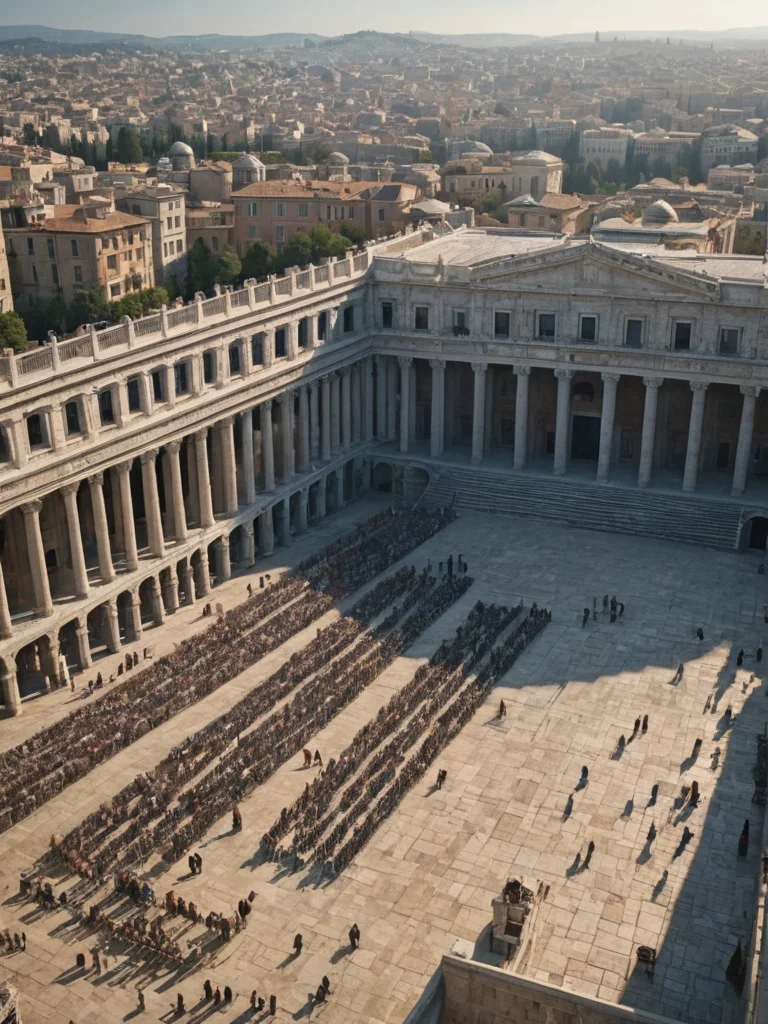
Emerging at the dawn of Constantinople, under the patronage of Emperor Constantine the Great himself, the Hippodrome was intended to be the eastern analogue of the Roman circuses, surpassing them in its splendor. Historians believe its construction began under Septimius Severus, but it was Constantine who transformed it into the grand architectural ensemble that served Byzantium for over a thousand years. It was a truly monumental structure: its length reached an astonishing 450 meters, and its width about 120 meters. The stands, located along the long sides, could accommodate, according to various estimates, from 60 to 100 thousand spectators, making it one of the largest structures of its kind in the ancient and medieval world. In the center of the arena was the spina – a barrier around which chariots competed, adorned with numerous statues and obelisks brought from the farthest corners of the empire, symbolizing the power and grandeur of Rome, transferred to the East.
The Hippodrome was an integral part of the architectural ensemble that formed the central square of the city. It was located directly next to the Great Palace of the Emperor and the Hagia Sophia, emphasizing its central position in state and spiritual life. This proximity was not accidental; it symbolized the inseparable connection between imperial power, the church, and the people, expressed through public spectacles. For the emperors, the Hippodrome was not just a place of entertainment, but a powerful tool for legitimizing their rule, a platform for demonstrating their greatness, generosity, and justice. Here they could directly communicate with their subjects, listen to their requests and complaints, and observe the mood of the masses. It was a unique arena where the delicate thread of popular sentiment intertwined with the rigid fabric of imperial policy, creating a unique atmosphere full of intrigue, passion, and sudden twists of fate.
Grand Spectacles: What Made Hippodrome Races a Cult Event?
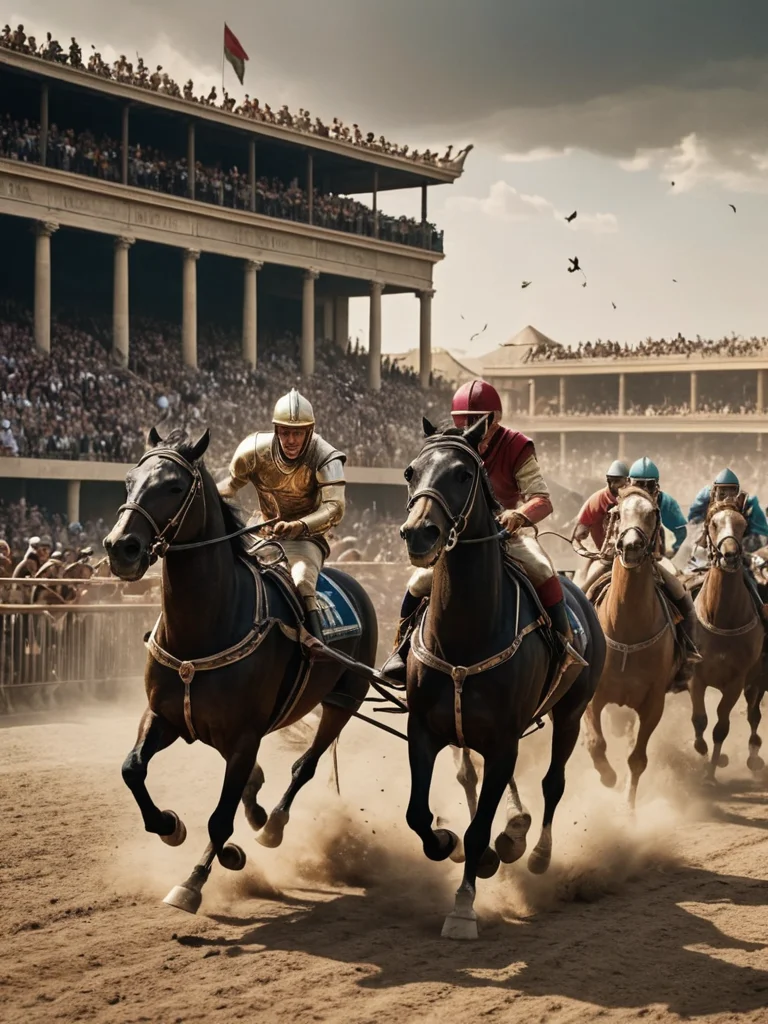
For a resident of Constantinople, visiting the Hippodrome was not just attending an entertainment event; it was a whole ritual, an integral part of daily life and the social calendar. The center of attraction, of course, was the chariot races – a spectacle that kept tens of thousands of people on edge. These were not just races, but highly organized competitions where not only chariots and their drivers fought for victory, but entire factions. Each team – the Blues, Greens, Reds, and Whites – represented not just a sports club, but a powerful social and political organization, a kind of “party” with its own fans, colors, and even anthems. Drivers, like the famous Porphyrius, were true superstars of their time; their names were on everyone’s lips, and their victories were celebrated with lavish festivities and monuments.
The races were incredibly spectacular and dangerous. Chariots, pulled by fours (quadrigas) or even six horses, thundered around the arena at immense speed, completing seven laps around the spina. The races were full of exciting maneuvers, risky overtakes, crashes, and collisions that kept the audience on the edge of their seats. The skill of the drivers, the strength and endurance of the horses, and luck – all played a role in determining the winner. Spectators arrived early to secure the best seats, placed bets, painted their faces in the colors of their favorite factions, and loudly expressed their emotions – from jubilant shouts to indignant murmurs. It was a true celebration, a kind of carnival, where social barriers were temporarily erased in the face of universal excitement and passion for victory.
However, the Hippodrome was a stage not only for chariot races. Other public events were held here, emphasizing Constantinople’s status as an imperial capital. These included triumphal processions of generals returning from victory, public executions of criminals and enemies of the state, intended to intimidate potential troublemakers, as well as wild beast hunts, though not as popular as in Rome, they were still practiced in the early stages of the empire’s existence. Sometimes, important state ceremonies were held at the Hippodrome, such as coronations or announcements of new laws, when the emperor addressed his subjects directly, using this grand platform to strengthen his power. It is important to note that the emperor had his own special box, called the Kathisma, which was directly connected to the Great Palace, allowing him to move easily between his residence and the arena, demonstrating his presence and grandeur to the assembled people. This was a powerful visual demonstration of the unity of ruler and ruled, strengthening the legitimacy of imperial power.
From Politics to Protests: The Hippodrome as a Stage for Great History
The Hippodrome was much more than just a place for entertainment; it was a mirror reflecting the political and social processes taking place in the Byzantine Empire. Its colossal size and capacity to hold vast crowds made it an ideal platform for expressing public opinion, and at times, for turbulent protests. Emperors understood this well and used the Hippodrome as a place to communicate with the people. Here they could deliver public speeches, announce new laws, gather support for military campaigns, or even present an heir. In turn, the people used this space to express their aspirations, approve or disapprove of the authorities’ actions, and sometimes to initiate real rebellions.
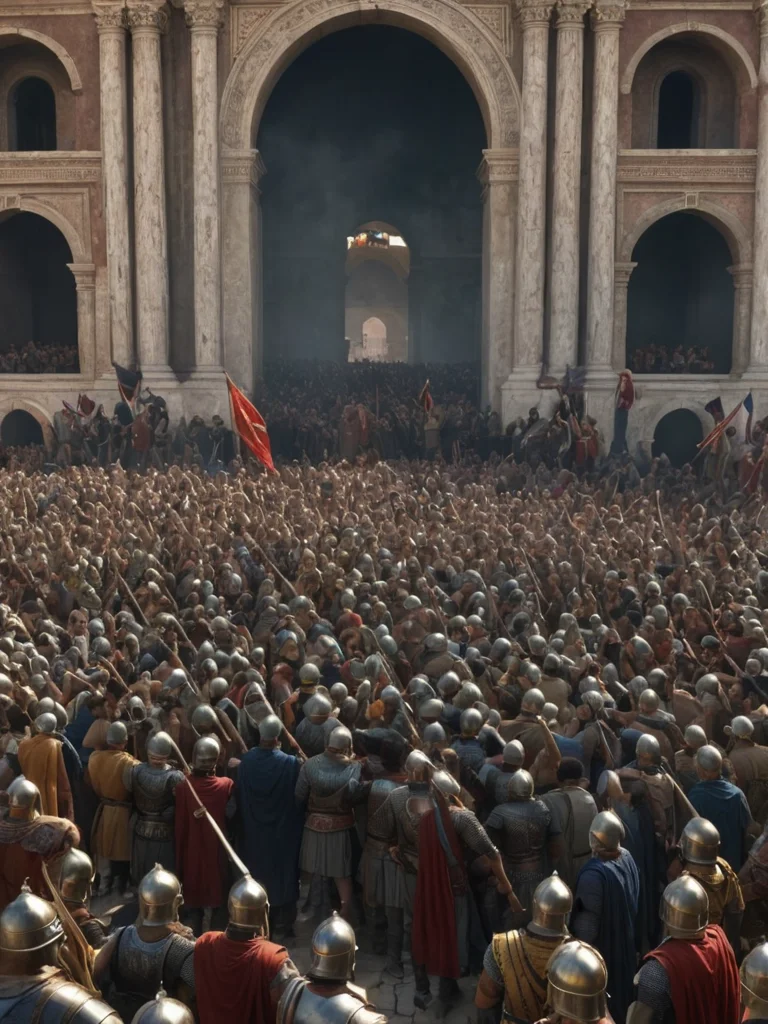
The most vivid and dramatic example of the Hippodrome’s political role was the famous Nika revolt in 532, during the reign of Emperor Justinian I. Initially, the conflict erupted due to rivalry between the Blue and Green factions, whose fans often caused riots in the city. When several instigators of the riots, belonging to both factions, were sentenced to execution, public discontent reached its peak. At the Hippodrome, during a regular race, demands for clemency escalated into open rebellion. The crowd, chanting “Nika!” (“Conquer!”), demanded the overthrow of Justinian and the enthronement of a new emperor. The revolt engulfed the entire city, turning into a real civil war that almost led to Justinian’s downfall. Fires devastated Constantinople, destroying a significant part of the city center, including the Hagia Sophia. Only thanks to the steadfastness of Empress Theodora, who refused to flee the city, and the decisive actions of generals Belisarius and Narses, was the revolt brutally suppressed. Thousands of rebels were driven into the Hippodrome and slaughtered; according to historians, their number could have reached 30,000. This event became a terrible lesson for the emperors: the Hippodrome, a symbol of unity, could easily turn into an epicenter of chaos and a threat to imperial power.
After the Nika revolt, the role of the factions at the Hippodrome, while still significant, became more controlled by the state. Emperors became more cautious in their public appearances, aware of the potential danger of mass gatherings. However, the Hippodrome continued to serve as a place for expressing public opinion, albeit in less dramatic forms. For example, an unpopular official could be booed, or, conversely, an emperor who had achieved a successful military campaign could be enthusiastically welcomed. It was a kind of popular tribune, where the voices of tens of thousands of people could be heard and influence the course of events. Thus, the Hippodrome was not just a place for entertainment, but a living organism, pulsating to the rhythm of imperial politics, closely intertwined with the destinies of both rulers and ordinary citizens.
Traces of Grandeur: What Remains of the Hippodrome Today and Its Legacy?
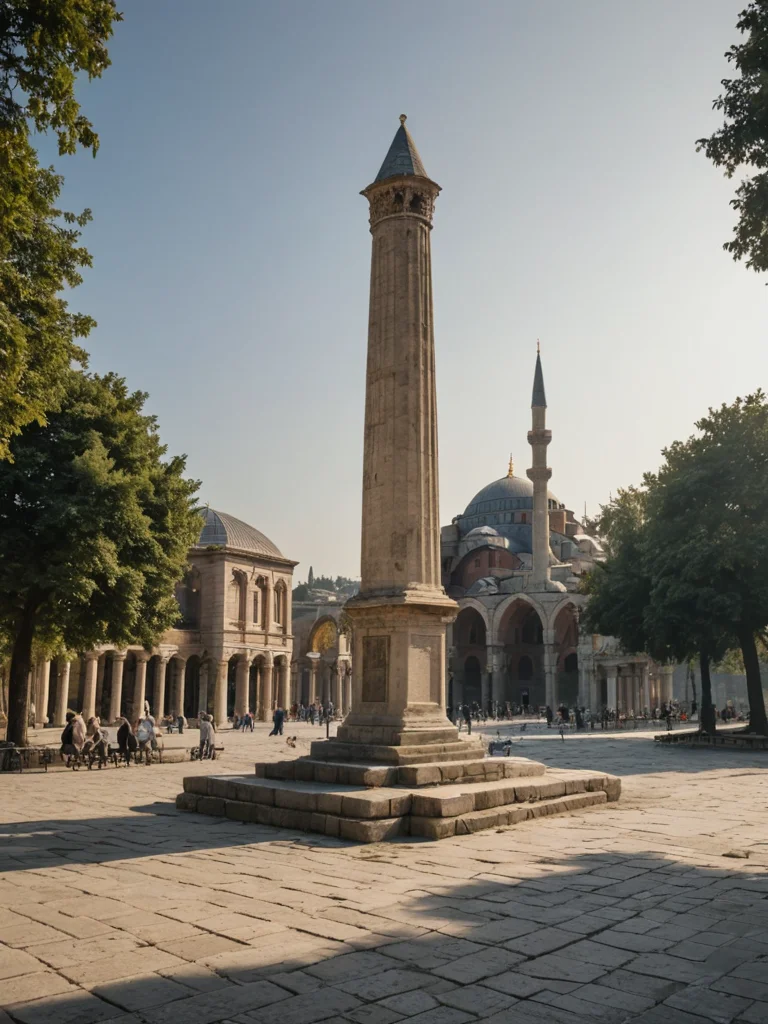
Unfortunately, very little remains of the grand Hippodrome of Constantinople as it was in its heyday. Time, earthquakes, fires, as well as looting and destruction during the Fourth Crusade (1204) and subsequent centuries have erased much of its magnificent structures. Today, the Sultanahmet Square (or Ahmediye) is located on the site of the ancient Hippodrome in Istanbul, which, however, has preserved the general shape and orientation of the former arena. This allows visitors to feel the scale of the once-existing structure, imagining its dimensions and the layout of the stands.
However, despite the losses, several key monuments that once adorned the spina of the Hippodrome have survived to this day and serve as silent witnesses to its former glory. The most notable of these is the Egyptian Obelisk, or the Obelisk of Theodosius. This monument, dating back to the 15th century BC, was originally erected by Pharaoh Thutmose III in the Temple of Karnak. It was transported to Constantinople by Emperor Theodosius I in the late 4th century and installed at the Hippodrome. Its base, decorated with reliefs depicting Theodosius himself and his court at the Hippodrome, is an invaluable source of information about the life and ceremonies of that time. Next to it is the Serpent Column – a fragment of an ancient Greek tripod, erected in Delphi in honor of the Greek victory over the Persians at Plataea in 479 BC. Originally, it was a bronze column consisting of three intertwined snakes supporting a golden tripod. It was transported to Constantinople by Constantine the Great, and although the golden tripod and the snakes’ heads are lost (according to legend, they were broken off by the Turks), the column itself still stands, being one of the oldest monuments in Istanbul.
The third surviving obelisk is the Obelisk of Constantine, or the Stone Obelisk. Originally, it was covered with gilded bronze plates depicting the victories of Basil I the Macedonian, but these were also lost during the Fourth Crusade when the Crusaders plundered the city. Now it is just a tall stone column, but it is still an important part of the historical ensemble of the square. In addition to these three monuments, the Hippodrome was once adorned with hundreds of statues brought from all corners of the Roman Empire – from marble sculptures to bronze masterpieces. Many of them were destroyed, melted down, or taken away as trophies. The most famous example is the renowned quadriga (a group of four bronze horses), which, after the plunder of Constantinople by the Crusaders, was transported to Venice and installed above the entrance to St. Mark’s Basilica, where it can be seen today (although the originals are now inside the basilica, and copies are outside). These scattered fragments and testimonies allow us only to vaguely imagine the former splendor of the Hippodrome, its role in the life of the empire, and its significance as a treasury of ancient art.
Why the Hippodrome of Constantinople is a History Lesson, Not Just Ruins
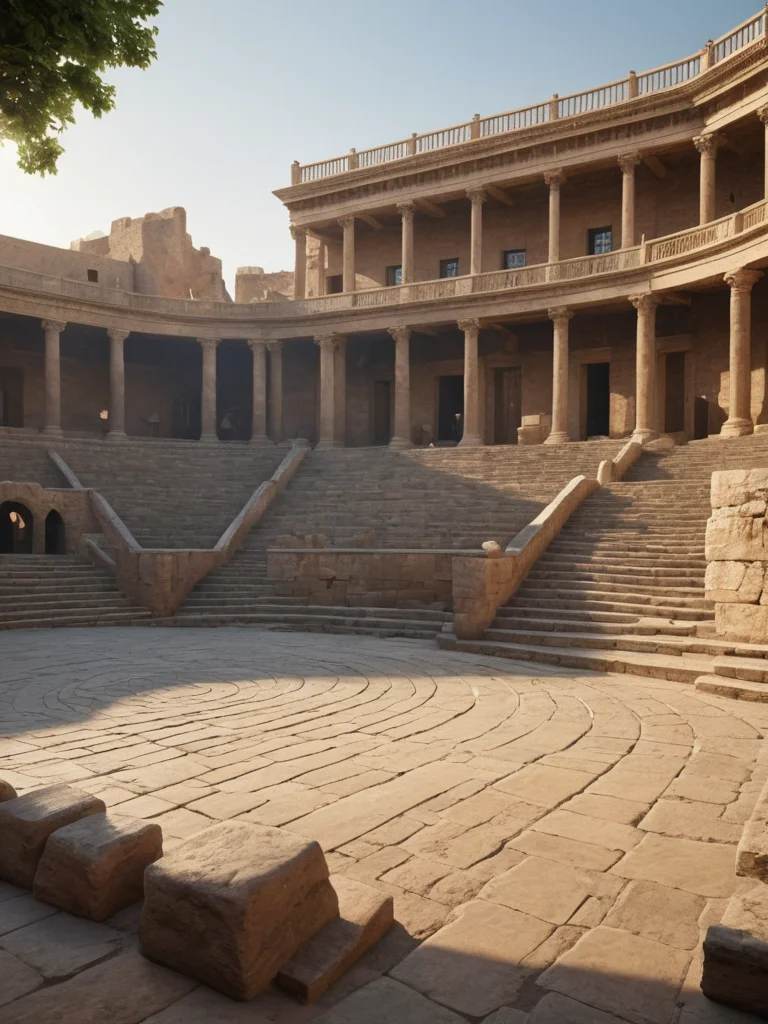
The history of the Hippodrome of Constantinople is much more than a narrative of ancient ruins and long-past sporting events. It is a deep and multifaceted lesson that allows us to better understand the nature of power, society, and culture of the Byzantine Empire, as well as to gain valuable insights applicable to modern times. The Hippodrome was a microcosm of Byzantium, reflecting all its complexities, contradictions, and magnificence. It demonstrated how the most diverse aspects of life could intertwine in one place: from entertainment and mass culture to high politics, religious dogmas, and acute social conflicts. Historians emphasize that it was a place where the sovereign and the people met directly, where public opinion was formed and expressed, sometimes peacefully, and sometimes turbulently, leading to bloodshed.
The Hippodrome teaches us about the power of mass gatherings and crowd psychology. Events like the Nika revolt serve as a stark reminder of how quickly ordinary discontent can escalate into a full-blown riot, and how easily seemingly harmless sports allegiances can become catalysts for political upheaval. It shows how fragile the balance between order and chaos can be, and how crucial it is for any authority to understand the mood of its subjects. On the other hand, the Hippodrome was also a testament to the Byzantine Empire’s remarkable ability to survive and adapt. Despite internal turmoil and external threats, the empire continued to use the Hippodrome as a tool for maintaining public order and imperial legitimacy for centuries.
The legacy of the Hippodrome is evident not only in the surviving monuments but also in how we perceive public spaces and their role in society today. It was one of the first and most prominent examples of a multifunctional public arena that served not only for spectacles but also as a center for public life, news, and political debates. In a sense, its functions can be compared to modern central squares where rallies and demonstrations take place, or to large stadiums that become epicenters of mass emotions and unite people. By studying the history of the Hippodrome, we gain the opportunity to glimpse into the unique world of Byzantium – a world that was far more complex, dynamic, and captivating than many imagine, and to understand that even the most mundane, at first glance, places can hold the key to unlocking great historical mysteries.