
Surely, each of you has heard at least once about the so-called “right of the first night” – a mysterious and shocking tradition that, according to common perceptions, existed in the Middle Ages. The image of an all-powerful feudal lord exercising the right to spend the first wedding night with the bride of his serf has become deeply ingrained in the collective consciousness. It has become a symbol of absolute power, oppression, and disenfranchisement. This plot has been played out many times in cinema, literature, and even folk tales, giving rise to dark associations with dark times. But what if this picture, so vivid and dramatic, turned out to be just an artful fabrication born of later eras?
Historians and researchers have been engaged in fierce debates for centuries about the reality of “jus primae noctis” – as this phenomenon is called in Latin. Some insist on its historical authenticity, citing indirect mentions and evidence of abuse of power as arguments. Others, on the contrary, firmly deny the existence of such a right as a legally established norm, considering it a myth created to discredit certain eras or social classes. In this article, we will delve into the depths of historical research to separate the wheat from the chaff of fiction, and try to understand why this idea has proven to be so tenacious and appealing.
We will examine how this image was formed in culture, what real feudal customs could have been its prototype, and where these dark rumors came from in the first place. Our goal is not just to debunk or confirm the myth, but also to understand why such stories, even if they do not correspond to reality, play such an important role in our perception of the past. After all, myths often tell us about the culture that gave birth to them no less than about the time to which they are attributed.
What is ‘jus primae noctis’: A Popular Image in Cinema and Literature
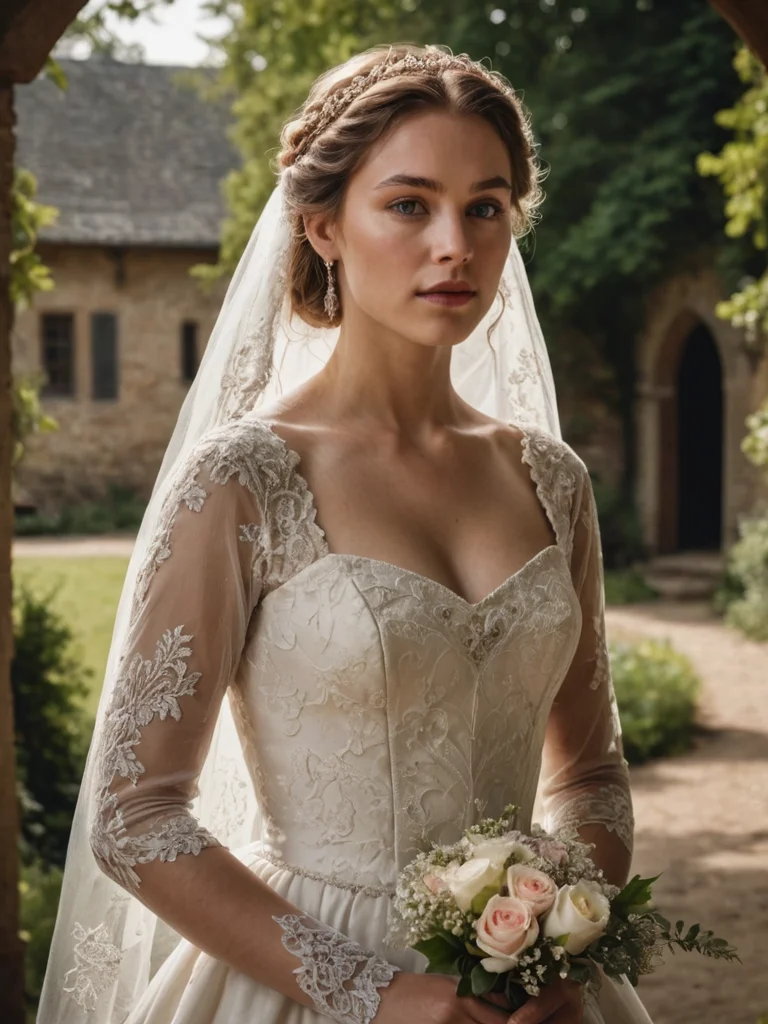
Before delving into historical debates, let’s clearly define what is meant by the “right of the first night.” Jus primae noctis, or droit du seigneur (the right of the lord, or master), is the supposed right of a feudal lord or local ruler to deflower a serf’s bride on her wedding night, before she consummates her marriage with her lawful husband. In the collective consciousness, this custom is perceived as the height of feudal arbitrariness, a symbol of humiliation and the complete lack of rights of ordinary people in the face of an all-powerful landowner. This image is so powerful and emotionally charged that it has firmly established itself in art.
Recall the famous film “Braveheart” (1995), where from the very first minutes the viewer is immersed in the world of brutal feudal England, where an English lord exercises this right, leading to tragic consequences and becoming one of the main driving forces for the protagonist. Or, if we turn to literature, Pierre-Augustin Caron de Beaumarchais’ play “The Marriage of Figaro” (1784) – a work that not only became a masterpiece of world drama but also made a huge contribution to the popularization of the myth of the right of the first night. In this comedy, Count Almaviva tries to restore this “right” that he has forgotten, which causes an outcry and becomes the basis of the intrigue. Despite the fact that the Count eventually backs down from his intentions, the very idea of this right is presented to the reader and viewer as something self-evident and disgusting.
Similar plots are found in historical novels, folk ballads, and even operas, each time reinforcing the stereotype of a dark, barbaric Middle Ages where human life and dignity were worthless. This image serves as a powerful tool for illustrating oppression, social inequality, and the struggle for freedom. It allows authors to instantly create an atmosphere of injustice and evoke sympathy for characters suffering from the arbitrary rule of the authorities. However, as we will see later, it is precisely this dramatic appeal and emotional richness that may have played a key role in the entrenchment of the “right of the first night” in collective memory, sometimes overshadowing historical reality.
It is important to note that in most of these works, the “right of the first night” is presented not as an isolated act of violence, but as a legalized, albeit barbaric, tradition. It is this distinction – between a crime and a right – that is key when analyzing historical sources. Works of art, of course, have the right to artistic convention, but our task as researchers is to separate artistic fiction from historical facts in order to obtain the most objective understanding of the past.
Myth vs. Fact: Did the ‘Right of the First Night’ Actually Exist According to Historians?

Now that we have clarified how the “right of the first night” is presented in popular culture, let’s turn to the most important question: did it actually exist? And here, according to the overwhelming majority of modern historians and medievalists, you will find a surprising discovery: no, the so-called “right of the first night” as a legally established and universally applied norm did not exist in the Middle Ages. This is one of the most tenacious and widespread historical myths.
Imagine the vast archives of medieval documents: thousands of charters, court decisions, feudal statutes, land registers, private letters, and chronicles. Historians have meticulously studied these invaluable sources for decades, trying to find at least one unambiguous testimony, at least one legal document that would directly or indirectly confirm the existence of this right. And what did they find? Nothing. Not a single official, legally binding act, not a single court case where a lord would refer to “jus primae noctis” as his legal right, or where peasants would complain about it as a custom they were obliged to obey.
What did exist then? There was a whole complex of feudal relations that indeed limited the freedom of peasants and gave lords enormous power. For example, these were:
- Formariage or Merchet: This was not a sexual, but a financial tax. Serfs could not marry without their lord’s permission. If they wanted to marry someone from outside their domain or marry a foreigner, they had to pay a certain fee to their lord. This was a payment for the loss of labor or for maintaining control over heirs. This is economic control, not a right to the body.
- Banalités: Feudal lords owned monopolies on certain services and facilities, such as mills, bakeries, and wineries. Peasants were obliged to use only these and pay for them. This was again a form of economic pressure and control, demonstrating the lord’s power over the peasants’ lives.
- General restrictions on personal freedom: Serfs were tied to the land, could not freely change their place of residence, sell property, or inherit it without the lord’s knowledge. Their children also became serfs. This created a system of dependence, but did not give the lord sexual rights.
Undoubtedly, in the conditions of feudal anarchy and the boundless power of some lords, there were numerous cases of sexual violence and abuse. Powerful lords could rape women, oppress their subjects, commit any atrocities, as they had de facto impunity. But these were acts of violence and crimes, not a legal “right.” No legal code or collection of customs of that time enshrined the lord’s right to deflower a bride. This is a fundamental distinction: one thing is a crime, another is an officially recognized custom or law. Historians agree that if such a right existed, it would have left a huge amount of traces in documents, chronicles, and court proceedings, as it would have been a matter of honor, inheritance, family ties – and therefore, constant conflicts requiring legal settlement. The absence of such traces is one of the most convincing arguments against the existence of the “right of the first night.
Where Did This Tenacious Myth Come From: Versions and Reasons for Its Spread

If the “right of the first night” did not exist as a legal norm, then why has this myth proven to be so tenacious and widespread? The answer lies in the complex interplay of historical, political, and cultural factors that have developed over centuries after the end of the Middle Ages.
One of the main versions links the origin and popularization of the myth to the era of the Renaissance and the Enlightenment. Humanists, and then Enlightenment philosophers, sought to contrast their “enlightened” and “rational” era with the “dark” and “barbaric” Middle Ages. For them, the Middle Ages were a time of ignorance, superstition, and despotism. The image of the “right of the first night” fit perfectly into this concept, serving as a vivid example of the extreme cruelty and injustice of the feudal system. It was used as a rhetorical device to demonstrate the need for radical social changes and the establishment of new, more humane orders.
A vivid example of such use is the aforementioned play by Beaumarchais, “The Marriage of Figaro” (1784). The appearance of this play on the eve of the French Revolution was not accidental. It became a powerful catalyst for anti-feudal sentiments, ridiculing the aristocracy and its privileges. The image of the Count trying to exercise the “right of the first night” caused public outrage and became one of the symbols of the arbitrary rule of the old regime. It is important to understand that at that time, the goal was not accurate historical description, but the creation of an emotionally charged image to mobilize public opinion. Even Voltaire, one of the pillars of the Enlightenment, referred to “jus primae noctis” in his writings as an existing fact, although his sources were more folk rumors than legal documents.
The myth received another powerful boost during the French Revolution. Revolutionaries actively used it in their propaganda to discredit the overthrown monarchy and aristocracy. The decree of August 4, 1789, which abolished feudal rights, mentioned “droit de cuissage” (the French name for the “right of the first night”) in the list of abolished abuses. However, this point, according to historians, was more of a symbolic gesture, designed to emphasize the barbarity of the ancien régime and legitimize revolutionary changes, rather than a real confirmation of its widespread existence. It was a powerful propaganda move that cemented the myth in public consciousness as something that truly needed to be abolished.
The version of the myth’s folkloric roots should also be considered. Some researchers suggest that the origins of the “right of the first night” may lie in ancient rituals related to fertility, initiation, or symbolic demonstrations of power. In some cultures, there were rituals where the chief or priest symbolically “consecrated” the wedding night, which over time could have been distorted and transformed into a story about sexual rights. Another version links it to customs where newlyweds had to obtain permission for marriage from the lord and pay a certain tax, which could have been subsequently interpreted as payment for the renunciation of some intimate right. These versions remain hypotheses, but they show how ancient traditions can be distorted and transformed into something completely different in popular memory.
Finally, psychology also played a role. The myth of the “right of the first night” is extremely dramatic, shocking, and easy to understand. It is ideal for creating a vivid narrative about the struggle between good and evil, the oppressed and the oppressors. Such stories are easily passed from mouth to mouth, remembered, and embellished with new details, becoming part of the collective unconscious. The lack of mass literacy in the Middle Ages and early modern period facilitated the spread of oral traditions and rumors, which could take the form of historical facts.
Thus, the “right of the first night” is a complex construct formed at the intersection of political propaganda, cultural needs, and popular imagination. It became not so much a historical fact as a powerful cultural symbol reflecting the perception of feudalism in subsequent eras.
The Main Lesson of the ‘Right of the First Night’: Why Myths About History Are So Important for Understanding the Past

So, we have come to the conclusion that the “right of the first night,” as presented in popular culture, is nothing more than a tenacious historical myth, not confirmed by serious sources. However, this does not mean that our research was useless. On the contrary, the history of this myth teaches us one of the most important lessons: even fabrications about history can be incredibly important for understanding the past.
Firstly, debunking myths helps us build a more accurate and objective understanding of the past. History is not just a collection of entertaining stories; it is a science that requires a critical approach to sources, thorough verification of facts, and the elimination of unreliable information. The fight against myths is a fight for historical truth, which allows us to see real processes and events, not their distorted reflections. When we understand what did not happen in the past, we can better focus on what actually took place and avoid false conclusions.
Secondly, studying the origin and spread of the myth of the “right of the first night” gives us a deep understanding of how historical memory is formed and how it can be used. This myth did not arise by chance. It was a powerful ideological weapon in the hands of critics of feudalism and inspirers of revolutions. It demonstrates how narratives, even those based on false premises, can influence public consciousness, justify political changes, and demonize entire eras or social groups. Understanding this mechanism is critically important for analyzing any historical epoch, as history is always written by someone and for some purpose.
Thirdly, the very fact of the existence and tenacity of this myth tells us a lot about the values and fears of the societies that created and spread it. Why did sexual violence become such a vivid symbol of feudal arbitrariness? Because it touches upon the deepest notions of human dignity, bodily integrity, and the right to personal life. The myth of the “right of the first night” reflects not medieval laws, but rather the perceptions of people in the modern era about cruelty, injustice, and the need for liberation from tyranny. It shows how important the concepts of personal freedom and inviolability were to them.
Finally, the story of the “right of the first night” teaches us critical thinking. It encourages us not to take beautiful or shocking stories at face value, but to always ask questions: “What is this based on?”, “What is the evidence?”, “Who benefits from the spread of this version?”. This is especially relevant in today’s world, where information spreads with incredible speed, and distinguishing truth from fiction is becoming increasingly difficult. Historical myths like the “right of the first night” serve as an excellent training ground for developing these skills.
Thus, although the “right of the first night” turned out to be a historical phantom, its study is a valuable lesson. It reminds us that history is not a static collection of facts, but a living dialogue between the past and the present, in which myths play their own, sometimes very significant, role. And our task as curious readers and researchers is to be attentive to these stories, understand their roots, and not be afraid to ask questions in order to come as close as possible to a true understanding of the majestic and sometimes paradoxical world of the past.