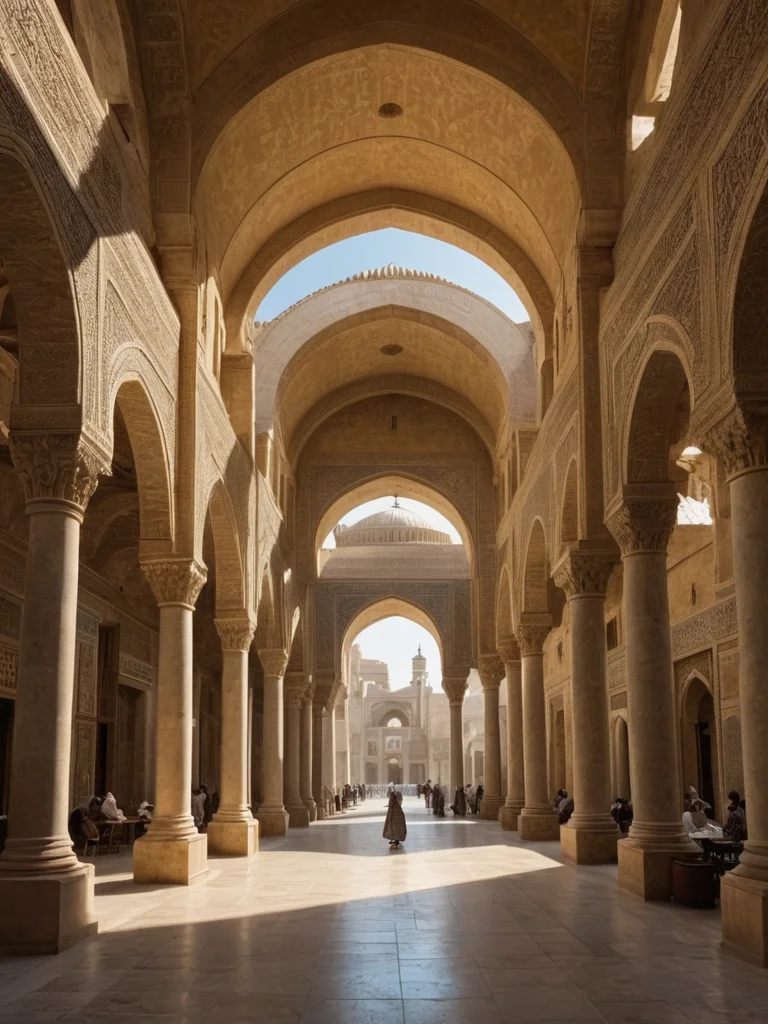
Throughout human history, there have been eras when certain regions became beacons of civilization, gathering the most outstanding minds, achieving incredible success in science, art, and trade. For the Islamic world, such an era was the so-called Golden Age, which lasted from the 8th to the 13th centuries. During this period, two great cities shone on the world map, like stars of the first magnitude: Baghdad in the East and Cordoba in the West. They were not just large settlements, but true metropolises, surpassing most European capitals of the time in their development and standard of living. Imagine megacities where the streets were lit at night, where a complex water supply system operated, and where libraries housed hundreds of thousands of priceless manuscripts – that’s what these centers of knowledge and progress were like.
The Golden Age of Islam: Baghdad and Cordoba – Two Capitals of World Progress
The Golden Age of Islam, which began around the mid-8th century, represents a period of unprecedented intellectual, cultural, and scientific flourishing in the Islamic world. Historians believe that the expansion of the Arab Caliphate, which united vast territories from the Iberian Peninsula to Central Asia, served as a catalyst for this flourishing. This unification led to a merging of diverse cultural traditions – Persian, Indian, Greek, Egyptian – and created a unique synergy that stimulated unprecedented progress. Unlike fragmented and largely stagnant medieval Europe, the Islamic world was a unified space for the exchange of ideas, goods, and knowledge.
During this period, Islamic civilization not only preserved and translated the works of ancient Greek and Roman philosophers and scientists, many of which would have been forever lost to humanity, but also actively developed this knowledge, adding its own discoveries. It was then that the foundations of algebra and algorithms were laid, astronomical observations were improved, new medical practices and surgical instruments were developed, and breakthroughs were made in optics that anticipated many modern concepts. This flourishing was inextricably linked to the flourishing of cities, which became its focal points.
Baghdad, the capital of the Abbasid Caliphate, and Cordoba, the center of the Umayyad Caliphate in Al-Andalus (Muslim Spain), became two of the brightest symbols of this Golden Age. These cities were not just large administrative centers; they were magnets for scholars, merchants, artisans, and artists from all over the known world. Their prosperity was based on several key factors: strong state support for science and education, developed trade, advanced technologies for their time, and relative religious tolerance, allowing different communities to coexist and exchange knowledge. We will delve into the specifics of each of these amazing cities to understand what they looked like and how they lived.
Baghdad: The City of One Thousand and One Nights – a Center of Knowledge and Trade
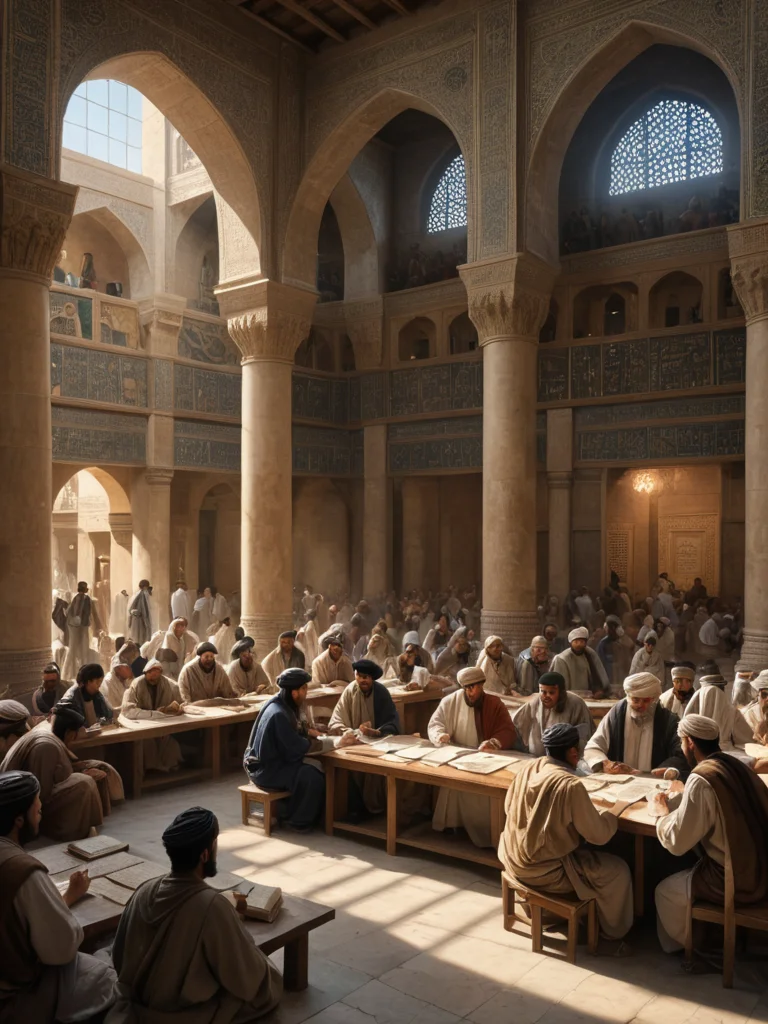
Baghdad, founded in 762 by Caliph al-Mansur, was designed as an ideal circular city, which in itself was an architectural and engineering miracle of its time. This city, nicknamed the “City of Peace” (Madinat al-Salam), quickly became the largest metropolis of its time, with a population estimated to have reached one million people by the 9th-10th centuries. Its location on the Tigris River, at the crossroads of trade routes between East and West, Persia, Mesopotamia, and the Mediterranean, ensured its incredible economic power. Sources describe Baghdad as a boiling cauldron of life, where every corner of the street was filled with sounds and aromas.
Intellectual Life: Bayt al-Hikma and the Flourishing of Sciences
- House of Wisdom (Bayt al-Hikma): This was the heart of Baghdad’s intellectual life. Founded by Caliph al-Ma’mun, Bayt al-Hikma was not just a library, but an entire research institute, bringing together translators, scientists, and thinkers. Here, works by ancient Greek (Aristotle, Plato, Galen, Euclid, Ptolemy), Indian, and Persian authors were actively translated into Arabic. This large-scale translation project allowed for the preservation and assimilation of a colossal amount of knowledge that would otherwise have been lost to the Western world.
- Scientific Achievements: Outstanding scientists worked in Baghdad. Mathematician Al-Khwarizmi developed algorithms and significantly advanced algebra (the word “algebra” itself comes from the title of his work “Kitab al-jabr wal-muqabala”). Astronomers, such as the Banu Musa brothers, made accurate measurements and wrote treatises on mechanics. In medicine, Ibn Sina (Avicenna), although not a native of Baghdad, but whose works were widely studied there, created the “Canon of Medicine” – an encyclopedic work that served as the main textbook for doctors in Europe and the East for centuries. Al-Razi (Rhazes) was a great physician, chemist, and philosopher who described smallpox and measles and significantly developed pharmacology.
- Libraries and Education: In addition to Bayt al-Hikma, Baghdad was famous for numerous private and public libraries, some of which contained tens of thousands of volumes. Education was highly valued, and there were numerous madrasas (educational institutions) where theology, law, medicine, mathematics, and astronomy were taught.
Economic Prosperity: a Trading Hub of the World
- Trade Routes: Baghdad was a central hub of the Silk Road and numerous other trade routes connecting China, India, Persia, Byzantium, North Africa, and Europe. Merchants brought silk, spices, precious stones, ceramics, and paper from China; cotton, sugar, perfumes from India; furs and slaves from Eastern Europe.
- Markets (souks): The city was known for its huge and specialized markets. Souk al-Teffah (Apple Market), Souk al-Dajaj (Chicken Market), Souk al-Attarin (Perfumers’ Market) – each offered a wide range of goods. Here you could find everything from exotic fruits to complex mechanisms. These markets were not only places of trade but also centers of social life, where people exchanged news and ideas.
- Financial System: In Baghdad, a sophisticated financial system developed, including banks, checks (saqq, from which the word “check” originates), and a credit system. This allowed merchants to safely and efficiently trade over vast distances without carrying large amounts of cash.
Social and Urban Life: Comfort and Beauty
- Urban Infrastructure: Baghdad was a city with developed infrastructure. A system of canals and aqueducts provided residents with clean water. There were public baths (hammams), which served not only for hygiene but also as places for communication and relaxation. The city had a well-organized system of garbage collection and sanitation, which was rare for that time.
- Hospitals (bimaristans): Baghdad had large hospitals that were advanced medical institutions. They provided free medical care to all those in need, regardless of their social status or religion. Hospitals had separate departments for various diseases, pharmaceutical laboratories, and lecture halls for medical students.
- Parks and Gardens: Despite the dense building, Baghdad had many green spaces, private gardens, and public parks that served as places for recreation and walks, as well as for growing exotic plants brought from all over the caliphate.
Cordoba: The Pearl of Al-Andalus – a Cultural Bridge Between Europe and the East
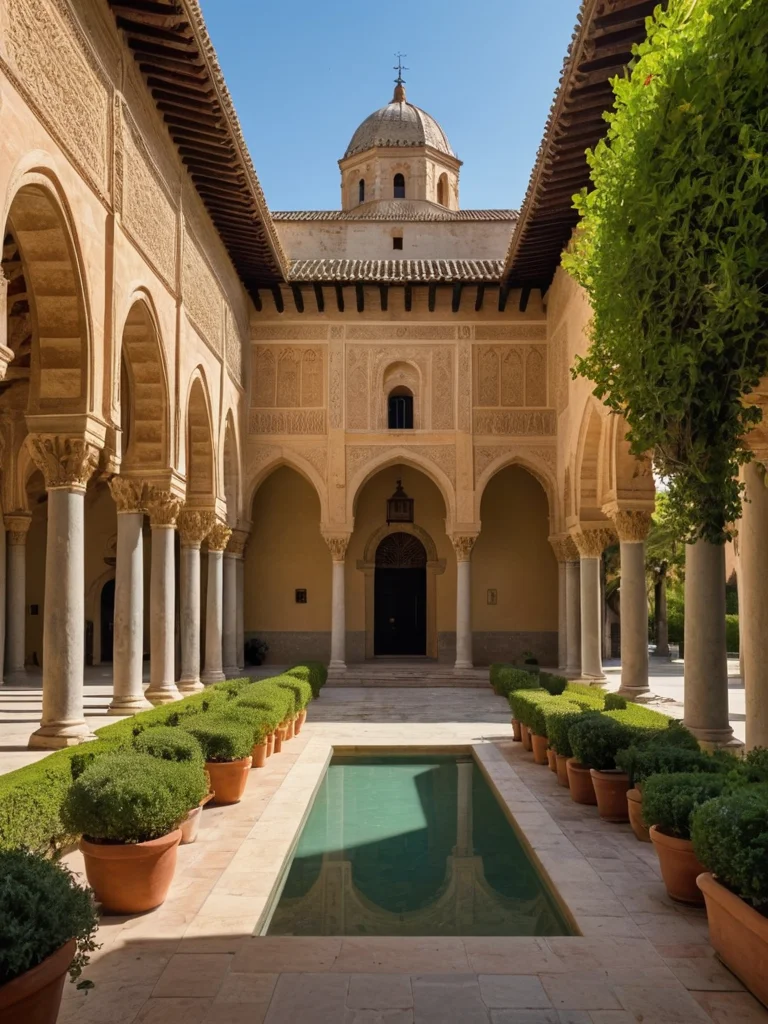
While Baghdad flourished in the East, in the far west, on the Iberian Peninsula, in the heart of Al-Andalus (Muslim Spain), Cordoba shone. This city, which became the capital of the Umayyad Caliphate in Spain in the 10th century, was perhaps the most developed city in Western Europe and one of the largest in the world. Historians often call it the “Pearl of Al-Andalus,” and this is no exaggeration. While many European cities were dirty and dark, Cordoba struck with its cleanliness, order, and splendor.
Urban Environment: an Oasis of Civilization
- Lighting and Paved Streets: Cordoba was one of the first cities in Europe where streets were paved and lit at night. Imagine: while in Paris or London people moved along dirty, dark roads, in Cordoba you could walk at night, enjoying the light of lanterns, of which there were several thousand. This was an unprecedented luxury and safety.
- Water Supply and Sanitation: Cordoba had a complex system of aqueducts and fountains providing the city with fresh drinking water. There were also public baths, the number of which reached 700, indicating a high level of hygiene and a developed culture of public leisure. The sewage system maintained the cleanliness of the city, which significantly reduced the spread of disease.
- Residential Houses: Houses in Cordoba were often multi-story, with inner courtyards and gardens providing coolness in the hot climate. They were equipped with plumbing supplying water directly into homes, as well as sanitary facilities. This was a level of comfort that was unavailable even to the nobility in other parts of Europe.
Intellectual Flourishing: Libraries and Religious Tolerance
- Libraries: Cordoba was famous for its libraries. It is said that only the personal library of Caliph al-Hakam II contained from 400,000 to 600,000 volumes, while the largest European libraries of that period had at best several thousand books. These libraries were open to all who wished, which contributed to the spread of knowledge.
- Philosophy and Science: In Cordoba, philosophy, medicine, astronomy, mathematics, and botany flourished. Here lived and worked such outstanding thinkers as Ibn Rushd (Averroes), one of the greatest Arab philosophers, whose commentaries on Aristotle had a huge impact on European scholasticism, and Maimonides, a great Jewish philosopher and physician, whose works influenced both Islamic and European thought. Muslim, Christian, and Jewish scholars worked side by side, exchanging knowledge.
- Medicine: Cordoba was a center of advanced medicine. Here were the first anatomical theaters in Europe, and doctors performed complex operations, including cataract surgery and the use of anesthesia. Pharmacology also reached a high level, with the development of new drugs and methods of their preparation.
- Education: The University of Cordoba, founded at the Great Mosque, was one of the leading educational centers in the world, attracting students from all over Europe and the Muslim world.
Economic Power and Cultural Fusion
- Agriculture: Muslims introduced advanced irrigation systems and new agricultural crops to Al-Andalus, such as rice, sugarcane, citrus fruits, and cotton, which significantly enriched the diet and economy of the region. Cordoba and its surroundings were exceptionally fertile.
- Crafts and Trade: The city was known for the production of high-quality goods: exquisite leather (Cordovan), textiles, ceramics, metalwork, and jewelry. These goods were exported throughout Europe and North Africa. Cordoba was also an important trading center, connecting Al-Andalus with the rest of the Islamic world and Christian Europe.
- Religious Tolerance (specifically Dhimmi): One of the unique features of Cordoba was relative religious tolerance, which allowed Muslims, Christians, and Jews to live and work together. This cultural and religious mosaic contributed not only to peaceful coexistence but also to an unprecedented exchange of ideas, stimulating intellectual and artistic flourishing.
- Architectural Splendor: The symbol of Cordoba is its Great Mosque (Mezquita), which began construction in the 8th century and was constantly expanded. Its endless columns and double arches create a mesmerizing space, being a masterpiece of Islamic architecture. Another outstanding monument was the palace city of Medina az-Zahra, built by Caliph Abd al-Rahman III, which amazed with its splendor and complex systems of water supply and sanitation.
What Made Them Great: Common Secrets of the Prosperity of Islamic Metropolises
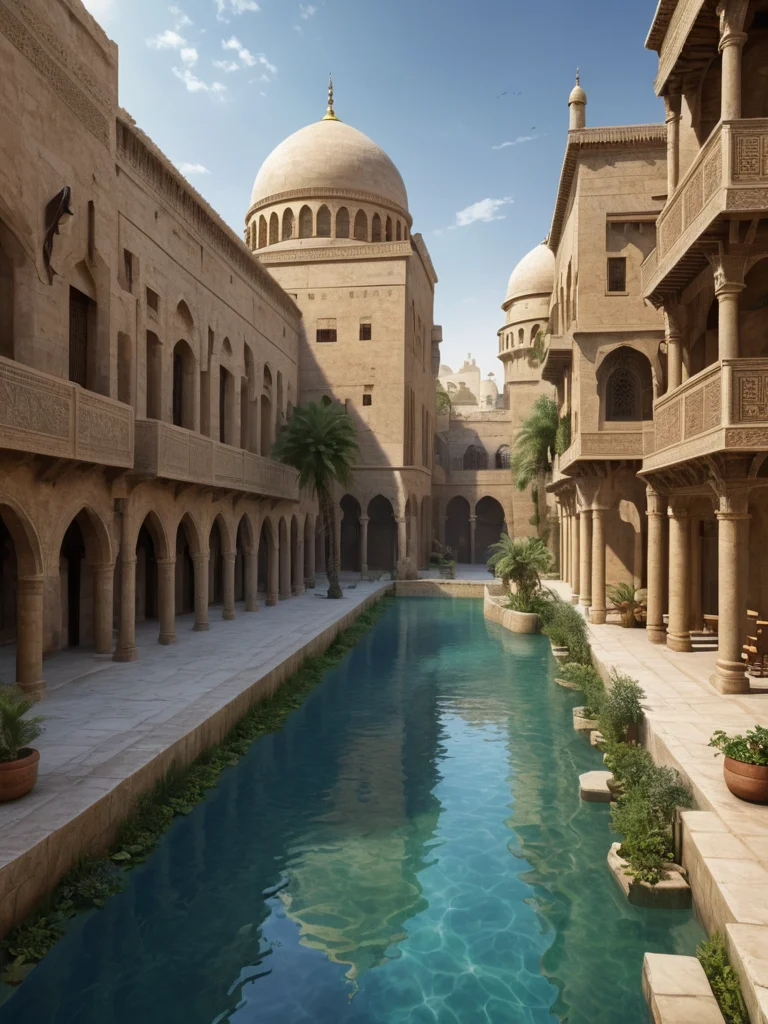
The prosperity of Baghdad and Cordoba was not accidental; it was based on a number of common principles and factors that distinguished Islamic civilization at that time from many others. Historians agree that these secrets of success can be reduced to several key points, closely intertwined and creating a powerful synergistic effect.
State Support and Patronage of Sciences
- Patronage of Rulers: Caliphs and emirs, such as the Abbasids in Baghdad (especially al-Ma’mun and Harun al-Rashid) and the Umayyads in Cordoba (Abd al-Rahman III and al-Hakam II), actively patronized scientists, philosophers, doctors, and artists. They allocated huge funds for the construction of libraries, observatories, hospitals, and for paying translators and researchers. For the rulers of that time, support for knowledge was not only a matter of prestige but also an understanding of its practical benefits for the state (for example, astronomy for navigation, medicine for public health, mathematics for engineering).
- Creation of Institutions: The emergence of institutions such as Bayt al-Hikma in Baghdad and the university at the Cordoba Mosque demonstrates a systematic approach to the development of science. These were not just disparate scientists, but organized centers where knowledge was systematized, studied, and transmitted.
Openness to Knowledge and Cultural Synthesis
- Translation Movement: One of the most important factors was the active assimilation of knowledge from other civilizations. Islamic scholars were not limited to their own discoveries; they purposefully collected, translated, and studied the works of ancient Greek, Persian, Indian, and Byzantine scientists. This process was unprecedented in its scale and played a critical role in preserving ancient heritage for the whole world.
- Adaptation and Development: Muslim scholars did not simply copy the knowledge of others, but creatively reworked it, checked it experimentally, corrected errors, and made their own discoveries. For example, they significantly improved Greek astronomy and medicine, introduced Indian numerals (now known as Arabic) and the concept of zero, which revolutionized mathematics.
Economic Power and Developed Infrastructure
- Strategic Location and Trade: Both cities were at the intersection of important trade routes, which ensured an influx of capital and goods. Baghdad controlled trade between East and West, while Cordoba served as a gateway between the Islamic world and Christian Europe, as well as North Africa.
- Innovations in Trade and Agriculture: The development of banking systems, checks, and lending contributed to economic growth.
- Urban Planning and Improvement: Investments in urban infrastructure – paved streets, street lighting, complex water supply and sanitation systems, public baths, and hospitals – created comfortable living and working conditions, attracted population, and contributed to sanitary well-being. This contrasted sharply with the conditions of life in most contemporary European cities.
Cultural Diversity and Relative Tolerance
- Coexistence of Communities: Although it was not complete equality, the policy of dhimmi (protected communities) allowed Christians and Jews to live and work under Muslim rule, preserving their religion and laws within certain limits. In cities such as Cordoba, this led to a unique cultural and intellectual exchange between representatives of different faiths, which significantly enriched scientific and philosophical thought.
- Attracting Talents: The atmosphere of openness, scientific patronage, and economic prosperity attracted talented people from all over the world to Baghdad and Cordoba, creating powerful intellectual communities.
Legacy of the Golden Age: How Baghdad and Cordoba Changed the World
The influence of Baghdad and Cordoba, as epicenters of the Golden Age of Islam, on subsequent world history cannot be overestimated. These cities were not just bright flashes of civilization; they were catalysts for changes that shaped the modern world, especially in Europe. Their legacy is felt today in a wide variety of human activities.
Transfer of Knowledge to Europe: a Bridge Through the Middle Ages
- Latin Renaissance of the 12th Century: While Europe was in relative decline after the fall of the Roman Empire, the Islamic world preserved and developed ancient knowledge. In the 12th century, thanks to contacts in Spain (during the Reconquista) and Sicily, as well as through the Crusades, Europeans began to translate Arabic texts into Latin. These translations, often carried out in centers such as Toledo, returned the works of Aristotle, Euclid, Ptolemy, and Islamic scholars to Europe.
- Influence on European Universities: The knowledge that came from Baghdad and Cordoba formed the basis of the curricula of the first European universities in Bologna, Paris, and Oxford. Islamic medicine, mathematics, astronomy, and philosophy became an integral part of European education.
Specific Contributions to World Science and Culture
- Mathematics: The introduction of Arabic numerals (actually of Indian origin) and the concept of zero revolutionized European mathematics, making complex calculations much easier and paving the way for the development of modern arithmetic and algebra, the name of which comes from the Arabic word.
- Astronomy: Improved astronomical instruments and accurate tables developed in Baghdad and Cordoba were used by European sailors and astronomers for centuries. They laid the foundation for the Copernican revolution.
- Medicine: The works of Ibn Sina (Avicenna), Al-Razi (Rhazes), and other Arab doctors were canonical in European medical schools until modern times. Islamic hospitals and practices, such as cataract surgery and anesthesia, were significantly more developed than in medieval Europe.
- Optics: Ibn al-Haytham (Alhazen), who worked in Baghdad, is considered one of the fathers of modern optics, and his works had a fundamental impact on European scientists, including Roger Bacon and Johannes Kepler.
- Agronomy and Engineering: Islamic innovations in irrigation, agricultural crops, and water technologies, developed in Cordoba, spread throughout Europe, improving yields and quality of life.
- Philosophy: The translations and commentaries of Ibn Rushd (Averroes) on Aristotle caused an intellectual boom in European scholasticism, stimulating rational thinking and a critical approach to knowledge.
Aesthetic and Cultural Influence
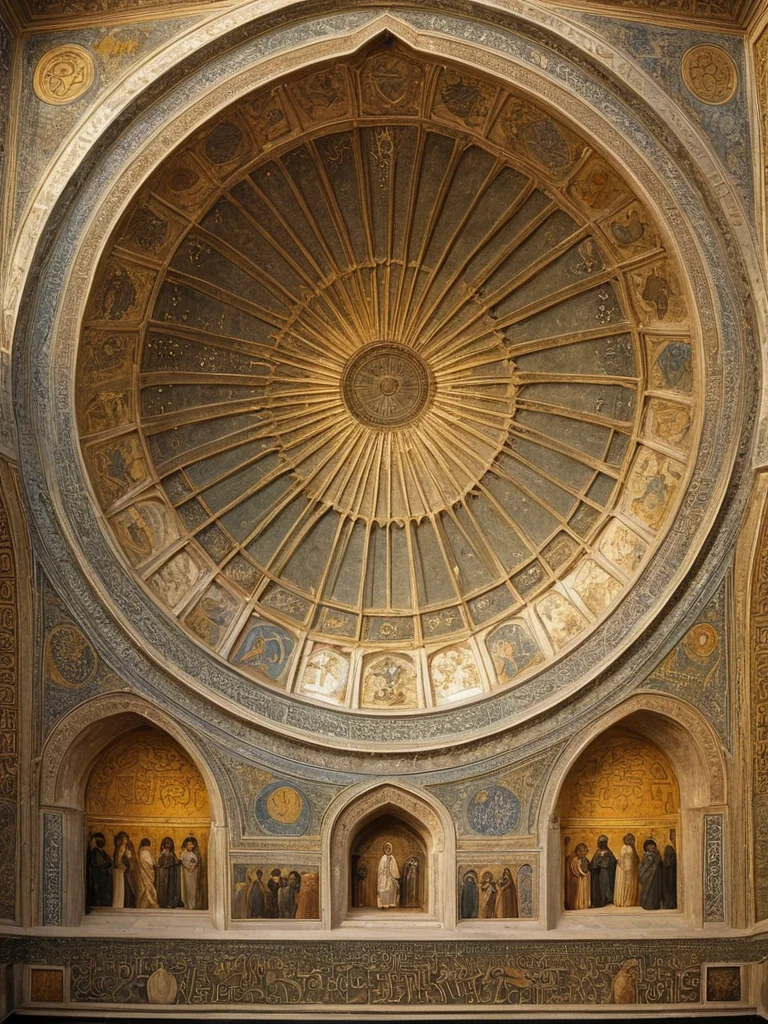
- Architecture: The magnificent architectural styles of Baghdad and Cordoba, with their arches, domes, mosaics, and intricate carvings, influenced subsequent architectural traditions, especially in Spain and Portugal, where the Moorish style left an indelible mark.
- Literature and Art: Arabic poetry, prose, and calligraphy, which flourished in these cities, demonstrated a high level of skill and influenced literary forms and artistic practices in other cultures.
Although Baghdad experienced a catastrophic Mongol invasion in 1258, and Cordoba fell under the onslaught of the Reconquista in 1236, their contribution to world civilization remains undeniable. These cities, like stars in the historical sky, forever changed the trajectory of human development. They became not just capitals of great empires, but true universities of the world, where knowledge knew no boundaries, and the thirst for discovery drove progress forward. By studying their history, we not only admire the achievements of the past but also learn valuable lessons about how the interconnectedness of cultures, openness to new ideas, and support for intellect can lead to unprecedented flourishing of civilization.