The history of Rus knows many turning points, but one of the most significant and dramatic, undoubtedly, was the Mongol invasion in the 13th century. The events of those years forever changed the appearance of ancient Russian cities, their political, economic, and social structure. What was life like in a Russian city under the Golden Horde? What changes did its inhabitants, their daily lives, crafts, and faith undergo? To answer these questions, let’s delve into the dark, but incredibly instructive pages of our history.
Moments of Fall: How Russian Cities Met the Mongol Invasion
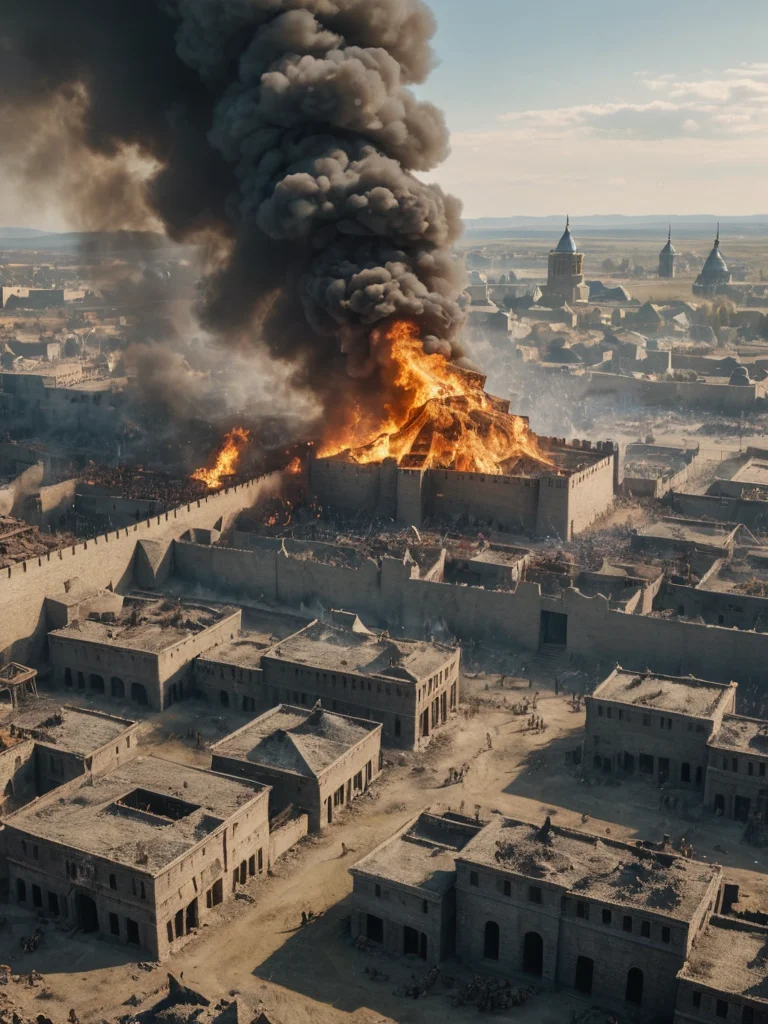
The catastrophe struck Rus swiftly and mercilessly. In the winter of 1237, like a snow avalanche, Mongol tumens led by Batu Khan invaded the Ryazan principality. Russian chronicles vividly depict horrifying scenes: the suddenness of the attack, the unprecedented cruelty of the invaders, and the desperate, but often futile, resistance. The wealthy and fortified cities of Northeastern Rus were the first to bear the brunt of the attack.
The examples of Ryazan, Kolomna, Vladimir, and Suzdal, and later Kozelsk, which the chronicle called the “evil city” for its unyielding resistance, showed the full might and tactics of the Mongol army. Usually, upon approaching a city, the Mongols offered surrender without a fight, demanding a tithe – a tenth of everything: people, livestock, property. Refusal led to an inevitable assault. Historians note that Russian cities were generally not prepared for such a large-scale and professional siege. Their defensive structures, mostly wooden, and sometimes earth ramparts with palisades, could not long withstand the Mongol siege engines, which included powerful stone-throwers and battering rams created with the help of Chinese engineers.
The storming of a city was a terrible spectacle. After breaching the walls, the Mongols would rush in, setting everything ablaze and putting all to the sword. Citizens who did not manage to hide or fell in battle became victims of mass executions or were driven into slavery. Chronicles are full of heartbreaking details: “and they slew everyone from young to old, and not one was left alive,” reads the account of Vladimir. After the city was taken, it was usually burned to the ground, its fortress walls destroyed, turning prosperous centers into ruins and ashes. Entire city blocks disappeared, and the population decreased many times over, if not tens of times. Many cities, such as Ryazan or Kozelsk, were completely destroyed and were only revived decades later, while some, like Iziaslavets or Sarayskoye Gorodishche, never recovered and disappeared from the map forever.
After the city fell and most of the population was exterminated, the survivors were driven to the Horde as slaves. Among them were not only ordinary citizens but also skilled craftsmen – blacksmiths, jewelers, builders. Their knowledge and skills were actively used by the Mongols to develop their cities and army. Thus, the fall of a city meant not just a military defeat, but the complete destruction of its economic, social, and cultural life, leaving behind only ashes and horrific memories.
Under the Khan’s Boot: New Rules of Life and Power in a Russian City
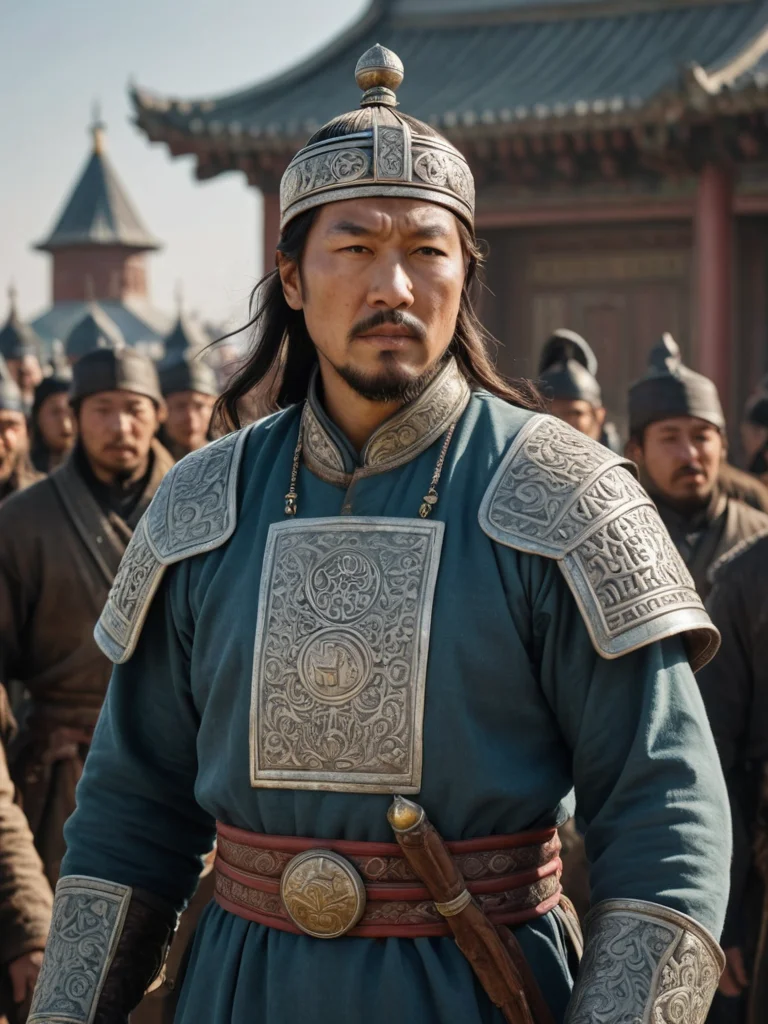
After the first wave of devastating invasions, the Mongols established a system of their dominion in Rus, known as the “Yoke.” It did not involve direct annexation of Russian lands but established strict control and dependence. The Golden Horde became the center of administration, and the Russian principalities became its vassals. This fundamentally changed the system of power and governance in the cities.
Princes no longer possessed full sovereignty. To obtain the right to rule, they had to receive a yarlyk – a charter from the Khan of the Golden Horde. This meant that the legitimacy of the prince’s power came not from God or hereditary right, but from the Khan’s will. Princes had to travel to the Horde regularly, often undergoing humiliating rituals and spending huge sums on gifts for the Khan and his nobles. These journeys were fraught with great risk to life, as evidenced by the fates of Mikhail of Chernigov, who was executed in the Horde for refusing to bow to idols, or Alexander Nevsky, who had to make considerable efforts to protect the interests of his lands.
To control tax collection and maintain order in cities and principalities, the Horde appointed its representatives – baskaks. Baskaks were usually accompanied by military detachments and had broad powers. Their presence was a constant reminder of Mongol rule. Initially, baskaks were directly involved in collecting tribute (vykhod), but over time, as relations became more complex and Russian princes grew stronger, this function began to pass to the Russian princes themselves. This was done, in part, at the initiative of the princes themselves, who sought to minimize the direct presence of the Mongols and avoid conflicts arising from the arbitrariness of the baskaks. For example, it was Alexander Nevsky who managed to negotiate with the Horde to transfer the collection of tribute into the hands of the Russian princes, which was an important step towards forming a more stable system of relations.
A census of the population was conducted in the cities, known as the “chislo,” for accurate accounting of taxpayers. This was an innovation for Rus and contributed to a more strict and regular collection of tribute. New taxes were introduced: in addition to the main “vykhod” (the Horde tax levied on the entire population, except the clergy), there were “tamga” (trade duty), “yam” (service for maintaining postal stations), and “korm” (maintenance of baskaks and their detachments). The burden of these obligations fell primarily on the townspeople, as trade and crafts were concentrated in the cities, and most of the taxable population lived there. The tax system became more centralized and ruthless, draining significant funds from the cities and limiting their economic development.
Thus, the Russian city, while retaining its internal organs of self-government (veche, princely administration), now operated under the watchful eye of the Horde, whose decisions were final and indisputable. This dependence significantly weakened urban institutions and slowed their independent development.
City Life Under the Horde: From Crafts to Taxes and the Daily Lives of Citizens
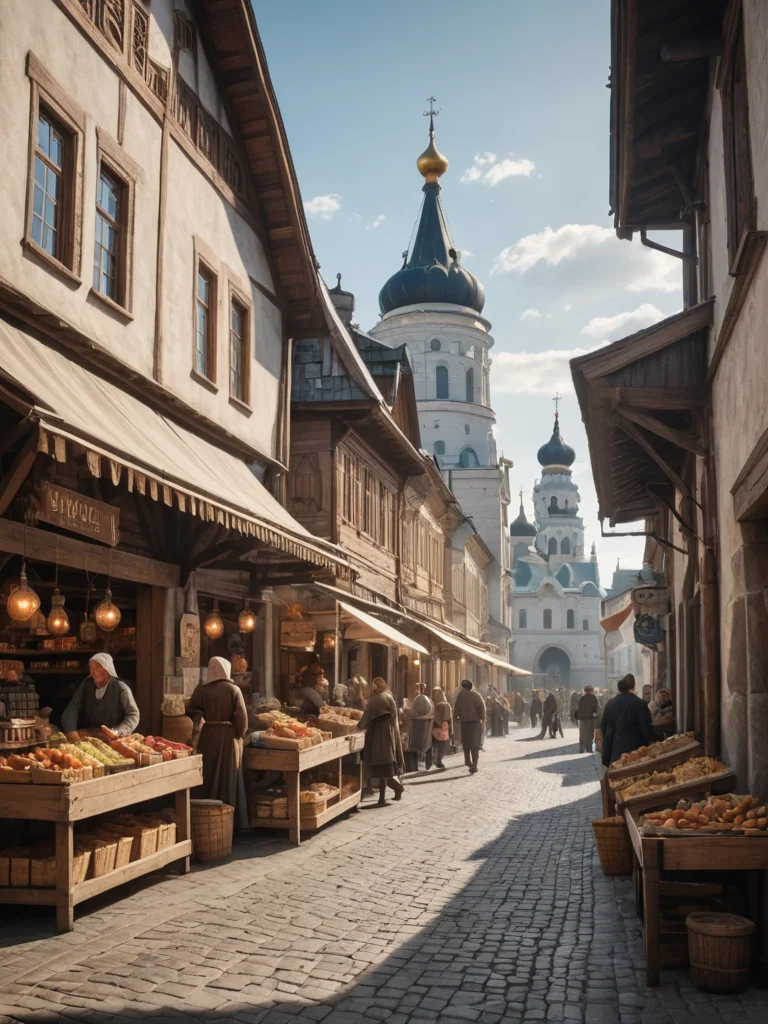
Daily life in a Russian city under the Mongol yoke was filled with hardship and deprivation. The economies of the cities, especially those that suffered devastation, recovered extremely slowly. Many crafts requiring complex production and extensive cooperation fell into decline. For example, fine jewelry work, cloisonné enamel, and the production of certain types of weapons, which had flourished in cities before the Mongol invasion, either disappeared entirely or were greatly simplified. This was due to the destruction of artisans and their equipment, as well as the disruption of trade ties and the general impoverishment of the population.
However, life went on. The townspeople who survived the initial pogroms gradually returned to the ashes, rebuilding their homes and shops. Crafts necessary for daily life gradually recovered in the cities: pottery, weaving, blacksmithing (production of simple tools and household items). There was a simplification of technologies and materials, but the foundation for further development was preserved.
The heaviest burden for the townspeople was taxes and obligations. The annual “vykhod,” collected in silver or furs, required immense effort. To pay it, townspeople were forced to sell their goods, harvest, or even property. Trade, although reduced, continued to exist, but now it was also subject to “tamga.” The Mongols were interested in maintaining trade routes, but on their terms. Russian merchants had to pay tribute and obtain permission to trade. The development of international trade relations, especially with the East, was driven by the interests of the Horde, which facilitated transit trade through its territories but strictly controlled it.
The daily lives of townspeople also underwent changes. In conditions of constant threat and instability, survival issues came to the forefront. Houses were built more simply, from more accessible materials. City walls, if rebuilt, became less grandiose. The population of cities for a long time could not recover to pre-Mongol levels. For example, Kiev, once one of the largest cities in Europe, became a small provincial center for a long time after its devastation in 1240.
The social structure of the cities also changed. The number of princely retinue members significantly decreased, as princes could not maintain large armies. The role of the urban posad population increased, as they now directly interacted with the Horde’s baskaks and tribute collectors. New social strata emerged, associated with serving the Horde or collecting tribute, although their numbers were relatively small compared to the main mass of townspeople. Despite all the hardships, the urban organism demonstrated remarkable resilience, slowly but surely regaining its strength.
Churches and Traditions: How Faith and Culture Survived the Yoke in Russian Cities
One of the surprising aspects of the Mongol yoke in Rus was the relative religious tolerance of the conquerors towards the Russian Orthodox Church. Unlike the destruction of cities and enslavement of the population, the Mongols did not seek to destroy the Orthodox faith or impose their own. This was due to both the peculiarities of the Mongols’ worldview, who professed traditional pagan beliefs (Tengrism) and were quite tolerant of other religions, and pragmatic calculation: supporting the clergy could contribute to pacifying the conquered territories.
Moreover, the Mongol Khans granted numerous privileges to the Orthodox Church. According to special yarlyks, clergy and church lands were exempt from all types of tribute and obligations, as well as from the baskak’s court. The Church gained the status of a privileged estate, which allowed it to accumulate significant wealth and land. This was vital for preserving national identity and cultural continuity under foreign domination.
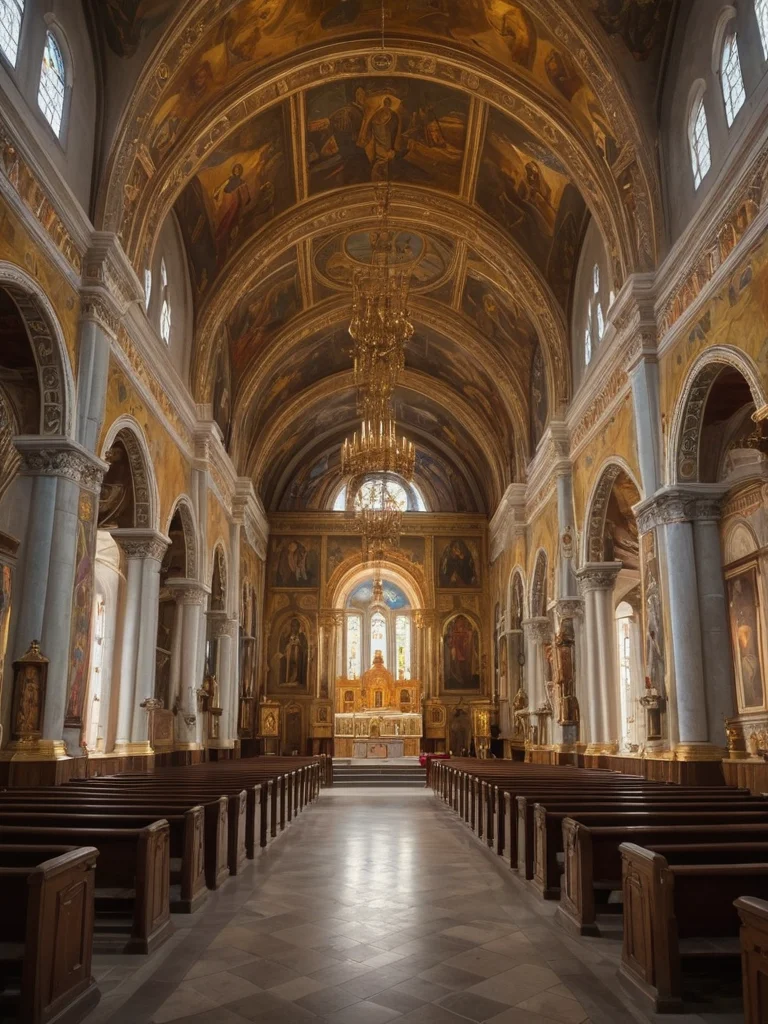
Churches, although many were destroyed during the invasion, were gradually restored or rebuilt. They remained centers of spiritual life, places of solace and hope for the townspeople. In conditions of political fragmentation and foreign oppression, it was the Church that united the scattered Russian lands and preserved the pan-Russian consciousness. Divine services continued in churches in Church Slavonic, and traditions and rituals were maintained. Monasteries, often located outside the city walls, became refuges for people, centers for copying books and preserving literacy, despite the general decline in the level of education.
Culture in the cities, of course, was not going through its best times. The construction of monumental buildings and the development of arts, which flourished in the pre-Mongol era, significantly slowed down. Icon painting, frescoes, jewelry art, book miniatures – all of this was either simplified or lost its former scope. However, thanks to the Church, these traditions did not break completely. Artisans working in monasteries and episcopal courts continued their work, preserving skills and passing them on to new generations. This allowed Rus, after liberation from the yoke, to relatively quickly restore its cultural achievements.
It is important to note that, despite the privileges, the Church also experienced difficulties related to general devastation and loss of parishioners. But its resilience and preservation of its autonomy played a decisive role in the fact that the Russian people were able to survive centuries of the yoke without losing their faith and cultural identity. Churches in Russian cities became not just architectural structures, but symbols of indomitable spirit and faith in the future.
The Legacy of the Horde: How the Russian City Emerged from the Centuries of the Yoke and What Changed Forever
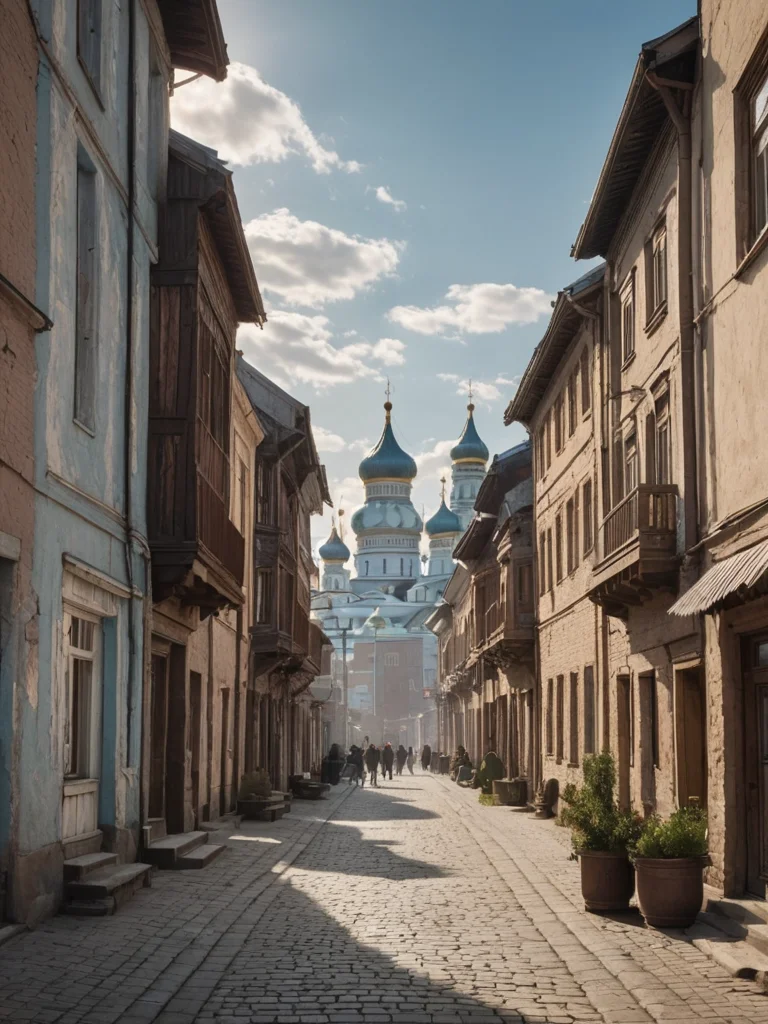
The Mongol yoke, which lasted for more than two and a half centuries, left an indelible mark on the history and appearance of the Russian city, transforming it forever. Despite liberation, many changes that occurred during this period became irreversible and determined the further path of development of the Russian state.
First and foremost, the Horde contributed to the centralization of power. The need to unite efforts to fight the invaders and, more importantly, to organize tribute collection, led to the strengthening of the Moscow princes. Moscow, initially a small city, managed to become the center for gathering Russian lands. This was due to both its favorable geographical location (intersection of trade routes, relative security from raids) and the political flexibility of the Moscow princes, who skillfully maneuvered between the Horde and other Russian principalities, obtaining yarlyks for the grand principality and the right to collect tribute. This centralization laid the foundation for future strong monarchical power.
Urban construction and architecture underwent significant changes. After a period of destruction, when many stone buildings were destroyed, reconstruction was slow. New cities and restored old ones often had simpler wooden fortifications. Gradually, as princely power strengthened and resources accumulated, the construction of more monumental buildings began, but now they were oriented not only towards defense but also towards demonstrating grand princely power. The Moscow Kremlin became a vivid example of this, embodying the ideas of centralized power and defensibility.
The economies of the cities also changed. Although many traditional crafts recovered, there was an intensification of economic unity around the emerging center – Moscow. Trade routes were reoriented, and the tax system, inherited from the Horde, became the basis for the future fiscal policy of the Moscow state. The formation of a pan-Russian market was a long process, but the impetus for it was given precisely during the struggle against the yoke.
In social terms, the influence of the Horde was manifested in the increased role of service people and the formation of a rigid hierarchy. Princely power became more despotic, drawing on the Horde’s experience in governing subjects and collecting taxes. Although some historians dispute the degree of direct influence of Mongol administrative practices, it is undeniable that the system of baskaks and tribute accustomed the Russian population to strict state regulation and obedience, which was then inherited by the Moscow rulers.
Cultural development, which slowed down during the yoke, received a new impetus after its overthrow. However, contacts with the West were weakened, which contributed to the development of a unique Russian culture, albeit in some isolation. The influence of the East, introduced by the Mongols, was limited and mainly concerned military affairs, individual elements of daily life, and language (for example, the words “dengi” (money), “kazna” (treasury), “tamozhnya” (customs) have Turkic origins). The Russian Orthodox Church, as noted, emerged from the yoke strengthened and became a powerful ideological center, contributing to the formation of a unified Russian state.
Thus, the Russian city, having passed through the crucible of the Mongol yoke, emerged transformed. It became part of a new, centralized state, learned to survive under heavy obligations, and preserved its faith and identity. The lessons learned from centuries of dependence had a profound impact on the formation of the Russian character, statehood, and determined many features of the country’s subsequent history.